Category Archives: BQB’s Public Domain Library

Top Ten Machiavelli Quotes

#10 – “Politics have no relation to morals.”

#9 – “Where the willingness is great, the difficulties cannot be great.”

#8 – “One who deceives will always find those who are willing to be deceived.”

#7 – “The first method for estimating the intelligence of a ruler is to look at the men he has around him.”

#6 – “It is better to be feared than loved, if you cannot be both.”

#5 – “If an injury has to be done to a man it should be so severe that his vengeance need not be feared.”

#4 – “He who wishes to be obeyed must know how to command.”

#3- “Never was anything great achieved without danger.”

#2 – “The wise man does at once what the fool does finally.”

#1 – “When you disarm the people, you commence to offend them and show that you distrust them either through cowardice or lack of confidence and these opinions generate hatred.”

Tagged , ,

Top Ten Quotes from “The Strange Case of Dr. Jekyll and Mr. Hyde” by Robert Louis Stevenson

#1 – “With every day, and from both sides of my intelligence, the moral and the intellectual, I thus drew steadily nearer to the truth, by whose partial discovery I have been doomed to such a dreadful shipwreck: that man is not truly one, but truly two.”

#2 – “There comes an end to all things; the most capacious measure is filled at last; and this brief condescension to evil finally destroyed the balance of my soul.”

#3 – “The most racking pangs succeeded: a grinding in the bones, deadly nausea, and a horror of the spirit that cannot be exceeded at the hour of birth or death. Then these agonies began swiftly to subside, and I came to myself as if out of a great sickness. There was something strange in my sensations, something indescribably sweet. I felt younger, lighter, happier in body; within I was conscious of a heady recklessness, a current of disordered sensual images running like a millrace in my fancy, a solution of the bonds of obligation, an unknown but innocent freedom of the soul. I knew myself, at the first breath of this new life, to be more wicked, tenfold more wicked, sold a slave to my original evil and the thought, in that moment, braced and delighted me like wine.”

#4 – “I have been made to learn that the doom and burden of our life is bound forever on man’s shoulders; and when the attempt is made to cast it off, it but returns upon us with more unfamiliar and more awful pressure.”

#5 – “I feel very strongly about putting questions; it partakes too much of the style of the day of judgement. You start a question, and it’s like starting a stone. You sit quietly on the top of a hill; and away the stone goes, starting others; and presently some bland old bird (the last you would have thought of) is knocked on the head in his own back garden, and the family have to change their name. No, sir, I make it a rule of mine: the more it looks like Queer Street, the less I ask.”

#6 – “This was the shocking thing; that the slime of the pit seemed to utter cries and voices; that the amorphous dust gesticulated and sinned; that what was dead, and had no shape, should usurp the offices of life. And this again, that that insurgent horror was knit to him closer than a wife, closer than an eye; lay caged in his flesh, where he heard it mutter and felt it struggle to be born; and at every hour of weakness, and in the confidence of slumber, prevailed against him, and deposed him out of life.”

#7 – “It is one thing to mortify curiosity, another to conquer it. ”

#8 – “I learned to recognize the thorough and primitive duality of man; I saw that, of the two natures that contended in the field of my consciousness, even if I could rightly be said to be either, it was only because I was radically both.”

#9 – “All human beings, as we meet them, are commingled out of good and evil: and Edward Hyde, alone, in the ranks of mankind, was pure evil.”

#10 – “Under the strain of this continually impending doom and by the sleeplessness to which I now condemned myself, ay, even beyond what I had thought possible to man, I became, in my own person, a creature eaten up and emptied by fever, languidly weak both in body and mind, and solely occupied by one thought: the horror of my other self.”

Tagged , , ,

Text of “The New Colossus” By Emma Lazarus

Not like the brazen giant of Greek fame,
With conquering limbs astride from land to land;
Here at our sea-washed, sunset gates shall stand
A mighty woman with a torch, whose flame
Is the imprisoned lightning, and her name
Mother of Exiles. From her beacon-hand
Glows world-wide welcome; her mild eyes command
The air-bridged harbor that twin cities frame.
“Keep, ancient lands, your storied pomp!” cries she
With silent lips. “Give me your tired, your poor,
Your huddled masses yearning to breathe free,
The wretched refuse of your teeming shore.
Send these, the homeless, tempest-tost to me,
I lift my lamp beside the golden door!”

Tagged , ,

Top Ten Quotes from “Walden” by Henry David Thoreau

#1 – “I find it wholesome to be alone the greater part of the time. To be in company, even with the best, is soon wearisome and dissipating. I love to be alone. I never found the companion that was so companionable as solitude.”

#2 – “Books are the treasured wealth of the world and the fit inheritance of generations and nations.”

#3 – “If you have built castles in the air, your work need not be lost; that is where they should be. Now put the foundations under them.”

#4 – “I learned this, at least, by my experiment: that if one advances confidently in the direction of his dreams, and endeavors to live the life which he has imagined, he will meet with a success unexpected in common hours.”

#5 – “We need the tonic of wildness…At the same time that we are earnest to explore and learn all things, we require that all things be mysterious and unexplorable, that land and sea be indefinitely wild, unsurveyed and unfathomed by us because unfathomable. We can never have enough of nature.”

#6 – “We must learn to reawaken and keep ourselves awake, not by mechanical aids, but by an infinite expectation of the dawn, which does not forsake us even in our soundest sleep. I know of no more encouraging fact than the unquestionable ability of man to elevate his life by a conscious endeavour. It is something to be able to paint a particular picture, or to carve a statue, and so to make a few objects beautiful; but it is far more glorious to carve and paint the very atmosphere and medium through which we look, which morally we can do. To affect the quality of the day, that is the highest of arts.”

#7 – “All men want, not something to do with, but something to do, or rather something to be.”

#8 – “In the morning I bathe my intellect in the stupendous and cosmogonal philosophy of the Bhagvat Geeta, since whose composition years of the gods have elapsed, and in comparison with which our modern world and its literature seem puny and trivial; and I doubt if that philosophy is not to be referred to a previous state of existence, so remote is its sublimity from our conceptions. I lay down the book and go to my well for water, and lo! there I meet the servant of the Bramin, priest of Brahma and Vishnu and Indra, who still sits in his temple on the Ganges reading the Vedas, or dwells at the root of a tree with his crust and water jug. I meet his servant come to draw water for his master, and our buckets as it were grate together in the same well. The pure Walden water is mingled with the sacred water of the Ganges.”

#9 – “The mass of men lead lives of quiet desperation.”

#10 – “I had three chairs in my house; one for solitude, two for friendship, three for society.”

Tagged , , , , ,

Text of Ulysses by Alfred Tennyson

It little profits that an idle king,
By this still hearth, among these barren crags,
Match’d with an aged wife, I mete and dole
Unequal laws unto a savage race,
That hoard, and sleep, and feed, and know not me.

I cannot rest from travel: I will drink
Life to the lees; all times I have enjoy’d
Greatly, have suffer’d greatly, both with those
That loved me, and alone; on shore, and when
Thro’ scudding drifts the rainy Hyades
Vext the dim sea: I am become a name;
For always roaming with a hungry heart
Much have I seen and known; cities of men
And manners, climates, councils, governments,
Myself not least, but honour’d of them all;
And drunk delight of battle with my peers,
Far on the ringing plains of windy Troy,
I am a part of all that I have met;
Yet all experience is an arch wherethro’
Gleams that untravell’d world, whose margin fades
For ever and for ever when I move.
How dull it is to pause, to make an end,
To rust unburnish’d, not to shine in use!
As tho’ to breathe were life. Life piled on life
Were all too little, and of one to me
Little remains: but every hour is saved
From that eternal silence, something more,
A bringer of new things; and vile it were
For some three suns to store and hoard myself,
And this gray spirit yearning in desire
To follow knowledge like a sinking star,
Beyond the utmost bound of human thought.

This is my son, mine own Telemachus,
To whom I leave the scepter and the isle—
Well-loved of me, discerning to fulfil
This labour, by slow prudence to make mild
A rugged people, and thro’ soft degrees
Subdue them to the useful and the good.
Most blameless is he, centred in the sphere
Of common duties, decent not to fail
In offices of tenderness, and pay
Meet adoration to my household gods,
When I am gone. He works his work, I mine.

There lies the port; the vessel puffs her sail:
There gloom the dark broad seas. My mariners,
Souls that have toil’d, and wrought, and thought with me—
That ever with a frolic welcome took
The thunder and the sunshine, and opposed
Free hearts, free foreheads—you and I are old;
Old age hath yet his honour and his toil;
Death closes all: but something ere the end,
Some work of noble note, may yet be done,
Not unbecoming men that strove with Gods.
The lights begin to twinkle from the rocks:
The long day wanes: the slow moon climbs: the deep
Moans round with many voices. Come, my friends,
‘Tis not too late to seek a newer world.
Push off, and sitting well in order smite
The sounding furrows; for my purpose holds
To sail beyond the sunset, and the baths
Of all the western stars, until I die.
It may be that the gulfs will wash us down:
It may be we shall touch the Happy Isles,
And see the great Achilles, whom we knew.
Tho’ much is taken, much abides; and tho’
We are not now that strength which in old days
Moved earth and heaven; that which we are, we are;
One equal temper of heroic hearts,
Made weak by time and fate, but strong in will
To strive, to seek, to find, and not to yield.

Tagged ,

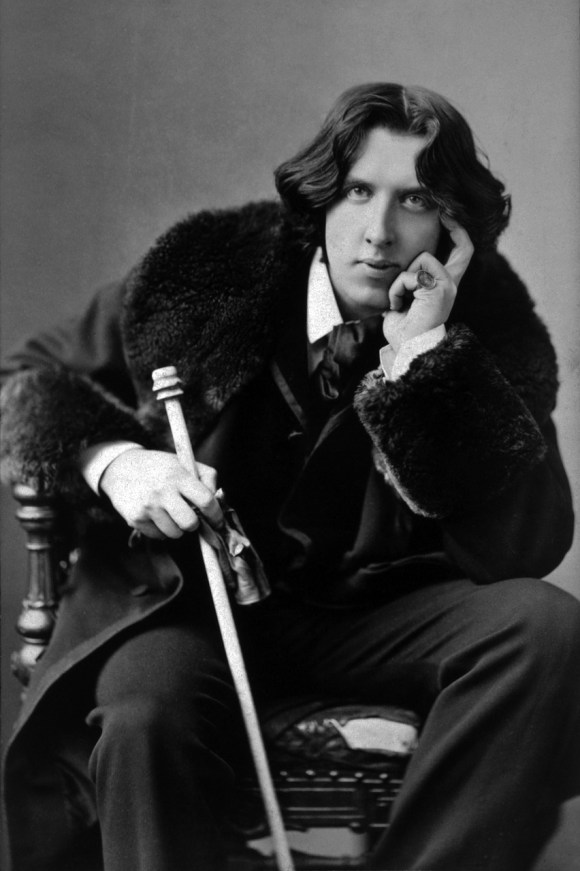
Top Ten Oscar Wilde Quotes

oscar-wilde-1165545_1280

#10 – “I can resist everything but temptation.”

#9 – “Women are made to be loved, not understood.”

#8 – “Experience is simply the name we give our mistakes.”

#7 – “Be yourself.  Everyone else is taken.”

#6 – “Most people are other people.  Their thoughts are someone else’s opinions, their lives a mimicry, their passions a quotation.”

#5 – “True friends stab you in the front.”

#4 – “The suspense is terrible.  I hope it will last.”

#3 – “The only difference between the saint and the sinner is that every saint has a past, and every sinner has a future.”

#2 – “A gentleman is one who never hurts anyone’s feelings unintentionally.”

#1 – “Memory is the diary that we all carry about with us.”

Tagged , ,

Text of “Ode On a Grecian Urn” by John Keats

Thou still unravish’d bride of quietness,
Thou foster-child of silence and slow time,
Sylvan historian, who canst thus express
A flowery tale more sweetly than our rhyme:
What leaf-fring’d legend haunts about thy shape
Of deities or mortals, or of both,
In Tempe or the dales of Arcady?
What men or gods are these? What maidens loth?
What mad pursuit? What struggle to escape?
What pipes and timbrels? What wild ecstasy?

Heard melodies are sweet, but those unheard
Are sweeter; therefore, ye soft pipes, play on;
Not to the sensual ear, but, more endear’d,
Pipe to the spirit ditties of no tone:
Fair youth, beneath the trees, thou canst not leave
Thy song, nor ever can those trees be bare;
Bold Lover, never, never canst thou kiss,
Though winning near the goal yet, do not grieve;
She cannot fade, though thou hast not thy bliss,
For ever wilt thou love, and she be fair!

Ah, happy, happy boughs! that cannot shed
Your leaves, nor ever bid the Spring adieu;
And, happy melodist, unwearied,
For ever piping songs for ever new;
More happy love! more happy, happy love!
For ever warm and still to be enjoy’d,
For ever panting, and for ever young;
All breathing human passion far above,
That leaves a heart high-sorrowful and cloy’d,
A burning forehead, and a parching tongue.

Who are these coming to the sacrifice?
To what green altar, O mysterious priest,
Lead’st thou that heifer lowing at the skies,
And all her silken flanks with garlands drest?
What little town by river or sea shore,
Or mountain-built with peaceful citadel,
Is emptied of this folk, this pious morn?
And, little town, thy streets for evermore
Will silent be; and not a soul to tell
Why thou art desolate, can e’er return.

O Attic shape! Fair attitude! with brede
Of marble men and maidens overwrought,
With forest branches and the trodden weed;
Thou, silent form, dost tease us out of thought
As doth eternity: Cold Pastoral!
When old age shall this generation waste,
Thou shalt remain, in midst of other woe
Than ours, a friend to man, to whom thou say’st,
“Beauty is truth, truth beauty,—that is all
Ye know on earth, and all ye need to know.”

Tagged , ,

Top Ten Quotes From Crime and Punishment by Fyodor Dostoyevsky

#1 – “Pain and suffering are always inevitable for a large intelligence and a deep heart.”
#2 – “When reason fails, the devil helps!”
#3 – “We’re always thinking of eternity as an idea that cannot be understood, something immense. But why must it be? What if, instead of all this, you suddenly find just a little room there, something like a village bath-house, grimy, and spiders in every corner, and that’s all eternity is. Sometimes, you know, I can’t help feeling that that’s what it is.”
#4 – “Pain and suffering are always inevitable for a large intelligence and a deep heart. The really great men must, I think, have great sadness on earth.”
#5 – “To go wrong in one’s own way is better than to go right in someone else’s.”
#6 – “The darker the night, the brighter the stars, the deeper the grief, the closer is God!”
#7 – “I used to analyze myself down to the last thread, used to compare myself with others, recalled all the smallest glances, smiles and words of those to whom I’d tried to be frank, interpreted everything in a bad light, laughed viciously at my attempts ‘to be like the rest’ –and suddenly, in the midst of my laughing, I’d give way to sadness, fall into ludicrous despondency and once again start the whole process all over again – in short, I went round and round like a squirrel on a wheel.”
#8 – “We sometimes encounter people, even perfect strangers, who begin to interest us at first sight, somehow suddenly, all at once, before a word has been spoken.”
#9 – “I did not bow down to you, I bowed down to all the suffering of humanity.”
#10 – “And the more I drink the more I feel it. That’s why I drink too. I try to find sympathy and feeling in drink…. I drink so that I may suffer twice as much!”
Tagged , , , ,

Text of Hamlet’s “To Be or Not to Be” Soliloquy by William Shakespeare

To be, or not to be-that is the question:
Whether ’tis nobler in the mind to suffer
The slings and arrows of outrageous fortune
Or to take arms against a sea of troubles
And by opposing end them. To die, to sleep–
No more-and by a sleep to say we end
The heartache, and the thousand natural shocks
That flesh is heir to. ‘Tis a consummation
Devoutly to be wished. To die, to sleep–
To sleep-perchance to dream: ay, there’s the rub,
For in that sleep of death what dreams may come
When we have shuffled off this mortal coil,
Must give us pause. There’s the respect
That makes calamity of so long life.
For who would bear the whips and scorns of time,
Th’ oppressor’s wrong, the proud man’s contumely
The pangs of despised love, the law’s delay,
The insolence of office, and the spurns
That patient merit of the unworthy takes,
When he himself might his quietus make
With a bare bodkin? Who would fardels bear,
To grunt and sweat under a weary life,
But that the dread of something after death,
The undiscovered country, from whose bourn
No traveler returns, puzzles the will,
And makes us rather bear those ills we have
Than fly to others that we know not of?
Thus conscience does make cowards of us all,
And thus the native hue of resolution
Is sicklied o’er with the pale cast of thought,
And enterprise of great pitch and moment
With this regard their currents turn awry
And lose the name of action. — Soft you now,
The fair Ophelia! – Nymph, in thy orisons
Be all my sins remembered.
Read more at http://www.monologuearchive.com/s/shakespeare_001.html#56MjVFyjjM7Tucct.99

Tagged , , ,

Text of She Walks in Beauty by Lord Byron

She walks in beauty, like the night

Of cloudless climes and starry skies;

And all that’s best of dark and bright

Meet in her aspect and her eyes;

Thus mellowed to that tender light

Which heaven to gaudy day denies.


One shade the more, one ray the less,

Had half impaired the nameless grace

Which waves in every raven tress,

Or softly lightens o’er her face;

Where thoughts serenely sweet express,

How pure, how dear their dwelling-place.


And on that cheek, and o’er that brow,

So soft, so calm, yet eloquent,

The smiles that win, the tints that glow,

But tell of days in goodness spent,

A mind at peace with all below,

A heart whose love is innocent!

Tagged , ,