Tag Archives: selfpublishing

#31ZombieAuthors – Day 31 – HALLOWEEN INTERVIEW – David W. Wright of the Self-Publishing Podcast

61tz7RpY0SL._UX250_

FIND THIS ZOMBIE AUTHOR ON:

Amazon              Twitter

Self Publishing Podcast

Sterling and Stone

Happy Halloween, 3.5 readers.

This month, we’ve chatted up an absurd amount of zombie fiction writers, haven’t we?

They’re all impressive in their own right, and they all bent over backwards to help me out, so it was virtually impossible to figure out who to assign the coveted Halloween spot to.

Then it hit me.  Use it to talk to one of the dudes who got me writing again.

Not to make this about me, but long ago, I gave up on my dream of becoming a writer.  Like so many before me, the path toward traditional publishing seemed like it was riddled with one insurmountable wall after another.  Spend my time writing only to end up with my work tossed on a rejection heap with countless other writers competing for a highly coveted publishing contract?

Hell, I might as well have cashed out my life savings (all 3.5 dollars of it) and spent it on lotto tickets.

So I moved on and pursued a more realistic profession, but as the years went by, I always second guessed myself.

“What if?”

What if I’d kept at it?  Would I be a writer today?”

Around late 2014 I discovered the Self Publishing Podcast, starring full time indie authors Johnny B. Truant, Sean Platt, and of course, today’s guest, David W. Wright.  Together, this trio have their own “story studio,” Sterling and Stone.

They’ve found success as multi-genre authors, with sci-fi epics like The Beam, steam punk adventures like The Dream Engine and TV style serials such as Yesterday’s Gone, just to name a few.  They’re so prolific I doubt I could rattle off all their hits in one sitting.
51yjssATf+L._SX322_BO1,204,203,200_Their self-publishing guide, Write. Publish. Repeat. (The No-Luck-Required Guide to Self-Publishing Success) has become a bible of sorts for the indie community.  I picked up a copy and thus far I’ve found the information it provides to be invaluable.

I have a standing appointment with these gents every Wednesday afternoon, during which I pop on their podcast and listen to the boys talk about the craft they love on my commute home.

To be clear, they don’t deal with get rich quick schemes or gimmicks.  They’re just three guys who talk about what works and doesn’t work for them.  They regularly schedule guests on the cutting edge of self-publishing, and most importantly, they have fun.

Yes, I said fun.  You won’t be bored when you listen to SPP.  The best way I can describe it is that Johnny, Sean and Dave aren’t the stodgy, tweed coat wearing professors who drone on and on in a boring lecture guaranteed to put you to sleep.

Rather, they’re the cool TAs who stop by your dorm, crack open a beer, joke around with you, and give you the straight scoop on what you need to know.

Will I ever self-publish a book?  I have no idea, but listening to these guys helped me decide to pick up my long abandoned dream of a writing career, dust it off, and start working toward it again, and that in and of itself has made me a happier person.

Dave, as one of Sterling and Stone’s preeminent horror fiction writers, welcome to the Bookshelf Battle Blog.  I’ve heard you and your compadres say it doesn’t get any worse than your other podcast, Better Off Undead, but I’d challenge that notion since last time I checked, my site only has 3.5 readers. 

NOTE: BOLD=BQB; ITALICS=DAVE

Q.  Happy Halloween, Dave!  Do you have any plans to celebrate?  (Redact as necessary.)

A.  If by celebrate, you mean hide away from anyone who might knock on my door, then yes, I’ll be celebrating in an undisclosed location.

Q.  What’s the deal with zombies?  The past month, I’ve interviewed authors from all different backgrounds and they’ve all managed to find their own unique take on the zombie genre.  For the layman who thinks, “I don’t get it.  All they do is grunt and groan and eat brains!” please explain why fans can’t get enough of the undead.

A.  I can only speak to the appeal from my perspective. As long as I can remember, long before I ever saw a zombie movie, I dreamed of hordes of slow-moving people coming after me. Most horror movies, the hero or heroine have some chance to defeat the bad guy, monster, etc… There’s something terrifying about an unyielding, unending force of nature like a horde of zombies.

There’s a cathartic nature to most horror, and I think zombies can be representative of many fears for people, and movies and books are just one way of facing those fears in a safe manner.

I think one of the books that truly gets that fear right is The Girl With All the Gifts. Those zombies will track you down, and just wait outside wherever you’re hiding. They’ve got nothing but time, and they will eventually get you, unless you find a way to fight back.

61NWfE06WqL._SX331_BO1,204,203,200_Q.   Z 2134, which you co-authored with Sean, features a dystopian America of the future, one in which zombie plagues have ravaged the world, giving rise to a totalitarian government, not to mention the Darwin Games, a televised survival show in which people have to fight zombies on air.  What inspired you to write these stories?

A.   Well, I’ve always wanted to write a zombie story. Sean wasn’t as keen on the idea, as he felt like it had all been done, and there was a lot of it at the moment. However, if we could mash up other genres, he was a lot more interested. So we thought, “Wouldn’t it be cool if there was a Hunger Games type story with zombies?” At the time, I’d not even seen The Hunger Games, and had read only the first few chapters. But I knew the idea, and we thought it would be cool to blend it with zombies and add a dose of 1984.

We pitched it to 47North after they’d reached out to us because of Yesterday’s Gone’s success, and they bought the trilogy.

Funny that some of the one star reviewers say it’s a “direct ripoff” of The Hunger Games, which I have to laugh at given that the only thing we ripped off was that it was a) a game and b) how The Hunger Games did the opening part where everyone had to make a mad dash toward the loot (which is as far as I got in the series). Anything similar beyond that, if there actually is, is pure coincidence. Fortunately, enough people liked the series for what it was to make it a bestseller at Amazon.

I think that mash-up of Z 2134 was sort of a dual-edged sword, though. While it earned us a lot of new readers, I think that people who thought we merely ripped off The Hunger Games, probably didn’t go on to give our other books a chance. They probably thought we were mash-up hacks churning out derivative stuff, which is a shame, because I feel that our other books are original and genre defying in many aspects.

Sean and Johnny are currently writing the first book in a zombie series that I’m super excited about, which seems to have an original sorta twist to it. Perhaps Sean and I will write in that world, since I’m still itching to do a proper real zombie story.

Q.  One thing I’ve noticed about science fiction/zombie lore is that authors have a tendency to forecast a future of doom and gloom.  I can’t say as I blame them though, given that every day there’s a new story on the news that rattles my faith in humanity.  Do you think a book where people are actually happy and the world has come together in a peaceful, harmonious future would ever be viable (or dare I say, realistic?)

A.  As much as I’d love to believe otherwise, it all comes down to a few things that seem immutable: there are limited resources on this planet, and people are clannish by nature. Therefore, there will always be struggle.

Q.   Let’s talk SPP.  You guys do a fair amount of busting on one another, all in good fun of course.  Still, I have to say I envy the partnership you’ve formed.  I’ve worked on a number of group projects in my life and to date, I’ve never walked away from the experience without holding back the desire to strangle my partners (who probably felt the same way about me.)  Do you guys realize what you have and more importantly, when the microphone’s off, do you tell each other?  It’d make me happy if the three of you would break out in a chorus of Bette Midler’s Wind Beneath My Wings one day, in celebration of a rare collaboration that actually works.

A.  I don’t think we talk too much about it. We’re usually busy talking about the work that needs to be done to fulfill our dreams. When we met in Austin in Sept. 2014, though, it was the first time all three of us were together, and we had a long heart-to-heart-to-heart talk, and it felt good to get to know Johnny (I’d already known Sean) in person. We’re like family, except we get along more often than most families.

Q.  Dave, as mentioned on your site, “Sean is the Tigger to your (Dave’s) Eeyore.”  I’d even go so far as to say that Sean is the Professor X to your Magneto.  In other words, Sean’s an optimist while you’re a pessimist.

Is that why you two work so well together?  One of you holds out hope, the other can see problems coming at twenty paces, and together you equal each other out?

A.  Good analogy. I think we’re a good mix, though I’m sure we’d be better off if I were a bit less pessimistic and a bit more hopeful. I think pessimism can be good as a protective shield, but there are times it costs you in potential.

Q.   Not to bore you with my problems, but a maniacal alien dictator from an unnamed world despises reality television to the point where he’s demanded that I write a novel so finely crafted that it causes the public to abandon shows where cameras follow around vapid celebrities and focus their attention entirely on scripted media.

But I don’t want to bother you with that.  You’ve been in self-publishing for a long time now.  Is there one nugget of advice, something that you wish someone had told you early on when you were getting started that you could pass on to me?

A.   Work through the doubt, and write a lot. Growing up, I tended to abandon projects the moment they got a bit too intimidating. I’m still prone to self-doubt and lots of rewriting before I’m happy, and I blow deadlines, but I am still always moving forward toward a goal — something I didn’t do before I had Sean as a partner.

Q.   Self-publishers are often vocal about their fears, which is understandable. Amazon might change their terms.  Tech companies they depend on might go out of business.  Traditional publishers might find a way to flip the proverbial poker table over and take their chips back.

But lets forget all that and be positive for a moment.  Let’s be Seans and not Daves.  As an expert in the field, do you foresee any major, positive developments coming in the future that will make self-publishers jump for joy?

A.   I’m hoping for a universal e-book format which would allow people to migrate their collections across readers without having to jump through hoops. I’d love to be able to buy at any store and read on whatever reader I prefer, without having to go through proprietary apps.

While companies may be resistant to this, I think in the long run it will help the companies sell more e-books.

Q.   Dave.  Seriously.  Thank you for all that you do.  When The History of Self-Publishing is written, there should be twenty chapters dedicated to you, Sean and Johnny.  The floor is yours.  If there are any last minute words of wisdom you’d like to share with my 3.5 readers, please feel free to do so.

A.   Thank you for having me. I’m not sure if this is wisdom, but I’ll share one thing. I started putting comic strips on the web in 1999. I was clueless to how bad I was. I think a lot of artists early on come in one of two flavors — they think they’re awesome or they think they’re shit. The truth is probably somewhere in between. Had I realized how bad I was, I’m sure I would’ve quit. Instead, I thought I was better than I was, but knew I wasn’t as good as I wanted to be, so I pushed through, always trying to get better, until I had a semi-successful comic which I could be proud of. So, I’d say don’t beat yourself up early on, but don’t ignore the areas you need to improve, and just always keep creating.

Tagged , , , , , , , , , , , , , , , , , , ,

BQB’s Zombie Apocalypse Survivor’s Journal – Day 31 – (Part 3)

It was late.

I sat in my office, the magic bookshelf behind me, the tiny characters who inhabited it fast asleep.

NN1 was on my TV, various commentators weighing in on all the consequences that General Morganstern was in for.

On my computer, I typed the following words:

Johnny Gunhands:  A Farewell to Hands

Draft #2

VGRF came in.

“You foiled a corrupt general’s plot, saved us all from being blown up, and destroyed the zombie menace,”  she said.  “Don’t you think you’ve earned some sleep?”

“I can’t,”  I replied.  “I’m too wired.  Besides, you know with the Mighty Potentate up my ass the world will never be safe from alien invasion until I finish this book.”

I opened up iTunes and turned on my favorite show, The Self Publishing Podcast.

Notorious indie authors Johnny B. Truant, Sean Platt, and David W. Wright were discussing the latest news in the world of do it yourself publishing.

“I hate you all,” grumbled Dave.

VGRF picked up the space phone and handed it to me.

“What?”  I asked.

“Go on,”  she said.

“Oh please.  The world has already given me too many miracles tonight.  I doubt an interview with one of these illustrious scribes is in the cards.”

“The worst that can happen is they say no,”  VGRF said.

I let out a loud, obnoxious sigh.

“Fine.  Here goes nothing.”

I looked up the number for Sterling and Stone, the SPP trio’s publishing company.

I dialed it.  The phone rang.

“Hello?  Yes. Bookshelf Q. Battler here.  I’m doing a zombie author interview series and I’d like to talk to Dave about Z2134….uh huh….uh huh….uh huh…Dave’s at Target?  Uh huh….sure I can hold…”

Tagged , , , , , , , , , , ,

#31ZombieAuthors – Day 30 Interview – J.M. Wilde – Australia Zombified

61wMym+WXfL._UX250_

FIND THIS ZOMBIE AUTHOR ON:

Amazon          Website

Facebook          Twitter

Wattpad

:::Looks in the mirror.  Slaps myself.:::

OK, BQB.  Get a grip.  You’ve got a half-hour left until East Randomtown is blown up.  You need to complete this interview, then go save the day.

Time is of the essence and you’re about to talk to a professional.  Sure, J.M. Wilde is one of today’s top Australian zombie fiction authors, but that doesn’t mean you have to be a jerk and ask her about Australian stuff.  She doesn’t want to talk about kangaroos, koala bears, or dingos.  She doesn’t want to compare knife sizes a la Paul Hogan in Crocodile Dundee.  Don’t ask her about vegemite sandwiches or if the Men Without Hats’ mandate to ostracize friends of your friends who don’t dance is still in effect over there.

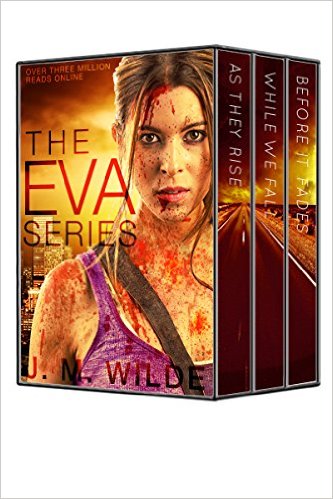
Just take all of your pre-conceived Aussie stereotypes and throw them out the window.  The fans of the highly popular Eva series deserve no less.

OK.  The space phone is ringing.

NOTE: BOLD=BQB; ITALICS=J.M.

Q.  Hello J.M.  I’m trapped in a zombie apocalypse and my hometown is about to be blown to smithereens as part of an elaborate conspiracy, but I’ve dropped everything to use a highly sophisticated alien communication device to place a call clear across the world in order to ask a question of utmost importance:

Clockwise or counterclockwise:  which way does the water swirl down the drain in the land down under?  Please.  Go flush your toilet, take copious notes, then come back with a full report.  I swear that’s all I’ll need to get all the curiosity about Australia out of my system.

A. I actually have no idea. I’ve never really noticed, I guess counterclockwise? Flushing the toilet isn’t any help because most toilets here don’t swirl, they just flush down. I didn’t even know that myth existed until that one episode of The Simpsons when they came to Australia.

Q.  By the way, since its already October 31 in Australia, Happy Halloween!  I realize this is an American holiday that began in the pre-colonial days of the U.S. in which colonists believed it was necessary to ward off evil spirits by running around in costumes, because if it’s one thing that a hell beast fears most, it’s a puritan in a bed sheet.  Fast forward to today, where once a year we all openly encourage children to disobey all the rules we impose on them throughout the rest of the year by encouraging them to “go ahead and knock on that stranger’s door and demand free food stuffs!”

Long story short – Halloween in Australia.  Does anyone over there do anything to celebrate or is it just another day?  Don’t worry if the answer is the latter.  With all the goofballs running around in costumes and all the weight I gain from eating fun size candy bars, there are times I wish it was November 1 already too.

A.  This is an interesting one. Halloween is also connected to Samhain, which takes place in Autumn. Here in Australia, Samhain takes place on May 1st, so technically that’s our Halloween. But thanks to commercialization and the many American TV shows and movies we watch, Halloween has made its way here over the last few years and is celebrated more and more on October 31st. It wasn’t celebrated here at all when I was a kid, but I would have loved to have gone trick or treating just like all my favorite characters on TV. Now, I see more and more kids and teens knocking at my door in costumes, and more Halloween decorations being sold in stores. Halloween parties are becoming a thing, too, which is awesome as I love a good costume party!

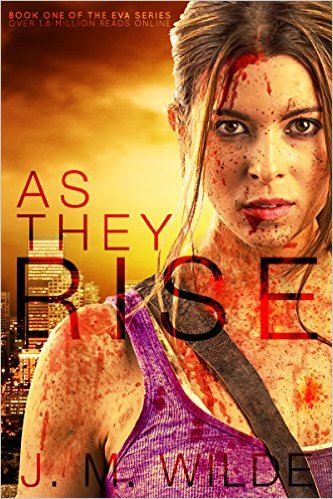
51b3SGDcMfL._SX331_BO1,204,203,200_Q.  Let’s talk about The Eva Series. In this three-book collection, you’ve turned Australia into one great big zombie infested death island.  Readers follow the journey of Eva as she and her friends make their way through the madness in search of safety. I have to admit, this is a pretty unique turn for the zompoc genre.  How did you come up with Eva’s story and what inspired you to tell her tale?

A. It really started because of my husband. I’d never written fiction before and wanted to try it, and at the time I thought my husband would be the only one who would ever read it. He loves zombies, so I decided to write a zombie story. And seeing as we live in Australia, I figured it would be cool to write about what might happen if a zombie virus broke out here. And voila! As They Rise, the first in the series, was born.

Q.  As I told a pair of writers the other day, I don’t have much pull in Hollywood.  Sure, Taye Diggs follows me on Twitter but I’m pretty sure he hit the follow button by accident.  That being said, “Zombies in Australia” seems like a concept ripe for a movie. On the off chance that J.J. Abrahams visits my blog by accident, give him your pitch as to why we need an Eva movie.

A. Taye Diggs follows me too! Okay, here’s my pitch. Hey J.J (or other equally awesome Hollywood person), enough already with zombies in the U.S of A! It’s been done to death (Ha! Puns.) Let’s move the fun down under where the stakes are higher and the production is cheaper. I’ve got the story, you’ve got the skills and the connections. Let’s make movie magic.

Q.  OK, I don’t want to brag, but I have been known to attract as many as 3.5 readers to my blog.  I thought that was pretty impressive until I learned that The Eva Series has racked up over 3 million reads online.  How did you get so many eyeballs on your work and for any aspiring writers out there, what can they do to attract more readers?

A. It’s all thanks to Wattpad. I don’t really know how it happened, but once I started uploading chapters to Wattpad a few years ago, it skyrocketed. I wouldn’t have ever considered being a pro writer without all the support from those early readers who kept begging me for more Eva. Aside from writing a good story and having a cool cover, I’ve found that being persistent and consistent is key when it comes to writing on Wattpad and attracting readers.

Q.  You’re a Wattpad star.  For people who aren’t as hip as we are, Wattpad is an online site that allows users to post their works and receive feedback from other users.  What about this site have you found useful and would you recommend it to other authors?

A. I adore the hell out of Wattpad, and I definitely recommend it to other authors. I think my favorite aspect about it is the interaction with readers. I’ve made friends and get to talk to my readers regularly, gain feedback on my work and just have so much fun with them.

J.M. Wilde on How to Get More Readers on Wattpad

Q.  So what’s next for you?  Any other book ideas in the works?  Could the zombies attack your neighbors?  Just going to throw it out there.  I feel like “TaZmania” or “New Z-Land” are rife with potential.

A. Haha! I love the New Z-Land idea. I’ve started working on a spin-off about one of the characters from book three, and I’ve been thinking about a potential fourth book in the series. But right now I’ve got a few other projects in the works; a couple of geeky YA contemporaries and a fanfic of The 5th Wave commissioned by Sony that’s being posted to Wattpad.

Q.  You’re a self-described fan girl.  On your website, you talk about how you want to be Iron Man and have pictures of yourself in Marty MacFly’s “future wear” from Back to the Future II, in which you’re meeting Christopher Lloyd, the actor who played Doc Brown.  I tip my hat to you, madam.  You’ve dethroned me as the Internet’s most renowned poindexter.  A lot of great superhero/comic bookish movies are coming out next year.  Which one or ones are you looking forward to most?

A.  Meeting Doc Brown was definitely one of the best moments of my life. BTTF is my fave movie so it was surreal. He’s such a nice dude. To answer your question … All of them! Deadpool. Captain America: Civil War. X-Men: Apocalypse. Suicide Squad. The list goes on!

Q.  J.M., thanks for taking a moment to talk with me.  Before I go, do you have any last minute advice that might help my friends and I survive the East Randomtown Zombie Apocalypse?

A. As Eva learned the hard way, fire doesn’t work against zombies, it just turns them into undead fireballs. Running is always the best choice. If you can’t run like hell, fight like hell. And always follow Rule #2 of Zombieland: double tap.

BQB EDITORIAL NOTE: J.M.’s running a Halloween sale!  Get all three books of the Eva series for .99 cents!

51OSu-1YEIL._SX331_BO1,204,203,200_

Tagged , , , , , , , , , , , , ,

#31ZombieAuthors – Day 27 Interview – Happy Birthday Jake Bible, Esteemed Inventor of the Drabble Novel

61nwe5iWrNL._UX250_

FIND THIS ZOMBIE AUTHOR ON:

Amazon      Website

Facebook      Twitter

By: Special Guest Interviewer, Alien Jones

Humans, my guest today is none other than Jake Bible.  A Bram Stoker Award nominated novelist, short story writer, independent screenwriter, podcaster, and inventor of “the Drabble Novel,” he’s entertained thousands with his horror and science fiction tales, reaching audiences of all ages with his ability to write in a wide range of genres.

Jake is the author of the bestselling Z-Burbia series.  Set in Asheville, NC, the books follows residents of a suburban community as they transition from easygoing living to post-apocalyptic zombie fighting.

SIDENOTE:  Today, October 27, is also Jake’s birthday.

A recent court ruling made the “Happy Birthday Song” free to all, which is great, because knowing that old cheapskate BQB, he’d of never approved of us singing it otherwise.

So let’s all sing Jake “Happy Birthday” shall we?

Happy Birthday to you!

Happy Birthday to you!

Happy Birthday Dear Jake Bible, Esteemed Inventor of the Drabble Novel!

Happy Birthday to you!!!!

Jake, welcome and thanks for taking my call on the space phone.

NOTE: BOLD=ALIEN JONES; ITALICS=JAKE

Q.  Here’s a question I’ve been wondering all month.  Humans live in a modern world.  Everything from technology to toilets, cars to electricity is available.  Why are so many humans fantasizing about living in a post-apocalyptic world where showers are a thing of the past and zombies want to eat them?  Are humans right in the head?

A. First, no, humans are not right in the head. That’s just a fact of life. as for why they would want to live in a post-apocalyptic world, well, that’s easy: it’s the great equalizer. Your survival depends on your skills and intelligence, not on what car you drive, how much you make, or whether or not you get a high score on a performance review. The rich can’t buy survival and the idiots won’t survive long. Win/win situation, in my opinion.

Q.  I suspect the characters that filled Whispering Pines, the suburban neighborhood featured in Z-Burbia miss their once comfortable lifestyle.  Though I don’t mean to ask for spoilers, can you give us a glimpse of what they have to go through?  How is zompoc living vs. suburban living?

A. Part of the satire in Z-Burbia is that the Whispering Pines homeowners don’t give up much after the dead rise. They keep their HOA and try to go on with life as usual. They have established power, they grow their own food, they even still have natural gas flowing. Sure, the dead want to eat their brains, but that’s what huge walls and razor wire are for, right? I mean, these people even have WiFi, just no Internet since the outside world wasn’t as lucky as the survivors in Whispering Pines.

Q.  You’re the inventor of “The Drabble Novel.”  On your blog, Brain Squeezin’s, you describe this as “a short short story written using only 100 words. Not 99 words, not 101 words, but 100 words exactly.”  You then go on to explain how you piece together several “drabbles” together to come up with a larger novel.  Am I correct in this description and how did you first discover this amazing contribution to the world of literature?

A.  I started writing drabbles to sharpen my skills as a writer. Being constrained by an exact number of words teaches you how to edit and how to make sure each word counts. When I went to write my first novel, Dead Mech, I used the writing form as an exercise to get used to characters and settings. Then I realized I liked the feel and flow of 100 words as scene sections. Instead of rewriting what I already had, I started filling in gaps and before I knew it I had the beginnings of a drabble novel where each section is exactly 100 words. It really gives the novel a cinematic, quick-cut feel which is perfect for the over the top, high-action plot.

Q. “Once upon a time, a bunny rabbit was hopping through the forest.  It stopped to eat a carrot when an enormous dragon swooped down and breathed fire in the bunny’s general direction.  Instantly, the rabbit harnessed the ancient power of the ninja masters of old, jumped into the air, and delivered a crushing roundhouse kick to the dragon’s hideous snout.  The beast fell to the ground with a deafening crash and the bunny skinned its oily hide and sold its dragon leather.  He then used the proceeds to take a gaggle of she-bunnies out on the town. Hanky panky transpired.”

ALIEN JONES: That’s one-hundred words exactly.  How’d I do?  Do I have a future in this business or what?

A.  You did great! That’s a story, right there. As for a future, well, drabbles don’t pay much. So, yes, you have a future, just a poor and hungry one. 😉

Q.  You’ve written other zombie tales outside of Z-Burbia.  One that comes to mind is Bethany and the Zombie Jesus.  To give readers a brief rundown, a stone carved likeness of Jesus decides it doesn’t want to be on a cross anymore, comes down and its up to Bethany to stop Zombie Jesus from bringing about the end of days.

I have to say, that’s one of the most unique zombie story premises I’ve observed yet.  How did you come up with that one?

A. The idea that Jesus rose from the grave makes him an easy target for zombification. So I went with that idea that instead of Jesus rising and being the world’s savior, he rose and was ready to start the zombie apocalypse a few thousand years ago and it has been left up to a handful of men and women over the millennia to keep watch over him and make sure he doesn’t get loose. Of course, eventually he gets loose and that’s where Bethany begins.

Q.  Kaiju.  Monster sharks.  Mechs.  These are just some of the topics of your other novels.  Accordingly, I have to ask, Monster Shark vs. Zombies.  Who wins?  Feel free to weigh in on a Kaiju’s or a Mech’s chances against a zombie horde as well.

A. Monster Shark will always beat zombies. Mainly because of its environment. Also, a monster shark is the ultimate apex predator. Now, if a monster shark becomes a zombie, that’s a whole other ballgame. Kaiju would take out a zombie horde, no problem. Stomp, stomp, chomp, done. Pretty much the same with mechs, minus the chomp part. Unless the mech is damaged and has no ammo then it is highly possible it can be overwhelmed by sheer numbers. Physics are physics.

Q.  Happy Birthday Jake.  I’d of baked you a cake but you know, I’m trapped in a zombie apocalypse and all.  Speaking of, before I go, do you have any last minute advice that might help the humans and I survive the East Randomtown Zombie Apocalypse?

A.  Never assume you are safe, never relax, always be on the lookout for trouble and always have an exit plan. Keep your loved ones close and your weapons closer. And cardio. That is always good advice. Cardio.

Tagged , , , , ,

#31ZombieAuthors – Day 26 Interview – Rhiannon Frater

51sbGgsNDyL._UX250_

FIND THIS ZOMBIE AUTHOR ON:

Amazon        Website

Facebook        Twitter

By: Alien Jones, Special Guest Interviewer

Greetings 3.5 human readers.

The Esteemed Brainy One here, filling in for Bookshelf Q. Battler as he recovers from his trial by zombie combat.

Today’s guest is Rhiannon Frater, author of such zombified books as the As the World Dies Trilogy and The Last Bastion series.

A prolific author, her works also transcend the Young Adult, Vampire, and Supernatural genres.

A Texan through and through, Frater’s many accolades include a starred review from Publisher’s Weekly for As the World Dies. Further, The Last Bastion of the Living was declared the Number One Zombie Release of 2012 by Explorations Fantasy Blog and the Number One Zombie Novel of the Decade by the B&N Book Blog.

When she’s not busy writing, other past times include sci-fi and horror shows, playing video games, cooking, dyeing her hair weird colors, and shopping for Betsey Johnson purses and shoes.

Welcome Rhiannon and thanking you for agreeing to an interview conducted by an alien. P.S., if anyone asks, I’d appreciate it if you could just tell them you were interviewed by a small human disguised in hipster garb.

NOTE: BOLD=Alien Jones; ITALICS=Rhiannon 

Q.   Let’s get right to it.  Obviously, you love sci-fi, horror and the supernatural.  Lots of people do but few take that passion and turn it into a successful writing career.  What motivated you to do it?

A.   Quite honestly, since I was a little girl I knew I was going to be a professional writer. I have never felt so certain of anything in my life. I just believed that I would one day write books that people would love. I guess it was a calling. I will admit that life got in the way of my writing and for a time I gave up on the dream. Then I reached a point where I realized how miserable I was when I wasn’t writing. My husband (then my boyfriend) encouraged me to start writing again. I did, and within five years I had a literary agent, a contract with Tor, and a solid fan base.

Q.   In the Last Bastion series, you paint a picture of a futuristic world overrun by zombies known as the Inferi Scourge.  Humans hole up inside “The Bastion” and its the job of warriors like Vanguards Lindsey Rooney or Maria Martinez to protect them.  It sounds like an awesome mashup, blending the genres of apocalyptic science-fiction and zombie horror for one fun ride.  Can you tell BQB’s 3.5 readers about this world?  And how did it first pop into your mind?

A.  Well, the Bastion is literally the last city of the living. The world is dead. The Inferi Scourge have destroyed everything. They’re not flesh-eating zombies, but they are driven with the need to infect and spread the virus that created them. The book is set far in the future, so there are some high-tech weaponry, etc, but it’s a decaying world with limited resources. In the first book, the powers that be in the Bastion are attempting to reclaim the vast valley that surrounds the Bastion. There is a natural barrier – a mountain range – between the valley and the outside world and a gate once held the Scourge out. But at some point the gate failed and the Scourge swarmed into the valley, pushing the humans into the walled city. The second book is about what remains outside the valley.

As with most ideas, I dreamed this one. It was a very terrifying nightmare, but I loved the story inside the dream so much I had to write it.

Q.  As the World Dies follows survivors struggling to survive in a zombie infested Texas.  Today, we live in a modern world where food, showers, TV, computers and other luxuries are all readily accessible.  Why then, do humans fantasize about living in a world with little to no comfort, being pursued by brain chomping beasts all the while?  I assume humans must fantasize about this quite a bit as novels such as yours do so well.  Should I be concerned about the mental stability of humanity or is it all in good fun?

A.   I don’t think we are actually fantasizing about wanting to live in a post-apocalyptic world.  I think it’s a way to live out our worst fears, but in a safe way. We fear our world collapsing, yet at the same time we crave a reset. Zombies aren’t real, so we can live out our worst fears in a fantasy landscape that we know will never come to pass. We can imagine ourselves surviving and somehow rebuilding society. It’s pure escapism. There is immense relief when you can close a book and trap the monsters inside and continue on with your life.

Q.  You also have a series about a very pretty vampire.  She’s Pretty When She Dies, Pretty When She Kills and so on.  Why are people always aghast at the possibility of being turned into a vampire?  Immortal life, youth and powers that put you above the law seem like a pretty sweet deal.  Is there a down side?

A.  Well, Amaliya is murdered and buried in a forest. Not a really awesome thing to happen. When she rises, she has no idea what is going on or what she is. So she has a very hard learning curve. Once she gets the hang of it, she likes being a vampire. There are drawbacks, of course, but she likes the power she inherits from her maker. Of course, having to deal with a psychotic creator that’s talking her not very fun. Also, the more powerful she becomes (she’s a necromancer/vampire), the more other supernatural creatures are gunning for her.

Q.  You’re a gamer.  What’s the best zombie based video game out there right now and why?

A.  I honestly don’t know. Most of them are first person shooters and I can’t play those. I throw up. I play Guild Wars 2 religiously and they have zombies called the Risen. I have to admit they’re pretty scary when they swarm you.

Q.  Rhiannon, thanks for allowing me to pepper you with questions for BQB’s humble blog.  Before I disperse, do you have any advice that might help the humans and I survive the East Randomtown Zombie Apocalypse?

Never venture out alone! Always have a zombie killing buddy. You watch their back, and they watch yours!

Tagged , , , , ,

#31ZombieAuthors – Day 25 Interview – Zombie Warfare

31k9+O6xswL._UX250_

FIND THIS ZOMBIE AUTHOR ON:

Amazon       Facebook     Website

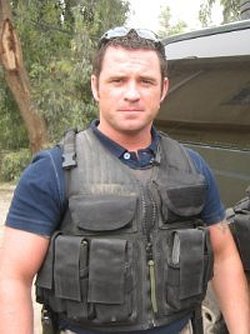
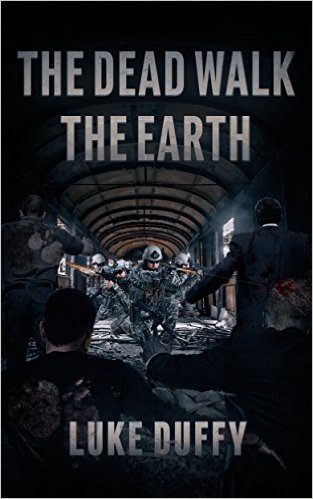
Today’s guest is Luke Duffy, author of The Dead Walk the Earth and When There’s No More Room in Hell series of books, which detail the journeys of soldiers as they fight undead hordes.

Have you ever read a zombie book written by a guy who’s skilled at jumping out of perfectly good airplanes? Having grown up in Northern England, Luke joined the Parachute Regiment at the age of eighteen. Further, he has worked in Iraq on the Private Security Circuit.

His first book, Running the Gauntlet: The Private War in Iraq, detailing his memoirs from his time on the circuit, was published in 2011.

Following that non-fiction work, he turned his attention to zombie lore.

Luke, thanks for taking a minute to talk with me today, and thank you for your service.

NOTE: BOLD=BQB; ITALICS=LUKE

Q.  I’m just going to say it. Look at you. Soldier. Private security. 51qtY0bYz1L._SX311_BO1,204,203,200_You’re a badass. As a layman, I’d think that having such vast military experience would inform one’s writing. Do you find that’s the case? Do you draw on your experience when writing your books?

A.  Absolutely. I read a few apocalyptic books before I decided to write my own. Some were great, others were awful. But one thing I found that the majority of them had in common was that most authors lacked any real experience in military matters. Don’t get me wrong, there were some great efforts out there, well researched and thought out, but there was always something missing. The mark was never quite hit. Only someone who has experienced being shot at, blown up, or felt those familiar sensations of dread and retrospect when preparing for a fight, can write a realistic battle scene. I’ve always tried to make the action as close to real as possible, and my own experiences have helped, a lot. I like to draw the reader into the pages, making them imagine what it is like to come under fire and wonder whether they would make it out. As a reader, it’s important to feel part of the story.

Also, most of my characters are actually based on real people that I have known over the years.

Q. You started out with non-fiction and then moved on to fiction. What drew you into the world of zombies?

A. In a few short words; Dawn of the Dead. I’m talking about the original. I watched it when I was about six or seven, and from there, I was hooked. It wasn’t so much the action and the zombies themselves, but more to do with the collapse of society and the slow death of humanity. Even as a kid the words ‘what if?’ rattled around inside my head. The end of civilisation has always fascinated me, regardless of the cause. But what could be more exciting, terrifying, and total, as the dead returning to life and hunting the living?

I like to imagine how different people, from various rungs of the social ladder, would react to a global crisis such as a zombie plague. I think true, true colours would quickly come to light, and I think the whole ‘good and bad’ thing would be turned on its head in many cases. I couldn’t imagine Bob Geldof and Bono still wanting to save the world, hugging plague victims and shaking hands with zombies. I think they would barricade themselves into their mansions and drop from the radar.

Q. Here’s a question I’ve thrown at a lot of writers this month. How do you find the time to write? I ask because I’m rather unfocused and if a good show comes on TV, there goes my writing for the day. So obviously, I respect a guy who has served in the military and in private security and yet still finds the time to write. Do you have any advice for aspiring scribes on how to balance work and writing?

A. My best piece of advice would be to create a routine. Finding the time and motivation to start writing, even if I’m half way through a book and on a roll, can be extremely hard. Sometimes I need to give myself a serious kick up the arse to get myself down behind my computer. Like you said, distractions can have a severe effect on you. So, what I do is ensure that I get myself into a routine. If I’m working away, most of my writing is done in the evening, which can be a real pain because my energy and enthusiasm is sapped by then.

When I’m home in the UK, it’s a little easier. I get up, have a coffee and a smoke, check the news, as well as the usual morning stuff that a man does. Then, come ten o’clock, I get to work and do at least four hours writing each day. After that, the world is my lobster and I don’t feel guilty, having the fact hanging over my head that I jacked on my work for the day because Susanna Reid was looking particularly hot on morning television and I became side-tracked.

Q. The description of The Dead Walk the Earth states, “Eight soldiers, accustomed to operating below the radar, carrying out the dirty work of a modern democracy, become trapped within the carnage of a new and terrifying world. Deniable and completely expendable. That is how their government considers them, and as the dead begin to walk, Stan and his men must fight to survive.”

“Deniable and expendable.” OK. So obviously, I enjoy being alive, so I’m not asking you to get into “If I tell you I have to kill you” territory (sorry, bad joke there) but generally speaking, is being “deniable and expendable” a fate that soldiers often find themselves facing?

A. Depends on the type of soldier and the operations being conducted. There’s no such thing as a clean government, and they all need someone to get their hands extremely dirty on their behalf, from time to time. I’ll not go into too much detail, but deniable operatives do exist. No, not like xXx and Mission Impossible. They’re just beyond fantasy. Deniable operators could be the man next door, or the guy driving your taxi. Shaved heads, huge muscles, and wearing Oakley sun glasses in the dark… don’t help.

I suppose that all soldiers are expendable, to a degree. Or at least they are viewed that way by the people who send them to war. No politician, no matter how sincerely they claim to have, has ever lost sleep or shed a tear over the men and women of their country being brought home in bags. Tony Blair and George Bush; they saw their military as mere pawns to be moved about on their own paths towards personal glory and gain.

Don’t get me wrong, I was part of the invasion of Iraq. I was amongst the first troops into Kosovo during the liberation in 99. I battled in Sierra Leone during their civil war, and I patrolled the streets of Northern Ireland before the peace process. I enjoyed the lot, but I never lost sight of the fact that not a single member of the government cared how many of my friends lost their lives.

Since joining the private circuit in Iraq, I’ve seen the attrition rate first-hand, and watched as countless friends were killed. Yes, we were in it for the money, but we were also doing a job on behalf of the US and UK governments, helping to rebuild the Iraqi infrastructure. But before long, the media stopped reporting the deaths and the government leaders forgot about us. All the while, the deaths of British and American private military soared. Expendable.

Q. Hypothetically, would today’s modern military be able to take on a zombie outbreak? Not that I spend a lot of time worrying about such a scenario, but I’d be interested to hear your take on it.

A. It depends on society as a whole, I suppose. In my books, the concept of the dead returning to life (zombies) has never been imagined. There are no books, movies, computer games, or folk tales about such creatures. So, when the dead begin to rise, it’s complete confusion, terror, and chaos. No one knows how to deal with the problem. On the one hand, some see the threat for what it is, and insist that immediate action be taken. However, on the other hand, there are the ‘bleeding hearts’ and ‘do-gooders’, bleating that even the dead are people and have rights.

Governments hesitate, fearing backlash should they act with what can be viewed as brutality and inhumanity towards the infected (yes, I believe that even on the brink of an apocalypse, the politicians would still worry about their image and future votes).

People struggle to come to terms with the outbreak. Families cannot imagine that the monsters staggering towards them are no longer their dad, mum, sister, brother, uncle – twice removed… etc.
Then there are the legal complications to consider. Most people out there follow the rules. They avoid confrontation and shy away from violence. Inflicting pain and suffering is not a desire that most human beings carry. Many would hesitate, because we have all been brought up to understand that killing is wrong, both in a legal and moral sense. Suddenly being told that it is perfectly okay to smash your neighbor’s head in with a hammer, isn’t going to have any great and immediate effect. Most people would simply lock their doors and hide. Even I would hesitate, and I don’t like my neighbors.

Morality and human emotions play huge parts in the downfall, and only when it is too late, do people realize the extent of the catastrophe and put down their delusions of decency and respect, but by then, it’s too late.

However, in reality, I believe that the military would soon have the outbreak under control. No doubt, they would all be rounded up and sent to work in Starbucks, maybe even become Labour Party members.

Q. Any plans for further zombie books in the future? Or perhaps other monsters? I read a post on your blog that made me think you find technology as infuriating as I do. That me think – soldiers vs. killer robots has some potential.

A. I take it that you’ve never watched Terminator?

Seriously though, yes, I find technology infuriating. In my opinion, it causes more trouble than its worth, even though I have found myself reliant upon it.

I have one more book to write in the current series, and then I intend to get a couple of kids’ books written that I have in mind. Yes, it’s a dramatic shift from people being eaten alive and copious amounts of profanities and violence, but I’ve had these stories in my head for some time, so I will be hanging up my zombie hat for a while. I may return in the future, if the demand is high enough and I have some new ideas, but for now, I need to step away from the genre.

Q. Luke, thanks for stopping by. Before I go, do you have any last minute advice that might help me survive the East Randomtown Zombie apocalypse?

A. Get away from the cities. Find a place that is remote. The dead are stupid, and lazy. Can you imagine them walking up mountains or fording rivers? High-ground, preferably open with good all round visibility, would be your best bet. Dense forests are also good, but they can be a double edged sword; they can’t see you, but you can’t see them, either. I wouldn’t like to have to bug-out from a wooded area during the dark hours, surrounded by zombies

If you’re stuck in an urban area, stock up, stay out of sight, and keep quiet. Remember, a barricade can never be too big, no matter how valuable that antique chest of drawers is. Trust no one, and lock your heart away in a sealed box. There’s no room for easy emotion and sentimentality in the zombie apocalypse world. Finally, make a note of all the people close by who have pets, because when the time comes, cats and dogs make good eating.

Tagged , , , , , , , , , , , , ,

#31ZombieAuthors – Day 24 Interview – W.J. Lundy – WTF

512Y4LyVAOL._UX250_

FIND THIS ZOMBIE AUTHOR ON:

Amazon          Website

Facebook        Twitter

My guest today is soldier/writer W.J. Lundy.

A veteran of the U.S. Military with service in Afghanistan, W.J. has over fourteen years of combined service with the Army and Navy in Europe, the Balkans, and Southwest Asia. W.J. is an avid athlete, backpacker and shooting enthusiast.

After being asked in jest about how it would be possible to defend against a zombie attack, W.J. began taking notes about his ideas and sure enough the Whiskey Tango Foxtrot series was born. In fact, W.J. wrote the first book of the series, Escaping the Dead in a small, spiral bound note book and later tapped it out on a keyboard once he got back home.

So it just goes to show you, 3.5 readers. You never know where or when inspiration might strike.

 NOTE: BOLD=BQB; ITALICS = WJ

61iZBK4i3+L._SX353_BO1,204,203,200_ Q. W.J., welcome. Thanks for talking to me today and thank you for your service. Obviously, I’m not a military man but I’m going to wager that “Whiskey Tango Foxtrot” translates into “WTF” or in other words, a phrase I might yell if I see a zombie, correct?

A. Absolutely, it is a bit of military vernacular. There are so many common phrases like this, and when I came up with the story line WTF fit the tale best, it really punctuates that first flash message to your brain when the target refuses to go down. It also translates nicely into civilian speak.

Q. I’m just going to throw it out there. I’m envious of your multi-tasking skills. I’m always whining that I’m never able to find the time to write and yet here you are, serving in the military, fighting evil, being an all around bad ass and such, and you still find time to write and publish. Meanwhile, if I feel a little cranky, or tired, or if there’s a good movie on HBO then I call it quits on writing for the rest of the day, so my hat goes off to you, sir. How do you do it? For aspiring scribes like myself, what advice do you have to balance work and writing?

A. I have to admit I find it very difficult. When I first started writing it was to fill the voids and occupy the down time while overseas, I could pour words on the page. As I returned from Afghanistan, my downtime was replaced with family time and many, many, other things. Now that the series and demand for more books has taken off, I typically find myself writing in the midnight hours of the day. I have pushed a lot of TV viewing and pleasure reading to the back for a while.

Breaks tend to help me and motivate my writing. Recently I was out on a 12 week training stint, it pulled me completely out of my creative zone, those reboots slow down my production, but I also come back with fresh ideas and a stronger drive to tackle a project. I like opening a document back up after one of those extended breaks, it’s like seeing something from a different POV and the characters really begin to take off again.

Q. There’s an old adage that goes, “Write what you know.” Obviously, you’re doing that here. How does your military experience inform the journey of your protagonist, Staff Sergeant Brad Thompson as he and his brothers and arms fight the zombie hordes?

A.  The biggest connection to my experience is with the character development and the character interactions, I also like to take readers to different parts of the world, places the average civilian will never experience. At the heart of the story, I like to stay true to my service background, and the military’s core values. Even if it at times it makes the story line feel stiff, I will choose realism over fantasy action scenes. In a civil breakdown like in WTF, it would all fall down to discipline and small unit leadership. Most of my real world missions have all been Joint service and I like to describe the “one team-one fight” relationship that the different branches of the service have. As long as those things remain after the balloons go up, I think we have a chance. If people stop working together and the military and law enforcement fall into anarchy and chaos we are all F’d….

Q.  Divided We Fall, which is Book Six of the Whiskey Tango Foxtrot series, has currently sold 150,000 copies and has 1,000 five star reviews by Amazon customers. Admittedly, I’m no publishing expert, but I am a book nerd and in my experience, that’s pretty amazing. The average of all your customer reviews is 4.8 and to put things in perspective, George R.R. Martin’s Game of Thrones has a 4.5 average. I’m not putting down Game of Thrones, but it just goes to show even the likes of the great George R.R. will have the occasional crabby reviewer throw a monkey wrench in the works. Can you take my 3.5 readers and I under your wing, oh wise one, and put us on the path to greatness with a few writing tips? How are you able to acquire such a high level of customer satisfaction?

A. Honestly I am amazed at my readers and the kind reviews I have received. The best thing I can say is write in your own voice, and don’t try to paint a picture in someone else’s vision … If that makes sense. I’ve helped a few aspiring writers and some of the worst things I’ve read is when a writer is trying to mimic another work, or write in someone else’s voice. Just tell the story the way you’d tell it to a friend, describe the scenes the way you see them. And of course find a quality trusted editor that you like and enjoy talking to. If you don’t like your editor, or have a bond with them it will show in the end result.

Q. Do you have any plans to branch out and possibly have the military fight other types of monsters? Just spitballing here, but Army Dudes vs. Cthulhu would be pretty sweet.

A. The Darkness Series is an Alien\Zombie hybrid tale, I have big things in mind for that series. The tone really hardens in the second book of the series The Shadows. If you like Body Snatchers with a mix of Battle of Los Angeles I think you will dig The Darkness. It is a fast developing Science fiction horror tale with some hard hitting guerrilla warfare dropped on top. The setup has been laid down with TD and I am really letting things go wild in TS.

Q. W.J. thanks for taking the time to speak with me today. Before I go, do you have any last minute advice that might help my friends and I brave the East Randomtown Zombie Apocalypse?

A. Zombies are synonymous with any threat (hurricane, terror attack, random violence). Stay vigilant, stay alert and stay alive. Whenever possible travel in pairs, know when to fight and when to run, and when you must fight, then fight as a team. Know your terrain and most importantly, always have a plan and a place to regroup with family if you lose comms.

Tagged , , , , , , , , , , ,

#31ZombieAuthors – Day 23 Interview – Peter Cawdron – Outsmarting Zombies

41CibZvigqL._UX250_

FIND THIS ZOMBIE AUTHOR ON:

Amazon        Website      Twitter

My guest today is Peter Cawdron, who comes from the land down under.  I don’t have to pay the Men At Work a royalty for saying that because Peter is an honest to God Australian zombie enthusiast.

Peter’s the author of the Z is for Zombie series of books which include What We Left Behind and All Our Tomorrows.  These books tell the story of teenager Hazel, who in the midst of a zombie apocalypse, searches for Steve, David, and Jane, the only people who ever understood her.

An avid fan of such classic science fiction writers as Philip K. Dick, Arthur C. Clarke and Michael Crichton, Peter is also a prolific science fiction author in his own right.

I wonder if there’s an extra charge to call Australia?  Aw screw it, the bill for this phone goes to Alien Jones anyway.

G’day Peter.

NOTE: BOLD=BQB; ITALICS=Peter

Q.  I just discovered that my perpetually angry uncle, who I thought never understood me, is in fact, the only person who ever understood me and what I need to make it in the world.  Unfortunately, he’s dead, though he visits me in ghost form from time to time.  Your protagonist, Hazel, feels like only three people understand her.  Is she really that confounding or is it typical teenage “no one gets me” angst?

41CT9h3vOuL._SX311_BO1,204,203,200_ (1)A.  Teenage angst is cliche, and yet there is an element of personal growth we all go through where we’re learning about the world afresh. I don’t know that it stops as an adult, at least, it shouldn’t. It hasn’t for me. I’m always learning, and not just intellectually. Emotional learning is often more important than facts or figures. I think that’s one reason why coming-of-age books have such universal appeal. It’s a chance to re-learn and renew, regardless of how old we may be. 

In my novel What We Left Behind and the sequel All Our Tomorrows, we see life through the eyes of a teenager struggling toaccept the end of the world, fighting to make a change. All too often, it is the upcoming generation that is the catalyst for change. Us old farts need to respect that, listen and understand. It’s the youth of today that can change tomorrow, and that’s the message common to my novels as well as books like Hunger Games, Maze Runner, and so many others. Change is good. It’s the status quo that’s scary.  

Q.  As a zombie fan, I’ve noticed that in most zompoc tales, zombies are never referred to as “zombies.”  They’re “walkers” or “the undead” or “creepers” and so on but never zombies.  Your characters refer to them as “Zee.”  Why is that?  Is “zombie” too informal?  Will we ever crack open a novel where a writer has a character saying, “Holy crap!  It’s a zombie!”

A.  Oh, they’re called zombies in What We Left Behind as well as Zee, but Zee makes things more personal, and I think that’s important. Zombie stories are notorious for being impersonal. Survivors are often portrayed as brutal if not more brutal than the zombies themselves, whereas zombie stories are really about survivors. And what is a zombie but a survivor that fell and failed. Zee makes that more poignant, reminding the reader that zombies aren’t simply cannon fodder. To the survivors, they once were as we are, and the term Zee keeps that fresh in mind.   

Q.  How did you get into the zombie craze?

A.  My kids love The Walking Dead, and I enjoy it too, but I get frustrated with the inaccuracies. Gasoline, as an example, has a shelf life of about nine months. Diesel’s a little better, but will be pretty nasty after a couple of years. So at some point everyone’s going to be walking, or riding bicycles or horses. The SUV might look like the ultimate zombie killing machine, but it’s not sustainable, so in All Our Tomorrows, they drive around in a Tesla with the doors stripped off and the seats torn out to keep the weight down, charging the car with solar panels. For me, it’s fun to consider practical stuff like that. 

Zombies are dumb, right? So what’s the greatest weapon in the zombie apocalypse? Smarts. I’ve tried to write novels that have smart, unique solutions to the zombie apocalypse rather than relying on shotguns and machetes all the time. Shotguns might work on the zombie in front of you, but the noise is going to bring in a dozen more zombies, while a machete is just plain stupid. It’s going to get stuck every time. 

41IgGgymVqL._SX331_BO1,204,203,200_Q.  You’re also a sci-fi aficionado.  One work of yours that caught my eye is Little Green Men, about a crew of space travelers who set down on a frozen planet and are attacked by, sure enough, little green men.  Is a story about trustworthy, non-murderous aliens possible?  Does it say anything about us as humans that we have a tendency to think the worst about the possibility of life on other planets?

And by the way, I have a colleague named Alien Jones who is in fact, a little green man.  He’s been totally above board thus far, but do you think I should keep an eye on him?

A.  Little Green Men is brutal. It’s a homage to Philip K. Dick and has an alienesque feel to it (Alien Jones would love it), but yes, it is possible to write about trustworthy, non-murderous aliens. Anomaly is my best selling novel, having sold over 75,000 copies.  Anomaly was my debut novel and even today, a dozen stories down the road, it still outsells everything else I’ve written. If you enjoyed Carl Sagan’s Contact, you’ll love Anomaly.

413RLsZCgPL._SX311_BO1,204,203,200_
As for Alien Jones, he’s clearly hampered by a paranoid companion 🙂

Q.  On your Amazon page, you talk a bit about the difference between general and “hard” science fiction.  Could you explain it for my 3.5 readers?

A.  Hard science fiction is a misnomer. 

Science fiction shouldn’t be hard to understand or hard and inflexible. There’s merit in keeping scifi as accurate and plausible as possible. There’s always a degree of handwavium in science fiction when authors start projecting their thoughts into the future, but the limitations of concepts like the speed of light actually add to the realism of a story. 
As much as I love the Star Trek reboots, I cringe when they ignore common sense. There’s one scene in Star Trek Into Darkness where Kirk is on the Klingon home world some undisclosed number of light years away from Earth, and he calls up Scotty on his handheld communicator. Scotty is in a bar on Earth and answers Kirk’s technical question. To me, that’s a wasted opportunity. Even if Kirk was somewhere within our solar system, say on Mars, Scotty couldn’t have a realtime chat like that, he’d be waiting at least half an hour for a message to arrive. Communication between star systems would be like the letters of the 1700s taking months to years to transit the globe. Star Trek Into Darkness wasted a wonderful opportunity, as instead of taking the lazy, easy way out, the writer could have used that limitation to drive up the tension. Sure, Scotty’s got the answers. But he’s not there, so Kirk has to figure it out on his own and that’s far more rewarding for the audience than watching Kirk being given a get-out-of-jail-free card. 
Hard science isn’t difficult, it’s just plausible and believable, and it makes stories more gritty and realistic. 

Q.  Peter, thanks for taking my call.  Before I go, do you have any advice that might help my friends and I survive the East Randomtown Zombie Apocalypse?

A.  Think before you act. Remember,

  1. You’re smart. They’re not. 
  2. They have numbers. You don’t.  
 Keep those two facts in mind and you’ll do fine. Oh, and keep a copy of What We Left Behind handy, you might find some good tips in there. 
Tagged , , , , , , , , , , , , , , , ,

#31ZombieAuthors – Day 22 Interview – Ryan Casey – Zombies and TV Style Serialization

61TuZz70E0L._UX250_

FIND THIS ZOMBIE AUTHOR ON:

Amazon          Website        Twitter

By: Special Guest Interviewer, Alien Jones

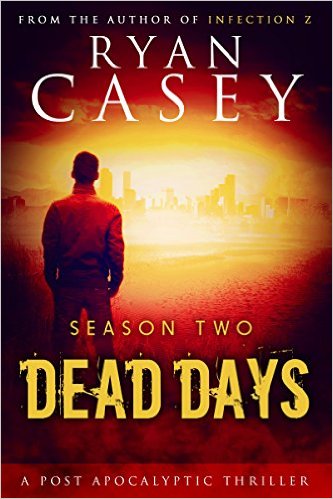
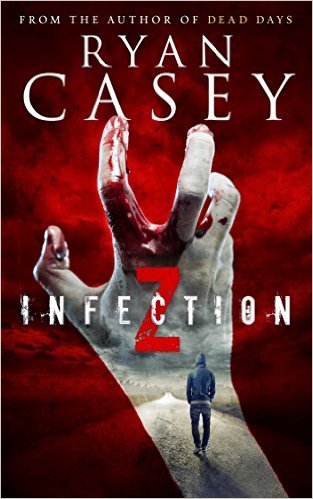
Attention all humans. Today’s guest is Ryan Casey, author of the critically acclaimed zombie apocalypse series, Dead Days. Zombie fans will also enjoy Infection Z and mystery buffs should check out the Brian McDone Mysteries series.

Known for tales filled with dark, page-turning suspense, complex characters and knockout twists, Casey has a BA in English with Creative Writing from the University of Birmingham. A resident of the United Kingdom, he enjoys American serial television and wastes too much time playing football manager games.

Thanks for taking my call, Ryan. I hope you don’t mind being interviewed by an alien. BQB was kind of a wuss about touching a phone covered in intergalactic goo. Go figure.

NOTE: BOLD=Alien Jones; ITALICS=Ryan

Q. Let’s get the important stuff out of the way. Are we talking American football as in the NFL or the game Americans call soccer but the rest of the world calls football?

A. Oh, soccer. Absolutely soccer. I’m a massive sports fan all round though and NFL’s profile is definitely growing in the UK, much like soccer in the US. Football Manager games are the height of addiction, mind. If you want to offer up a portion of your productivity to the gods of procrastination, go ahead and pick up a copy. You’ll absolutely regret it.

510gVdAGSWL._SX331_BO1,204,203,200_Q. Dead Days is the story of a group of survivors in a UK based zombie apocalypse. The description of Season Two of Dead Days states, “the only survivors were those willing to sink to the most brutal depths of humanity in order to further their own existence.”

So I just have to ask, if only the most depraved are able to survive an apocalypse, should we be concerned that a-holes are destined to inherit the Earth?

If I’m being cynical, I’d say yes, that’s a very big concern. Nice guys really do finish last a lot of the time, as I’ve unfortunately discovered through experience on way too many occasions. So if you want to survive an apocalypse, get practicing being a depraved arsehole — fast!

In all seriousness though, I don’t think it’d quite play out like that. I think humanity would struggle, naturally, especially if communications and luxuries of a material world suddenly become irrelevant. I like to think there’d be a lot of room for good, positive movements, too. They just don’t make for quite as good reading.

Q. Piggybacking on that last question, when a zombie apocalypse requires survivors to “sink to the most brutal depths of humanity,” is there anyone left for the reader to root for?

Yes! Absolutely. I love these characters and apparently so too do readers. I think what makes them so relatable — or more specifically, empathetic — is that they all go through shit. They all make bad choices. They all do things in the heat of the moment that stay with them, haunt them.

But the difference between the heroes and the villains of Dead Days? The heroes overcome their demons. They face up to their sins, take responsibility. The villains succumb to their problems. Which, unfortunately, often makes them even more dangerous.

Q.  A lot of people want to write but not as many study writing formally. You studied Creative Writing at the University of Birmingham. Did you find that experience helpful and would you recommend Creative Writing as a major to other aspiring writers?

I found it a helpful experience. There were some good teachers and some fantastic fellow students, for example Stuart Meczes, author of the brilliant HASEA urban fantasy novels. But I’d say it’s all just a part of the wider learning program of being a writer. The learning doesn’t stop when we leave university. The learning continues, constantly.

I believe the only way to keep writing fresh is to consistently push myself. I want the novel I’m working on to be the best novel I’ve ever written… and for the next novel to be even better. I write a lot, but I throw away even more. Seriously, you do not want to see my unfinished novels folder.

Q. You like serialized television and it shows in your writing. In fact, Dead Days is offered to readers in a serialized format, meaning episodes come out at regular intervals to eventually form a seasonal box set. As an author, what inspired you to present your work in this way rather than in one large novel?

Dead Days was an experiment that worked out beautifully. I’m a big fan of serialised television, like you note, and was particularly influenced by this golden age of television we’re living in. Shows like Breaking Bad, Game of Thrones, True Detective, The Walking Dead — some truly stellar writing, better than anything the movie industry offers at present, in my humble opinion.

I always thought the serialised form went hand in hand with this generation of shorter-attention spans and constant distractions, but I was disgruntled with how many “serial” projects were actually just novels broken up into parts.

The intention of Dead Days was, and still is, to transform a television experience onto the page, and not just tear a novel to pieces for financial gain.

Q. A number of authors are embracing the serialized TV style format of writing. For aspiring writers out there, are there any advantages to this style? Any disadvantages?

A major advantage is, like I mentioned, how hand-in-hand with the television format it goes. I think in a world of infinite distractions—iPads, smartphones, Netflix, news—the serialised form is a great way to deliver tighter experiences to readers, so they can enjoy the story then get on with other elements of their busy lives.

A disadvantage is that you have to learn TV structure. As I mentioned, far too many writers just jump on the serialised craze and split their novels into chunks because they think it’ll lead to financial riches. That’s not how it works. If you want to write a serial, you have to learn the craft of television writing before you jump into it. You have to learn about episodic arcs, series arcs, all kinds of things like that. To me, it’s not a negative because I like learning and already had some experience in TV writing. But if you don’t like doing the work, it could be a disadvantage.

51pY7O7uCLL._SX311_BO1,204,203,200_ Q. Infection Z is your other zombie apocalypse series. It follows Hayden McCall, a jobless layabout in his mid-twenties. Assuming his landlord has paid him a visit to collect the overdue rent, Hayden learns that his landlord has become zombified and the story begins. Is it a challenge to write an underdog’s way out of a zompoc? Would it have been easier had Hayden been a muscle bound military man/weapons expert? But of course, would Hayden have been as relatable to the average reader?

A. I don’t strictly believe in ‘write what you know,’ but I believe in ‘write what you can empathise with.’ I have more in common with a lazy underdog than a military expert (unfortunately), so I just find it easier to get into the heads of characters like Hayden. Only difference between him and me is he overcomes his demons. I’d be the guy locking himself in the bathroom whimpering until the zombies finally barged their way inside…

Q. Ryan, thanks for taking the time to be interviewed by an alien. Before I go, do you have any last minute words of wisdom that might help my human charges and I survive the East Randomtown Zombie Apocalypse?

I’d get punching that alien stomach of yours some more. If there’s a space phone in there, who knows what else is hiding within? A space machete? A space rifle? A space CURE?! You’ll only find out by trying.

Tagged , , , , , , , , , , , , , , , , ,

#31ZombieAuthors – Day 21 Interview – Al K. Line – Zombie Botnets, Literally!

zombiebotnet

FIND THIS ZOMBIE AUTHOR ON:

Amazon      Website

Facebook

My guest today is Al K. Line.

3.5 readers, you might want to log off Twitter for a moment.

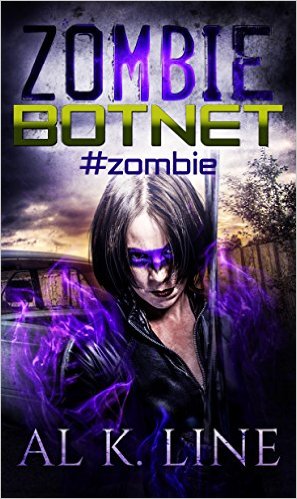
Al’s the author of the Zombie Botnet series. The mayhem begins when a devastating computer virus delivers subliminal data packets via social media, turning computer users the world over into murderous creatures.

A resident of rural England, when Al isn’t busy writing, he spends his time with his wife, sons, and dogs, the latter of which he notes he has too many.

Al, welcome.

NOTE: BOLD=BQB; ITALICS=AL

51wVI4sSyfL._SX295_BO1,204,203,200_ Q.  You’re the twenty-first zombie author I’ve interviewed this month and I have to admit, I honestly thought I’d of heard it all by now, but people becoming zombies via a computer virus? For the less tech savvy among us, can you explain how this works in your books?

A.  Sure. Ven, the woman behind the “bit of bother,” lets loose a computer virus designed to infect millions of devices and allow her to get up to no good. Unfortunately, it all gets a little out of hand. The virus she unleashes has been compromised and the data packets go viral. An embedded subliminal message in the form of a video basically rewires the brain of anyone that views it and then it’s game over — welcome to zombieville.

Q. How did you come up with this idea?

A. The term zombie botnet is well known within the hacker community, it’s a way of describing a huge array of devices that have been infected and can be manipulated for all manner of nefarious naughtiness. What if the zombie botnet really could do as the name implies? It came from there.

Q. Everywhere I go, people are glued to technology. Phones. Laptops. Tablets. Everyone’s checking Facebook, Twitter, or some other site and usually the latest update is something as trivial as “I just blew my nose.” Do you think we might be zombies already?

A. I love technology, use it daily, and my career relies on it, but yeah, it can get out of hand. It’s the change it has caused to society that I find most interesting, making people slaves to the latest trend or social media platform — let’s face it, if we lose our internet connection for a few minutes we begin to panic, right? This is what the series plays on: our inability to look away. The first thing we do when we hear of a disaster is to check Twitter or Facebook, well, what if those platforms are the very ones causing the problem? People would still look, they can’t help it. It’s too ingrained into the fabric of our techno-reality now to ever go back.

Q. I notice this series is actually considered half-horror/half-comedy. I have to say, the idea of society being hoisted on its own technological petard seems rife with the ability to provide social commentary, not to mention a joke or two.  Personally, I’m so addicted to social media that if all I have to do not to become a zombie is not check Twitter, I’m not sure I could do it. How are you able to combine humor with horror, when the two normally don’t mix well?

A. You gotta see the funny side, right? It’s the whole premise. Yes, there is social commentary, but it isn’t judgmental. We all have our obsessions, our hangups and our needs, and the absurdity of how the infection is caused screams for a bit of a laugh at our own expense. Plus, to be honest I can’t help myself. Characters suddenly appear on the page (I mean computer screen really) and they often happen to be rather comical — there’s no stopping it once the words somehow jump from my brain to the developing book.

Q. Al, your book features people being turned into zombies via subliminal messages. Just now, a real live zombie actually just jumped out of my computer screen. Have you ever heard of such a thing happening in zombie lore and any ideas on how to defeat such a menace?

A. Oh, loads, it happens all the time. The best thing to do is to scream really loud and run really fast — only pausing to update Facebook and check if anyone has posted anything on Twitter that could help in 140 characters or less.

Q. Thanks for the interview, Al. Before I go, do you have any last minute advice that might help my friends and I survive the East Randomtown Zombie Apocalypse?

A. Nope. You’re going be dead any moment. Actually, should I even be answering this? Hello? I knew it, dead already, brains all over the floor. There’s probably some zombie granny chewing on your intestines at this very moment. Oh, don’t forget to follow me on Facebook at https://www.facebook.com/authoralkline

Yeah, I get the irony.

Tagged , , , , , , , , , , , , , , , , , , , , ,