

FIND THIS ZOMBIE AUTHOR ON:
By: Special Guest Interviewer, Alien Jones
Attention all humans. Today’s guest is Ryan Casey, author of the critically acclaimed zombie apocalypse series, Dead Days. Zombie fans will also enjoy Infection Z and mystery buffs should check out the Brian McDone Mysteries series.
Known for tales filled with dark, page-turning suspense, complex characters and knockout twists, Casey has a BA in English with Creative Writing from the University of Birmingham. A resident of the United Kingdom, he enjoys American serial television and wastes too much time playing football manager games.
Thanks for taking my call, Ryan. I hope you don’t mind being interviewed by an alien. BQB was kind of a wuss about touching a phone covered in intergalactic goo. Go figure.
NOTE: BOLD=Alien Jones; ITALICS=Ryan
Q. Let’s get the important stuff out of the way. Are we talking American football as in the NFL or the game Americans call soccer but the rest of the world calls football?
A. Oh, soccer. Absolutely soccer. I’m a massive sports fan all round though and NFL’s profile is definitely growing in the UK, much like soccer in the US. Football Manager games are the height of addiction, mind. If you want to offer up a portion of your productivity to the gods of procrastination, go ahead and pick up a copy. You’ll absolutely regret it.
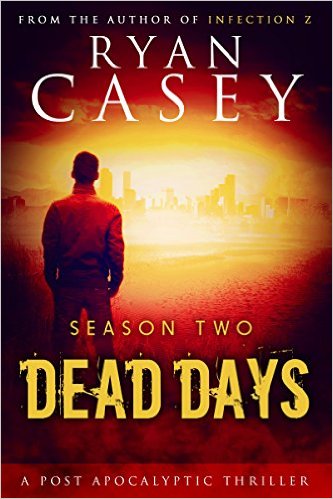 Q. Dead Days is the story of a group of survivors in a UK based zombie apocalypse. The description of Season Two of Dead Days states, “the only survivors were those willing to sink to the most brutal depths of humanity in order to further their own existence.”
So I just have to ask, if only the most depraved are able to survive an apocalypse, should we be concerned that a-holes are destined to inherit the Earth?
If I’m being cynical, I’d say yes, that’s a very big concern. Nice guys really do finish last a lot of the time, as I’ve unfortunately discovered through experience on way too many occasions. So if you want to survive an apocalypse, get practicing being a depraved arsehole — fast!
In all seriousness though, I don’t think it’d quite play out like that. I think humanity would struggle, naturally, especially if communications and luxuries of a material world suddenly become irrelevant. I like to think there’d be a lot of room for good, positive movements, too. They just don’t make for quite as good reading.
Q. Piggybacking on that last question, when a zombie apocalypse requires survivors to “sink to the most brutal depths of humanity,” is there anyone left for the reader to root for?
Yes! Absolutely. I love these characters and apparently so too do readers. I think what makes them so relatable — or more specifically, empathetic — is that they all go through shit. They all make bad choices. They all do things in the heat of the moment that stay with them, haunt them.
But the difference between the heroes and the villains of Dead Days? The heroes overcome their demons. They face up to their sins, take responsibility. The villains succumb to their problems. Which, unfortunately, often makes them even more dangerous.
Q. A lot of people want to write but not as many study writing formally. You studied Creative Writing at the University of Birmingham. Did you find that experience helpful and would you recommend Creative Writing as a major to other aspiring writers?
I found it a helpful experience. There were some good teachers and some fantastic fellow students, for example Stuart Meczes, author of the brilliant HASEA urban fantasy novels. But I’d say it’s all just a part of the wider learning program of being a writer. The learning doesn’t stop when we leave university. The learning continues, constantly.
I believe the only way to keep writing fresh is to consistently push myself. I want the novel I’m working on to be the best novel I’ve ever written… and for the next novel to be even better. I write a lot, but I throw away even more. Seriously, you do not want to see my unfinished novels folder.
Q. You like serialized television and it shows in your writing. In fact, Dead Days is offered to readers in a serialized format, meaning episodes come out at regular intervals to eventually form a seasonal box set. As an author, what inspired you to present your work in this way rather than in one large novel?
Dead Days was an experiment that worked out beautifully. I’m a big fan of serialised television, like you note, and was particularly influenced by this golden age of television we’re living in. Shows like Breaking Bad, Game of Thrones, True Detective, The Walking Dead — some truly stellar writing, better than anything the movie industry offers at present, in my humble opinion.
I always thought the serialised form went hand in hand with this generation of shorter-attention spans and constant distractions, but I was disgruntled with how many “serial” projects were actually just novels broken up into parts.
The intention of Dead Days was, and still is, to transform a television experience onto the page, and not just tear a novel to pieces for financial gain.
Q. A number of authors are embracing the serialized TV style format of writing. For aspiring writers out there, are there any advantages to this style? Any disadvantages?
A major advantage is, like I mentioned, how hand-in-hand with the television format it goes. I think in a world of infinite distractions—iPads, smartphones, Netflix, news—the serialised form is a great way to deliver tighter experiences to readers, so they can enjoy the story then get on with other elements of their busy lives.
A disadvantage is that you have to learn TV structure. As I mentioned, far too many writers just jump on the serialised craze and split their novels into chunks because they think it’ll lead to financial riches. That’s not how it works. If you want to write a serial, you have to learn the craft of television writing before you jump into it. You have to learn about episodic arcs, series arcs, all kinds of things like that. To me, it’s not a negative because I like learning and already had some experience in TV writing. But if you don’t like doing the work, it could be a disadvantage.
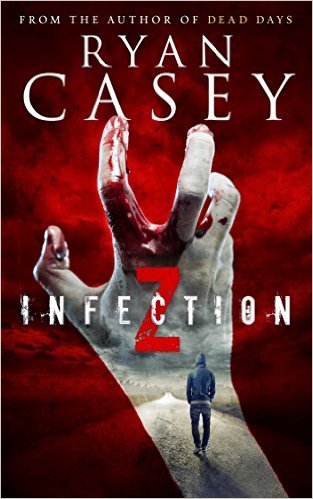 Q. Infection Z is your other zombie apocalypse series. It follows Hayden McCall, a jobless layabout in his mid-twenties. Assuming his landlord has paid him a visit to collect the overdue rent, Hayden learns that his landlord has become zombified and the story begins. Is it a challenge to write an underdog’s way out of a zompoc? Would it have been easier had Hayden been a muscle bound military man/weapons expert? But of course, would Hayden have been as relatable to the average reader?
A. I don’t strictly believe in ‘write what you know,’ but I believe in ‘write what you can empathise with.’ I have more in common with a lazy underdog than a military expert (unfortunately), so I just find it easier to get into the heads of characters like Hayden. Only difference between him and me is he overcomes his demons. I’d be the guy locking himself in the bathroom whimpering until the zombies finally barged their way inside…
Q. Ryan, thanks for taking the time to be interviewed by an alien. Before I go, do you have any last minute words of wisdom that might help my human charges and I survive the East Randomtown Zombie Apocalypse?
I’d get punching that alien stomach of yours some more. If there’s a space phone in there, who knows what else is hiding within? A space machete? A space rifle? A space CURE?! You’ll only find out by trying.




 Bookshelf Battle