Tag Archives: horror

BQB’s Zombie Apocalypse Survivor’s Journal – Day 29

All eyes were on me as I walked to the center of the gym to address the survivors.

“People of East Randomtown,” I said. “First, thank you for voting for me to be your Mayor. Just want to say it’s a job I don’t want at all and as soon as the zombie apocalypse is over, I look forward to not being in charge of a town full of inbred dummies who nominate their leaders based on what TV show they appeared in for thirty seconds in the 1980s, or whether or not they have a blog with an audience of 3.5 readers.”

A random citizen shouted from the crowd, “Don’t forget the man who met James Van Der Beek! Leo McKoy will ALWAYS be better than you, BQB!”

“Damn,” I said. “This town is really divided. Anyway, I’d like to propose that we all pack up everything, take all the cars left in the parking lot, and travel by convoy to my home, the Bookshelf Battle Compound, where the forty foot high walls of my home base will keep us safe. There, we’ll ride out the zompoc together. What do you say?”

“You’ll never be as good as Doug Hauser!” a woman yelled. “I’ll never trust a leader who wasn’t in a 1980’s cop show for thirty seconds!”

I wasn’t without my defenders.

“Silence, all of you!” cried Father O’Neil, the parish priest at Our Lady of Random Suffering, East Randomtown’s Catholic Church. “Let he who is without 3.5 readers cast the first stone!”

“Thank you father,” I said. “So listen. Talk amongst yourselves, survivors. Hash it out, then take a vote.”

The survivors talked to each other. The conversations were loud, wild, and full of inappropriate hand gestures.

“BQB,” VGRF said. “What about Morganstern? Won’t he blow us all up if we leave the rec center with you?”

“He’d never kill all these people just to get to me,” I said. “Would he, AJ?”

“He totally would,” AJ said. “However, the zombie hordes outside the rec center fence grow larger and nastier every day. It’s only a matter of time before they crash through our defenses and gobble everyone up. Your plan to reconvene to BQB HQ is risky, but it is our only hope.”

A few minutes later, Mario called out from the crowd.

“Mayor Battler, we’ve reached a decision.”

“And?” I asked.

“The results are as follows,” Mario said, reading off a piece of notebook paper. “Suck It, Nerd. 499 votes. What the Hell, Let’s Go to the Geek’s House? 501 votes.”

“Wow,” I said. “Not exactly a mandate but it’s a majority. Thank you ladies and gentlemen. Take the rest of today and all day tomorrow to pack your things. Grab all the food and supplies. Don’t leave anything important behind. We’ll leave tomorrow night as soon as it gets dark.”

“Good idea, BQB,” Alien Jones said. “A night move will make it harder for Morganstern’s drones to spot you.”

“Are you going to call another zombie author?” VGRF asked.

“No,” I replied. “You know, I’ve been thinking. This zombie author interview series has been irresponsible on my part. Here I am, responsible for the whole town’s safety, and I’ve been wasting time promoting my blog with zombie author interviews. Sorry, but I can’t even spend one more second on zombie authors.”

Alien Jones forked over the space phone and pointed to a book with a massive, red eyed zombie dinosaur with a mouth full of enormous, razor sharp teeth.

“Holy Crap, that’s the coolest thing I’ve ever seen,” I said. “Screw the town. Let’s get these dudes on the space phone immediately.”

Tagged , , , , , ,

Alien Jones’ Zombie Apocalypse Survivor’s Journal – Day 27

Night came and went and eventually Video Game Rack Fighter passed out from exhaustion, lying in bed next to her beau, Bookshelf Q. Battler, holding him tightly.

BQB, the illustrious host of a blog with a mere 3.5 readers, barely held on.  I scanned him with my, well, I’ll keep calling it a space phone because that’s about all your insignificant human brains could ever possibly understand.

The nerd’s life pulse was growing dim.

Suddenly, a hole was vaporized in the ceiling by a red beam of light.  Another beam of gold light took its place and my Supreme Overlord, the Mighty Potentate, materialized in the room, golden scepter in hand, oversized crown on his head.

Three of his best security aliens materialized as well.  The MP is too important not to have protection.

I dropped to my knees and proceeded to flagellate myself, as is the custom of my home world whenever one is in the presence of The Potent One.

“Oh Great Potentositude!”  I said as I flailed my arms up and down.  “I am not worthy of your presence!  Why do you honor one as lowly as I with your magnanimous appearance?”

The Mighty Potentate only had one volume – LOUD.  He didn’t have a quiet setting.  He shouted everything he had to say in the tone of a being that was planning to murder you.

Probably because most of the time he usually is but let’s not get bogged down by semantics.

“JONES!  SPARE ME YOUR RUMP SWABBERY AND STAND AT ONCE!”

I did.  My ruler pointed at BQB, who was lying there with his mouth agape.

“Why is the Chosen One is such a horrid state?  Explain yourself immediately or be vaporized!”

The security aliens cocked and locked their vaporization blasters, ready to turn me into a fine mist.

Vaporization was the Mighty Potentate’s solution for everything.  I can’t say it didn’t work for him.  My home world ran like a well oiled machine, thanks to constant, non-stop threats of vaporization.  In fact, your human leaders might want to look into this practice.

“Oh He of Vast Potent Powers,”  I said.  “Please forgive me for my failure.  Bookshelf Q. Battler, er, ‘The Chosen One’ was forced into a trial by zombie combat and was injured.”

“And you let it happen!”  the Mighty Potentate said.  “Do you know if the Chosen One dies, I’ll be left with no choice but to break Intergalactic Space Law, separate our planet from the Intergalactic Space Organization, and conduct a full scale invasion of Earth just to prevent the spread of reality television to the rest of the universe?”

“Mighty Potentate,”  I said.  “I am so sorry I have failed you.  Truly, an insect such as I does not deserve to bask in the glorious rays of your pleasant visage.  It’s just that you’ve put down so many edicts that sometimes I get confused.  ‘Protect the Chosen One.’  ‘Don’t do anything that will draw too much attention from the humans.’  ‘Do not interfere in human affairs.’  It’s like I can’t follow one of your orders without breaking another one.’”

The Mighty Potentate’s face turned into one of furious anger.  His volume went off the charts.

“DO YOU DARE QUESTION THE COMMANDS OF YOUR SUPREME OVERLORD?!”

I trembled.  The Mighty Potentate was the only being in the universe that ever made me afraid.  I’m not sure if it was because I was scared of vaporization, saddened by the possibility of disappointing a ruler I had tremendous respect for, or a combination of the two.

“No!  Not at all, oh Mightiest of Potentates!  It was my brain, much inferior to yours, that wasn’t able to figure out how to protect the Chosen One and follow your edicts at the same time!”

“Believe it or not, Jones, but the last thing I want to do is conquer Earth,”  the Mighty Potentate said.  “Are you aware that Zamfram’s Intergalactic Real Estate Guide lists Earth as the cheapest property in the entire universe?  I won’t even be able to pay a junk service to haul this miserable excuse for a planet away.”

I could tell the Mighty Potentate was ready to rant.  I didn’t interrupt.

“Do you know these hairless apes have been around for nearly two hundred thousand years and they only figured out six hundred years ago that if they sail from one side of the planet to the other they won’t fall off?”

“Imbeciles for certain,” I said.  “Humans surely rival the Moloklaxons as the dumbest species.”

“Holy Flarking Shazbo,”  the Mighty Potentate continued.  “They destroy their protective ozone layer with products that make their hair shinier.  They wage war after war in the name of one invisible man in the sky because they don’t like the idea that another group of humans would believe in a different human in the sky.  And they consume cheese stuffed crust pizza by the truck load then wonder why they’re fatter than space cows.”

“It’s a real mess down here, MP,”  I said.  “I’ve done the best I can to inform the humans as to how they can change their ways with my ‘Ask the Alien’ column.

“All of this nonsense I can put up with,”  the Mighty Potentate said.  “But having my television invaded by programs about supermodels with large behinds who go shopping, plumbers who fix toilets, grizzly pawn shop owners, and stereotypical Italians from New Jersey who do nothing but party and get spray on tans is where I draw the line.  I will send my entire armada to take over this planet to prevent that from happening.”

“I understand, Mighty One,”  I said.  “You’re very protective of your beloved scripted programming.”

“Damn straight!”  the Mighty Potentate said.  “Why would anyone watch reality TV show when they can take in a drama full of twists and plot turns?  It makes no sense!”

“Another human mystery I suppose,”  I said.

“This is a sad state of affairs,”  the Mighty Potentate said.  “The Chosen One is the only human holding my back from a global conquest.”

I had a question and as I’m sure you realize, posing a question to an unquestionable ruler is a sticky wicket to be sure.

“Mighty Potentate,”  I said.  “Know that I, your humble servant, would never question your mandates, but I have a question that will help my pitiful brain understand your declarations better.  Are you certain that BQB is, in fact, the Chosen One?”

“DO YOU DARE CAST DOUBT ON YOUR MIGHTY POTENTATE?”

“No!  Not at all!”  I said.  “It’s just…well…all BQB does is go to work then come home, watch TV and eat nachos.  Once in awhile he tries to write, gets a sentence or two down, then announces, ‘F%$k it!  I’m watching Game of Thrones!  If there is greatness in him, it must be buried deep as I have yet to see it.”

“Rest assured it is there, Jones,” the Mighty Potentate said.  “I have foreseen in a vision that this nerd will write a book so witty, so charming, so amazing that the humans will rise up and demand better from the entertainment industry, and reality television will be no more without the need of an alien invasion!”

“Your visions are never wrong,”  I said.

“Of course they aren’t!  Did I not foresee that the Moloklaxons would become the A-Holes of the Universe?”

“You did.”

“Did I not foresee that Morloff Delta would become a safe haven for intergalactic space prostitutes?”

“No one but you saw that one coming, Oh Wise Potentate,”  I replied.

“And who foretold that a race of sentient iguanas would overthrow the Voscari System?”

“You did, MP,”  I said.  “The Prime Iguana is truly a bloodthirsty ruler.”

“Then stop questioning your unquestionable ruler and get with the program, Jones!”  the Mighty Potentate said.  “Help this nerd get his writing career off the ground or it’s the vaporizer for you.”

“I understand,”  I said.

“Good,”  the Mighty Potentate said as he put a hand on my shoulder.  “Jones, I would not have tolerated a failure like this from any of the other aliens under my command.  I hope you know that.”

“I had a feeling.”

“Do you know why I give you such leeway?”  the Mighty Potentate asked.

“I hope you will enlighten me, oh Great Enlightened One.”

“I am in the twilight of my life, Jones,”  the Mighty Potentate explained.  “Beings of our species rarely last longer than a million years.  I’m just shy of my 990,000 birthday.  I’ve got about ten grand’s worth of years left before my body’s organs liquefy into a putrid stench.”

“Oh Potentate,”  I said.  “Please don’t say such things.  Why, you barely look a day over 500,000.”

“Well I work out,”  the Mighty Potentate said.  “Even so, while I have conquered much of the universe, I cannot conquer death.  I must know that my empire will be in good hands when I scream the great scream of death as my body turns itself inside out as happens to all of our elderly.”

“I cannot fathom the idea of a Mighty Potentate-less world,”  I said.

“You won’t have to,” the MP said.  “For all this time, I have been grooming you to become the next Mighty Potentate.”

My life juices boiled with shock.

“Me?”

“You,”  the Mighty Potentate said.  “Why do you think I appointed you to the Esteemed Council of Potentate Advisors?  There’s the Esteemed Warmonger One, who leads all of my troops into battle.  The Esteemed Medical One, who advises me on the latest advancements in medicine, and so on.  But there can only be one Esteemed Brainy One, the alien capable of advising me on ALL matters and that is you.  Surely you’re aware of the tradition that the Esteemed Brainy One always advances to the position of Mighty Potentate upon a Mighty Potentate’s demise?”

“I am,”  I said.  “But you’ve been so efficient with your threats of vaporization that I assumed you’d just threatened the Esteemed Medical One to find a way to keep you alive indefinitely.”

“The thought had crossed my mind,”  the Mighty Potentate said.  “But honestly, I look forward to the sweet release of death that will come when my body explodes and its innards congeal into a viscous slop.  I’ve been Potentating for far too long and I need a break.”

“I shall do all I can to live up to this great honor,”  I said.

“See that you do,” the MP said.  “I’m in my golden years, Jones, and the last thing I need to do is be worrying about trying to find a buyer for a planet full of hairless apes who only figured out how to fly a hundred years ago.”

The Mighty Potentate held up his scepter and the golden beam of light returned, whisking him and his security detail away.

I dialed up another zombie author on my space phone.

“Me, the next Mighty Potentate, as long as I help the Chosen One with his writing career,”  I said.  “Let’s up BQB’s blog stats with another interview

Tagged , , , , ,

#31ZombieAuthors – Day 25 Interview – Zombie Warfare

31k9+O6xswL._UX250_

FIND THIS ZOMBIE AUTHOR ON:

Amazon       Facebook     Website

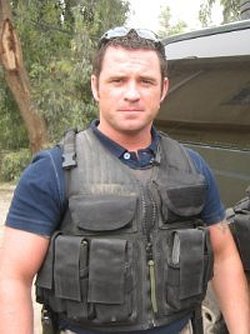
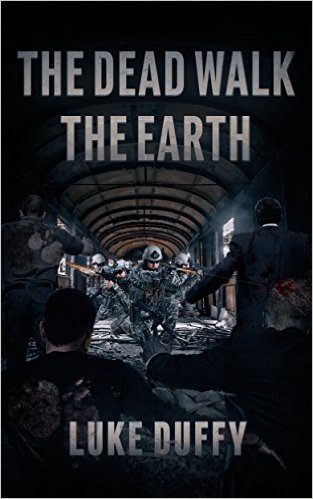
Today’s guest is Luke Duffy, author of The Dead Walk the Earth and When There’s No More Room in Hell series of books, which detail the journeys of soldiers as they fight undead hordes.

Have you ever read a zombie book written by a guy who’s skilled at jumping out of perfectly good airplanes? Having grown up in Northern England, Luke joined the Parachute Regiment at the age of eighteen. Further, he has worked in Iraq on the Private Security Circuit.

His first book, Running the Gauntlet: The Private War in Iraq, detailing his memoirs from his time on the circuit, was published in 2011.

Following that non-fiction work, he turned his attention to zombie lore.

Luke, thanks for taking a minute to talk with me today, and thank you for your service.

NOTE: BOLD=BQB; ITALICS=LUKE

Q.  I’m just going to say it. Look at you. Soldier. Private security. 51qtY0bYz1L._SX311_BO1,204,203,200_You’re a badass. As a layman, I’d think that having such vast military experience would inform one’s writing. Do you find that’s the case? Do you draw on your experience when writing your books?

A.  Absolutely. I read a few apocalyptic books before I decided to write my own. Some were great, others were awful. But one thing I found that the majority of them had in common was that most authors lacked any real experience in military matters. Don’t get me wrong, there were some great efforts out there, well researched and thought out, but there was always something missing. The mark was never quite hit. Only someone who has experienced being shot at, blown up, or felt those familiar sensations of dread and retrospect when preparing for a fight, can write a realistic battle scene. I’ve always tried to make the action as close to real as possible, and my own experiences have helped, a lot. I like to draw the reader into the pages, making them imagine what it is like to come under fire and wonder whether they would make it out. As a reader, it’s important to feel part of the story.

Also, most of my characters are actually based on real people that I have known over the years.

Q. You started out with non-fiction and then moved on to fiction. What drew you into the world of zombies?

A. In a few short words; Dawn of the Dead. I’m talking about the original. I watched it when I was about six or seven, and from there, I was hooked. It wasn’t so much the action and the zombies themselves, but more to do with the collapse of society and the slow death of humanity. Even as a kid the words ‘what if?’ rattled around inside my head. The end of civilisation has always fascinated me, regardless of the cause. But what could be more exciting, terrifying, and total, as the dead returning to life and hunting the living?

I like to imagine how different people, from various rungs of the social ladder, would react to a global crisis such as a zombie plague. I think true, true colours would quickly come to light, and I think the whole ‘good and bad’ thing would be turned on its head in many cases. I couldn’t imagine Bob Geldof and Bono still wanting to save the world, hugging plague victims and shaking hands with zombies. I think they would barricade themselves into their mansions and drop from the radar.

Q. Here’s a question I’ve thrown at a lot of writers this month. How do you find the time to write? I ask because I’m rather unfocused and if a good show comes on TV, there goes my writing for the day. So obviously, I respect a guy who has served in the military and in private security and yet still finds the time to write. Do you have any advice for aspiring scribes on how to balance work and writing?

A. My best piece of advice would be to create a routine. Finding the time and motivation to start writing, even if I’m half way through a book and on a roll, can be extremely hard. Sometimes I need to give myself a serious kick up the arse to get myself down behind my computer. Like you said, distractions can have a severe effect on you. So, what I do is ensure that I get myself into a routine. If I’m working away, most of my writing is done in the evening, which can be a real pain because my energy and enthusiasm is sapped by then.

When I’m home in the UK, it’s a little easier. I get up, have a coffee and a smoke, check the news, as well as the usual morning stuff that a man does. Then, come ten o’clock, I get to work and do at least four hours writing each day. After that, the world is my lobster and I don’t feel guilty, having the fact hanging over my head that I jacked on my work for the day because Susanna Reid was looking particularly hot on morning television and I became side-tracked.

Q. The description of The Dead Walk the Earth states, “Eight soldiers, accustomed to operating below the radar, carrying out the dirty work of a modern democracy, become trapped within the carnage of a new and terrifying world. Deniable and completely expendable. That is how their government considers them, and as the dead begin to walk, Stan and his men must fight to survive.”

“Deniable and expendable.” OK. So obviously, I enjoy being alive, so I’m not asking you to get into “If I tell you I have to kill you” territory (sorry, bad joke there) but generally speaking, is being “deniable and expendable” a fate that soldiers often find themselves facing?

A. Depends on the type of soldier and the operations being conducted. There’s no such thing as a clean government, and they all need someone to get their hands extremely dirty on their behalf, from time to time. I’ll not go into too much detail, but deniable operatives do exist. No, not like xXx and Mission Impossible. They’re just beyond fantasy. Deniable operators could be the man next door, or the guy driving your taxi. Shaved heads, huge muscles, and wearing Oakley sun glasses in the dark… don’t help.

I suppose that all soldiers are expendable, to a degree. Or at least they are viewed that way by the people who send them to war. No politician, no matter how sincerely they claim to have, has ever lost sleep or shed a tear over the men and women of their country being brought home in bags. Tony Blair and George Bush; they saw their military as mere pawns to be moved about on their own paths towards personal glory and gain.

Don’t get me wrong, I was part of the invasion of Iraq. I was amongst the first troops into Kosovo during the liberation in 99. I battled in Sierra Leone during their civil war, and I patrolled the streets of Northern Ireland before the peace process. I enjoyed the lot, but I never lost sight of the fact that not a single member of the government cared how many of my friends lost their lives.

Since joining the private circuit in Iraq, I’ve seen the attrition rate first-hand, and watched as countless friends were killed. Yes, we were in it for the money, but we were also doing a job on behalf of the US and UK governments, helping to rebuild the Iraqi infrastructure. But before long, the media stopped reporting the deaths and the government leaders forgot about us. All the while, the deaths of British and American private military soared. Expendable.

Q. Hypothetically, would today’s modern military be able to take on a zombie outbreak? Not that I spend a lot of time worrying about such a scenario, but I’d be interested to hear your take on it.

A. It depends on society as a whole, I suppose. In my books, the concept of the dead returning to life (zombies) has never been imagined. There are no books, movies, computer games, or folk tales about such creatures. So, when the dead begin to rise, it’s complete confusion, terror, and chaos. No one knows how to deal with the problem. On the one hand, some see the threat for what it is, and insist that immediate action be taken. However, on the other hand, there are the ‘bleeding hearts’ and ‘do-gooders’, bleating that even the dead are people and have rights.

Governments hesitate, fearing backlash should they act with what can be viewed as brutality and inhumanity towards the infected (yes, I believe that even on the brink of an apocalypse, the politicians would still worry about their image and future votes).

People struggle to come to terms with the outbreak. Families cannot imagine that the monsters staggering towards them are no longer their dad, mum, sister, brother, uncle – twice removed… etc.
Then there are the legal complications to consider. Most people out there follow the rules. They avoid confrontation and shy away from violence. Inflicting pain and suffering is not a desire that most human beings carry. Many would hesitate, because we have all been brought up to understand that killing is wrong, both in a legal and moral sense. Suddenly being told that it is perfectly okay to smash your neighbor’s head in with a hammer, isn’t going to have any great and immediate effect. Most people would simply lock their doors and hide. Even I would hesitate, and I don’t like my neighbors.

Morality and human emotions play huge parts in the downfall, and only when it is too late, do people realize the extent of the catastrophe and put down their delusions of decency and respect, but by then, it’s too late.

However, in reality, I believe that the military would soon have the outbreak under control. No doubt, they would all be rounded up and sent to work in Starbucks, maybe even become Labour Party members.

Q. Any plans for further zombie books in the future? Or perhaps other monsters? I read a post on your blog that made me think you find technology as infuriating as I do. That me think – soldiers vs. killer robots has some potential.

A. I take it that you’ve never watched Terminator?

Seriously though, yes, I find technology infuriating. In my opinion, it causes more trouble than its worth, even though I have found myself reliant upon it.

I have one more book to write in the current series, and then I intend to get a couple of kids’ books written that I have in mind. Yes, it’s a dramatic shift from people being eaten alive and copious amounts of profanities and violence, but I’ve had these stories in my head for some time, so I will be hanging up my zombie hat for a while. I may return in the future, if the demand is high enough and I have some new ideas, but for now, I need to step away from the genre.

Q. Luke, thanks for stopping by. Before I go, do you have any last minute advice that might help me survive the East Randomtown Zombie apocalypse?

A. Get away from the cities. Find a place that is remote. The dead are stupid, and lazy. Can you imagine them walking up mountains or fording rivers? High-ground, preferably open with good all round visibility, would be your best bet. Dense forests are also good, but they can be a double edged sword; they can’t see you, but you can’t see them, either. I wouldn’t like to have to bug-out from a wooded area during the dark hours, surrounded by zombies

If you’re stuck in an urban area, stock up, stay out of sight, and keep quiet. Remember, a barricade can never be too big, no matter how valuable that antique chest of drawers is. Trust no one, and lock your heart away in a sealed box. There’s no room for easy emotion and sentimentality in the zombie apocalypse world. Finally, make a note of all the people close by who have pets, because when the time comes, cats and dogs make good eating.

Tagged , , , , , , , , , , , , ,

#31ZombieAuthors – Day 23 Interview – Peter Cawdron – Outsmarting Zombies

41CibZvigqL._UX250_

FIND THIS ZOMBIE AUTHOR ON:

Amazon        Website      Twitter

My guest today is Peter Cawdron, who comes from the land down under.  I don’t have to pay the Men At Work a royalty for saying that because Peter is an honest to God Australian zombie enthusiast.

Peter’s the author of the Z is for Zombie series of books which include What We Left Behind and All Our Tomorrows.  These books tell the story of teenager Hazel, who in the midst of a zombie apocalypse, searches for Steve, David, and Jane, the only people who ever understood her.

An avid fan of such classic science fiction writers as Philip K. Dick, Arthur C. Clarke and Michael Crichton, Peter is also a prolific science fiction author in his own right.

I wonder if there’s an extra charge to call Australia?  Aw screw it, the bill for this phone goes to Alien Jones anyway.

G’day Peter.

NOTE: BOLD=BQB; ITALICS=Peter

Q.  I just discovered that my perpetually angry uncle, who I thought never understood me, is in fact, the only person who ever understood me and what I need to make it in the world.  Unfortunately, he’s dead, though he visits me in ghost form from time to time.  Your protagonist, Hazel, feels like only three people understand her.  Is she really that confounding or is it typical teenage “no one gets me” angst?

41CT9h3vOuL._SX311_BO1,204,203,200_ (1)A.  Teenage angst is cliche, and yet there is an element of personal growth we all go through where we’re learning about the world afresh. I don’t know that it stops as an adult, at least, it shouldn’t. It hasn’t for me. I’m always learning, and not just intellectually. Emotional learning is often more important than facts or figures. I think that’s one reason why coming-of-age books have such universal appeal. It’s a chance to re-learn and renew, regardless of how old we may be. 

In my novel What We Left Behind and the sequel All Our Tomorrows, we see life through the eyes of a teenager struggling toaccept the end of the world, fighting to make a change. All too often, it is the upcoming generation that is the catalyst for change. Us old farts need to respect that, listen and understand. It’s the youth of today that can change tomorrow, and that’s the message common to my novels as well as books like Hunger Games, Maze Runner, and so many others. Change is good. It’s the status quo that’s scary.  

Q.  As a zombie fan, I’ve noticed that in most zompoc tales, zombies are never referred to as “zombies.”  They’re “walkers” or “the undead” or “creepers” and so on but never zombies.  Your characters refer to them as “Zee.”  Why is that?  Is “zombie” too informal?  Will we ever crack open a novel where a writer has a character saying, “Holy crap!  It’s a zombie!”

A.  Oh, they’re called zombies in What We Left Behind as well as Zee, but Zee makes things more personal, and I think that’s important. Zombie stories are notorious for being impersonal. Survivors are often portrayed as brutal if not more brutal than the zombies themselves, whereas zombie stories are really about survivors. And what is a zombie but a survivor that fell and failed. Zee makes that more poignant, reminding the reader that zombies aren’t simply cannon fodder. To the survivors, they once were as we are, and the term Zee keeps that fresh in mind.   

Q.  How did you get into the zombie craze?

A.  My kids love The Walking Dead, and I enjoy it too, but I get frustrated with the inaccuracies. Gasoline, as an example, has a shelf life of about nine months. Diesel’s a little better, but will be pretty nasty after a couple of years. So at some point everyone’s going to be walking, or riding bicycles or horses. The SUV might look like the ultimate zombie killing machine, but it’s not sustainable, so in All Our Tomorrows, they drive around in a Tesla with the doors stripped off and the seats torn out to keep the weight down, charging the car with solar panels. For me, it’s fun to consider practical stuff like that. 

Zombies are dumb, right? So what’s the greatest weapon in the zombie apocalypse? Smarts. I’ve tried to write novels that have smart, unique solutions to the zombie apocalypse rather than relying on shotguns and machetes all the time. Shotguns might work on the zombie in front of you, but the noise is going to bring in a dozen more zombies, while a machete is just plain stupid. It’s going to get stuck every time. 

41IgGgymVqL._SX331_BO1,204,203,200_Q.  You’re also a sci-fi aficionado.  One work of yours that caught my eye is Little Green Men, about a crew of space travelers who set down on a frozen planet and are attacked by, sure enough, little green men.  Is a story about trustworthy, non-murderous aliens possible?  Does it say anything about us as humans that we have a tendency to think the worst about the possibility of life on other planets?

And by the way, I have a colleague named Alien Jones who is in fact, a little green man.  He’s been totally above board thus far, but do you think I should keep an eye on him?

A.  Little Green Men is brutal. It’s a homage to Philip K. Dick and has an alienesque feel to it (Alien Jones would love it), but yes, it is possible to write about trustworthy, non-murderous aliens. Anomaly is my best selling novel, having sold over 75,000 copies.  Anomaly was my debut novel and even today, a dozen stories down the road, it still outsells everything else I’ve written. If you enjoyed Carl Sagan’s Contact, you’ll love Anomaly.

413RLsZCgPL._SX311_BO1,204,203,200_
As for Alien Jones, he’s clearly hampered by a paranoid companion 🙂

Q.  On your Amazon page, you talk a bit about the difference between general and “hard” science fiction.  Could you explain it for my 3.5 readers?

A.  Hard science fiction is a misnomer. 

Science fiction shouldn’t be hard to understand or hard and inflexible. There’s merit in keeping scifi as accurate and plausible as possible. There’s always a degree of handwavium in science fiction when authors start projecting their thoughts into the future, but the limitations of concepts like the speed of light actually add to the realism of a story. 
As much as I love the Star Trek reboots, I cringe when they ignore common sense. There’s one scene in Star Trek Into Darkness where Kirk is on the Klingon home world some undisclosed number of light years away from Earth, and he calls up Scotty on his handheld communicator. Scotty is in a bar on Earth and answers Kirk’s technical question. To me, that’s a wasted opportunity. Even if Kirk was somewhere within our solar system, say on Mars, Scotty couldn’t have a realtime chat like that, he’d be waiting at least half an hour for a message to arrive. Communication between star systems would be like the letters of the 1700s taking months to years to transit the globe. Star Trek Into Darkness wasted a wonderful opportunity, as instead of taking the lazy, easy way out, the writer could have used that limitation to drive up the tension. Sure, Scotty’s got the answers. But he’s not there, so Kirk has to figure it out on his own and that’s far more rewarding for the audience than watching Kirk being given a get-out-of-jail-free card. 
Hard science isn’t difficult, it’s just plausible and believable, and it makes stories more gritty and realistic. 

Q.  Peter, thanks for taking my call.  Before I go, do you have any advice that might help my friends and I survive the East Randomtown Zombie Apocalypse?

A.  Think before you act. Remember,

  1. You’re smart. They’re not. 
  2. They have numbers. You don’t.  
 Keep those two facts in mind and you’ll do fine. Oh, and keep a copy of What We Left Behind handy, you might find some good tips in there. 
Tagged , , , , , , , , , , , , , , , ,

#31ZombieAuthors – Day 22 Interview – Ryan Casey – Zombies and TV Style Serialization

61TuZz70E0L._UX250_

FIND THIS ZOMBIE AUTHOR ON:

Amazon          Website        Twitter

By: Special Guest Interviewer, Alien Jones

Attention all humans. Today’s guest is Ryan Casey, author of the critically acclaimed zombie apocalypse series, Dead Days. Zombie fans will also enjoy Infection Z and mystery buffs should check out the Brian McDone Mysteries series.

Known for tales filled with dark, page-turning suspense, complex characters and knockout twists, Casey has a BA in English with Creative Writing from the University of Birmingham. A resident of the United Kingdom, he enjoys American serial television and wastes too much time playing football manager games.

Thanks for taking my call, Ryan. I hope you don’t mind being interviewed by an alien. BQB was kind of a wuss about touching a phone covered in intergalactic goo. Go figure.

NOTE: BOLD=Alien Jones; ITALICS=Ryan

Q. Let’s get the important stuff out of the way. Are we talking American football as in the NFL or the game Americans call soccer but the rest of the world calls football?

A. Oh, soccer. Absolutely soccer. I’m a massive sports fan all round though and NFL’s profile is definitely growing in the UK, much like soccer in the US. Football Manager games are the height of addiction, mind. If you want to offer up a portion of your productivity to the gods of procrastination, go ahead and pick up a copy. You’ll absolutely regret it.

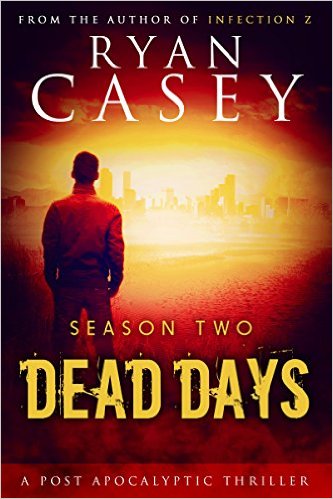
510gVdAGSWL._SX331_BO1,204,203,200_Q. Dead Days is the story of a group of survivors in a UK based zombie apocalypse. The description of Season Two of Dead Days states, “the only survivors were those willing to sink to the most brutal depths of humanity in order to further their own existence.”

So I just have to ask, if only the most depraved are able to survive an apocalypse, should we be concerned that a-holes are destined to inherit the Earth?

If I’m being cynical, I’d say yes, that’s a very big concern. Nice guys really do finish last a lot of the time, as I’ve unfortunately discovered through experience on way too many occasions. So if you want to survive an apocalypse, get practicing being a depraved arsehole — fast!

In all seriousness though, I don’t think it’d quite play out like that. I think humanity would struggle, naturally, especially if communications and luxuries of a material world suddenly become irrelevant. I like to think there’d be a lot of room for good, positive movements, too. They just don’t make for quite as good reading.

Q. Piggybacking on that last question, when a zombie apocalypse requires survivors to “sink to the most brutal depths of humanity,” is there anyone left for the reader to root for?

Yes! Absolutely. I love these characters and apparently so too do readers. I think what makes them so relatable — or more specifically, empathetic — is that they all go through shit. They all make bad choices. They all do things in the heat of the moment that stay with them, haunt them.

But the difference between the heroes and the villains of Dead Days? The heroes overcome their demons. They face up to their sins, take responsibility. The villains succumb to their problems. Which, unfortunately, often makes them even more dangerous.

Q.  A lot of people want to write but not as many study writing formally. You studied Creative Writing at the University of Birmingham. Did you find that experience helpful and would you recommend Creative Writing as a major to other aspiring writers?

I found it a helpful experience. There were some good teachers and some fantastic fellow students, for example Stuart Meczes, author of the brilliant HASEA urban fantasy novels. But I’d say it’s all just a part of the wider learning program of being a writer. The learning doesn’t stop when we leave university. The learning continues, constantly.

I believe the only way to keep writing fresh is to consistently push myself. I want the novel I’m working on to be the best novel I’ve ever written… and for the next novel to be even better. I write a lot, but I throw away even more. Seriously, you do not want to see my unfinished novels folder.

Q. You like serialized television and it shows in your writing. In fact, Dead Days is offered to readers in a serialized format, meaning episodes come out at regular intervals to eventually form a seasonal box set. As an author, what inspired you to present your work in this way rather than in one large novel?

Dead Days was an experiment that worked out beautifully. I’m a big fan of serialised television, like you note, and was particularly influenced by this golden age of television we’re living in. Shows like Breaking Bad, Game of Thrones, True Detective, The Walking Dead — some truly stellar writing, better than anything the movie industry offers at present, in my humble opinion.

I always thought the serialised form went hand in hand with this generation of shorter-attention spans and constant distractions, but I was disgruntled with how many “serial” projects were actually just novels broken up into parts.

The intention of Dead Days was, and still is, to transform a television experience onto the page, and not just tear a novel to pieces for financial gain.

Q. A number of authors are embracing the serialized TV style format of writing. For aspiring writers out there, are there any advantages to this style? Any disadvantages?

A major advantage is, like I mentioned, how hand-in-hand with the television format it goes. I think in a world of infinite distractions—iPads, smartphones, Netflix, news—the serialised form is a great way to deliver tighter experiences to readers, so they can enjoy the story then get on with other elements of their busy lives.

A disadvantage is that you have to learn TV structure. As I mentioned, far too many writers just jump on the serialised craze and split their novels into chunks because they think it’ll lead to financial riches. That’s not how it works. If you want to write a serial, you have to learn the craft of television writing before you jump into it. You have to learn about episodic arcs, series arcs, all kinds of things like that. To me, it’s not a negative because I like learning and already had some experience in TV writing. But if you don’t like doing the work, it could be a disadvantage.

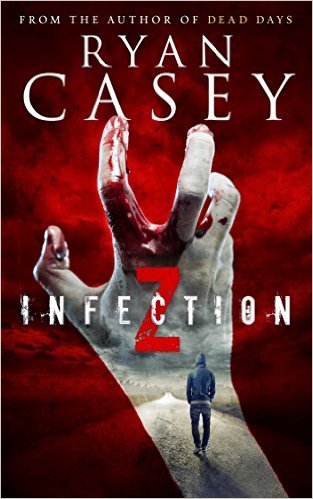
51pY7O7uCLL._SX311_BO1,204,203,200_ Q. Infection Z is your other zombie apocalypse series. It follows Hayden McCall, a jobless layabout in his mid-twenties. Assuming his landlord has paid him a visit to collect the overdue rent, Hayden learns that his landlord has become zombified and the story begins. Is it a challenge to write an underdog’s way out of a zompoc? Would it have been easier had Hayden been a muscle bound military man/weapons expert? But of course, would Hayden have been as relatable to the average reader?

A. I don’t strictly believe in ‘write what you know,’ but I believe in ‘write what you can empathise with.’ I have more in common with a lazy underdog than a military expert (unfortunately), so I just find it easier to get into the heads of characters like Hayden. Only difference between him and me is he overcomes his demons. I’d be the guy locking himself in the bathroom whimpering until the zombies finally barged their way inside…

Q. Ryan, thanks for taking the time to be interviewed by an alien. Before I go, do you have any last minute words of wisdom that might help my human charges and I survive the East Randomtown Zombie Apocalypse?

I’d get punching that alien stomach of yours some more. If there’s a space phone in there, who knows what else is hiding within? A space machete? A space rifle? A space CURE?! You’ll only find out by trying.

Tagged , , , , , , , , , , , , , , , , ,

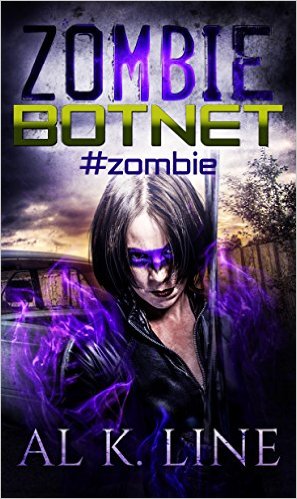
#31ZombieAuthors – Day 21 Interview – Al K. Line – Zombie Botnets, Literally!

zombiebotnet

FIND THIS ZOMBIE AUTHOR ON:

Amazon      Website

Facebook

My guest today is Al K. Line.

3.5 readers, you might want to log off Twitter for a moment.

Al’s the author of the Zombie Botnet series. The mayhem begins when a devastating computer virus delivers subliminal data packets via social media, turning computer users the world over into murderous creatures.

A resident of rural England, when Al isn’t busy writing, he spends his time with his wife, sons, and dogs, the latter of which he notes he has too many.

Al, welcome.

NOTE: BOLD=BQB; ITALICS=AL

51wVI4sSyfL._SX295_BO1,204,203,200_ Q.  You’re the twenty-first zombie author I’ve interviewed this month and I have to admit, I honestly thought I’d of heard it all by now, but people becoming zombies via a computer virus? For the less tech savvy among us, can you explain how this works in your books?

A.  Sure. Ven, the woman behind the “bit of bother,” lets loose a computer virus designed to infect millions of devices and allow her to get up to no good. Unfortunately, it all gets a little out of hand. The virus she unleashes has been compromised and the data packets go viral. An embedded subliminal message in the form of a video basically rewires the brain of anyone that views it and then it’s game over — welcome to zombieville.

Q. How did you come up with this idea?

A. The term zombie botnet is well known within the hacker community, it’s a way of describing a huge array of devices that have been infected and can be manipulated for all manner of nefarious naughtiness. What if the zombie botnet really could do as the name implies? It came from there.

Q. Everywhere I go, people are glued to technology. Phones. Laptops. Tablets. Everyone’s checking Facebook, Twitter, or some other site and usually the latest update is something as trivial as “I just blew my nose.” Do you think we might be zombies already?

A. I love technology, use it daily, and my career relies on it, but yeah, it can get out of hand. It’s the change it has caused to society that I find most interesting, making people slaves to the latest trend or social media platform — let’s face it, if we lose our internet connection for a few minutes we begin to panic, right? This is what the series plays on: our inability to look away. The first thing we do when we hear of a disaster is to check Twitter or Facebook, well, what if those platforms are the very ones causing the problem? People would still look, they can’t help it. It’s too ingrained into the fabric of our techno-reality now to ever go back.

Q. I notice this series is actually considered half-horror/half-comedy. I have to say, the idea of society being hoisted on its own technological petard seems rife with the ability to provide social commentary, not to mention a joke or two.  Personally, I’m so addicted to social media that if all I have to do not to become a zombie is not check Twitter, I’m not sure I could do it. How are you able to combine humor with horror, when the two normally don’t mix well?

A. You gotta see the funny side, right? It’s the whole premise. Yes, there is social commentary, but it isn’t judgmental. We all have our obsessions, our hangups and our needs, and the absurdity of how the infection is caused screams for a bit of a laugh at our own expense. Plus, to be honest I can’t help myself. Characters suddenly appear on the page (I mean computer screen really) and they often happen to be rather comical — there’s no stopping it once the words somehow jump from my brain to the developing book.

Q. Al, your book features people being turned into zombies via subliminal messages. Just now, a real live zombie actually just jumped out of my computer screen. Have you ever heard of such a thing happening in zombie lore and any ideas on how to defeat such a menace?

A. Oh, loads, it happens all the time. The best thing to do is to scream really loud and run really fast — only pausing to update Facebook and check if anyone has posted anything on Twitter that could help in 140 characters or less.

Q. Thanks for the interview, Al. Before I go, do you have any last minute advice that might help my friends and I survive the East Randomtown Zombie Apocalypse?

A. Nope. You’re going be dead any moment. Actually, should I even be answering this? Hello? I knew it, dead already, brains all over the floor. There’s probably some zombie granny chewing on your intestines at this very moment. Oh, don’t forget to follow me on Facebook at https://www.facebook.com/authoralkline

Yeah, I get the irony.

Tagged , , , , , , , , , , , , , , , , , , , , ,

BQB’s Zombie Apocalypse Survivor’s Journal – Day 21

Another morning in the computer lab.

Coming Soon - Johnny Gunhands: A Farewell to Hands (hands to be edited out in post-production)

Coming Soon – Johnny Gunhands: A Farewell to Hands (hands to be edited out in post-production)

I paced the floor and slurped on stale coffee while Alien Jones typed the words as they flowed from my cake hole.

“Johnny Gunhands. He’s muscular, rugged, virile, and in his late twenties.”

“ERRRNT! Wrong!” the Esteemed Brainy One replied.

“Wrong?”

“Wrong! How could someone become such a skilled master at taking down criminals without a bit of life experience behind him?”  Alien Jones asked. “Personally, I picture Johnny Gunhands pushing forty.”

“Aww but then the young people won’t read it,” I said. “Everyone under thirty-five is convinced that everyone over thirty five is a bunch of corrupt old farts who’ve sold their souls to the man!”

“What does everyone over thirty-five think about everyone under thirty-five?” AJ asked.

“That all they do is snapchat and take selfies all day.”

“Are these assessments accurate?”

“Surprisingly so on both counts,” I said.

I took another sip of my java. Bleh. It was rank, but my only source of caffeine. It would have to do.

“Fine,” I said. “We’ll compromise. Johnny Gunhands is thirty-two. Old enough to get some respect from gray haired readers. Young enough that the selfie stick crowd won’t think he’s Methuselah. Can I go on?”

“Please.”

“So in the opening scene, we see a butcher’s knife. A random mobster holds it up in the air and a ray of moonlight glistens off of it. It comes down with a WHACK and then the mobster says, ‘That’s what you get for arresting the boss, see?’”

“SHIT!” Alien Jones cried.

“Oh like you could do any better.”

“No,” AJ said as he nursed his hand. “The mouse. It got white hot and…”

Sparks flew out of the monitor. To our amazement, a foot came out of the screen, then another one, then a torso, arms, and a head.

“What the F%$K is that?” I yelled.

“It’s an e-zombie!” AJ replied.

The monster let loose with a terrifying growl and then lunged at me.

I did what any man trained in martial arts could do.

I performed a round house kick to the beast’s head, knocking it clean off.

It rolled to the floor but it was still alive. It grunted and it’s eyes moved around.

I stepped on it, pressing my foot down until I felt the skull crack under my shoe, the damned creature’s brains going kerplooey.

“I’ve heard about a computer virus but this is ridiculous!” I said. “Who knew that e-zombies were even a thing?”

Alien Jones handed me the space phone.

“There’s an author who knows all there is to know about this.”

Tagged , , , , , , , ,

#31ZombieAuthors – Day 20 Interview – Rachel Higginson – Zombified Romance

rh

FIND THIS ZOMBIE AUTHOR ON:

  Amazon           Website

 Facebook         Twitter

Today’s guest is Rachel Higginson, author of the zombie apocalypse romance series, Love and Decay.  Currently in Season Three, it’s the story of Reagan, whose dreams of a happily ever after go up in smoke when she’s forced to run her zombified high school sweetheart over with her mother’s car to keep herself from becoming zombie chow.

Born and raised in Nebraska, Rachel spent her college years traveling the world, the highlights of said journey including Eastern Europe, Paris, Indian Food and the beautiful beaches of Sri Lanka.

She came home to marry her own high school sweetheart, who luckily, has yet to become zombified.  When she’s not writing, she’s either raising her four children or reading.

BQB: Rachel, thanks for taking my call.

RACHEL: Thank you! I’m so excited to chat.

NOTE:  BOLD=BQB; ITALICS=RACHEL

Q.   Love and Decay is serialized in a television-esque style.  Season Three came out in May of this year and you expect Season Four in December.  As you describe on your website, during a season, each episode comes out in the form of a novella of around 20,000 words.  When all of the novellas are out, you put them together in a seasonal omnibus.

Thanks to streaming media and the ability to watch whatever you want, whenever you want, television has drastically improved in recent years.  What inspired you to serialize your work and is there any benefit to doing so as opposed to releasing the entire season in one novel up front?

A.  It was my husband’s idea actually. He thought it would be a great way to get more content to my readers faster. 20,000 words seemed easy to him. While it’s not actually easy, it is so much fun. And the 20k setup forces me to write in a different way than I would a full length novel. These episodes are intense and action packed. The plot-building is stripped down to bare bones to allow everything that needs to happen happen in a four chapter novella. If I were to write the same story in a 100k novel, I would write it completely different. It would be the slow build to the climactic moment. And while a zombie apocalypse book can be nothing but action-packed and exciting, the build-up would still be stretched out over time and chapters. The novellas give me permission to pack a punch with each episode. The story arc is still there, but it’s less of a consistent rise. It’s more like taking a roller coaster up the side of a mountain- you’re always going up, but it’s the most exciting way to get to the top.
 
Q.  I have to admit the idea sounds interesting.  We’re all so busy these days that the idea of sitting down to read an entire novel can be daunting for me, whereas the idea of perusing 20,000 words every two weeks seems doable.  What do your readers think of this approach?

A. They love it. They also hate it! They love it because they get to stay engaged with a fictional world they adore for six entire months. I finish a novel in a few days, a week at most. And then I fall into book depression because I have to leave that story behind. With the novella setup, my readers don’t have to leave the Love and Decay World. They get to stay involved for six entire months. And with how the episodes are set up, each read is exciting, each novella propels the plot forward. There isn’t time for slow, calm, world-building chapters. Each novella has to be an adrenaline-pumping ride through the zombie apocalypse. They hate it though because they really are short reads. Some of my readers can finish them in an hour. And then they’re forced to wait for two weeks to find out what happens next. They don’t like that part- and I really don’t blame them. But I secretly think they love the anticipation. That’s half the fun! 

Q.  Reagan falls for one of the Parkers, the brothers who come to her aid.  Love is hard to find even when the world is running smoothly and the damned aren’t trying to crack open your skull just to feast on the sweet, juicy innards.  For  cynics like me, is there any way you convince us that love in the time of a zombie apocalypse is possible?

A. Oh for sure! I think it’s human nature. We’re not meant to be alone, live alone. Even at the end of the world. The greatest goal of humankind is to be known and understood. And there is no greater way to know and understand a person than by loving them. I would think even more so in a zombie apocalypse where fear and uncertainty rule the day. Sure, there’s also a lot of killing and running for their lives, but love happens in all those in between places. Even if it’s not convenient, it’s something we can’t stop. We are designed to love. But then again, I’m a romantic. 

Q.  The undead aren’t the only ones after Reagan.  Not to give too much away, but threats come in the form of a stalker and bounty hunters, just to give some examples.  What is it about a zombie apocalypse that brings out the worst in people?  Can anyone be trusted when zombies are afoot?

A. In my vision of the zombie apocalypse, men and women are ruled by fear. Sometimes that manifests in helping others survive and sometimes that manifests in grappling for control in any way that you can. In our world today, there are bad and good people. I think circumstances in a zombie outbreak would only amplify those roles. Without standards or authority, bad people are free to do as they please, free to find control anyway that they can. If they can control a situation, there is nothing to fear. That makes it nearly impossible to trust people. You can’t predict how another person will react to their fear or living with fear on a daily basis. But I can’t believe everyone would turn to their darker instincts. There will always be good people in the world or maybe just people who cope better. Trust can happen, but slowly. Or very quickly, depending on the life-threatening situation you find yourself in. 🙂 

Q.  Thanks for taking the time to speak with me today.  Before I go, do you have any last minute advice that might help my friends and I survive the East Randomtown Zombie Apocalypse?

A. Stick together and get creative! You’re going to need a lot of weapons, so you might have to be flexible with the definition of “weapon.” But whatever you end up using, make sure that sucker is dead before you turn around. 

Tagged , , , , , , , , , , , , , , ,

#31ZombieAuthors – Day 18 Interview – Deirdre Gould – Maine Prepping and Self-Publishing

dg

FIND THIS ZOMBIE AUTHOR ON:

Amazon             Website

  Twitter

My guest today is Deirdre Gould, who has strategically placed herself in Maine, where cold temperatures make the zombies run slower and remote isolation means zombifying viruses take longer to spread.  Better yet, harsh storms make it so no one thinks Deirdre’s crazy for prepping.

In other words, she finds it to be a primo spot for writing the After the Cure series, which chronicles a world in which “the December Plague” has turned humans into violent, bloodthirsty, cannibalistic monsters.

I just hope they don’t eat me.  I taste awful.

Let me see if I can Deirdre on the space phone.

Q.  Hello Deirdre.  Are you a prepper and if so, I’ll ask the question I’ve posed to other prepper authors this month.  Why?  Are we all doomed or is it just a better safe and sorry thing?

A.  Hello BQB, things are getting pretty dodgy for you and your comrades! I hope I can help! Am I a prepper? Well, yes and no.  What lots of folks forget about Maine is that most of it is very, very rural.  And in the winter, when the tourists go home, even the cities are kind of rural.  There are some places, like my home town, that first got electricity within my lifetime (and I’m in my 30s).  Not only was a significant portion of my childhood spent without running water or electricity, but even after we got put on the grid, it wasn’t reliable. For a long time, it wasn’t unusual for the power to go out at least once a week.  It’s still pretty normal for it to go down once a month or so. And although our power workers are truly the best, it’s a big state (landwise) and once the power goes out, it could be out for a few hours or several days.  

As recently as the 1998 ice storm, my family spent two full weeks with no power and no running water.  And winter up here is no joke. You know that Stephen King book. The Storm of the Century?  Yeah, we have one of those at least every year.  Really. Had to turn one of the kids over to Linoge like six years ago. So almost everyone has a wood stove, most rural places still have an old hand pump well (and someone that lives there knows how to prime it and is constantly reminding people not to fall in), and lots of us have pantries stocked full at any given moment.  Especially because we can our own goods. And because for many people, the closest grocery store is forty five minutes to an hour away (everything is very spread out here).  Solar panels are big here, when people can afford them. Homemade windmills too.

But I don’t know anyone who has a bunker, unless it’s been turned into a root cellar after the Soviet Union collapsed.  Or a gun unless it’s for deer hunting. While a packed pantry is good, I try not to store more than about six months worth of anything, it’s just not practical for my particular family. And while Mainers have a reputation for being curt or crotchety, we really do take care of our neighbors instead of try to hide what we’ve got from them.  And I know there are lots of very generous preppers out there who do the same, but I’ve also heard stories about secret storehouses and guarded water sources. But probably somewhere in the back of almost every Mainer’s mind is the memory of someone helping them out when they most needed it.  Whether it was being rescued from an icy accident, sharing water with each other during the ice storm, or that emergency delivery of wood or oil in the worst part of February, we’ve all got them. Even in this modern world, we wouldn’t survive out here without each other. Besides, having the neighbors over is an excuse for a party. I like to think of us more as the Hobbits of the Prepper world. We do it because it makes good sense, and because we are always expecting company.  Not because we’re all doomed. 

Q.  Soap.  Water.  Tacos.  iPads.  Netflix.  Showers.  All these great inventions become lost in a zombie apocalypse.  Why do zombie fans fantasize about a world where all these things we take for granted are lost?

A.  I think it’s that old urge to pit man against nature. We want to imagine that we are tough enough to measure up without our crutches. We’ve conquered every bit of this old earth (there’s even a litter problem on Everest and tourists in Antarctica), so there’s no place left for those that feel that drive to explore, to prove that rugged individualistic streak. Much of apocalyptic fiction is concerned with the end of civilization, of course, but why? Is it because there is something inherently wrong with showers and readily available bacon? For the majority of these stories, no. It’s not really about damning our current way of life (though lots of these stories contain “warnings”), it’s about wanting to do better. About wanting to be better. But we all know we are creatures of habit. We won’t stop what we like unless we’re forced to.  We won’t make a better world until the one we live in is destroyed.  These stories aren’t about losing technology and history and massive portions of the population.  That’s just a byproduct.  The real story is about the people that emerge when they are forced to do without.  To do without modern implements, without the convenience and interconnectedness of society, even to do without the most basic and precious commodity we have, other humans and their brain power (cause it’s being snacked on).  It’s about being alone in an unfamiliar world and not only surviving, but making that world a better place.  Starting fresh.  That’s what we all really want to do. Start fresh.

Q.  You provide your readers with an interesting spin on the zompoc genre, namely, your series begins “after the cure” has been found.  This cure turns the Infected back to normal, regular humans but alas, they have to live with the realization of all the horrible things they’ve done.

I hate to ask for spoilers, but here’s the question that pops into my mind.  A zombie turns back to normal.  Should we blame him for eating other humans or should we be all like, “It’s cool, man.  You were a zombie.”

A.  No worries, that’s not really a spoiler, that’s one of the biggest questions of the series and why I started writing it in the first place.  Remember that the non-zombies aren’t totally innocent either.  They would have had to kill to survive as well. In the world of After the Cure, some of the Immunes killed even when they didn’t have to. But they didn’t know that the zombies would be cured. Should we blame them too?  How does a society function when everyone is a killer? You’d think that it would just fall apart. But we know, from our own human history, that it happens. We don’t have zombies, but we do have war and atrocity and cruelty. But when the war is over, when the conflict is resolved, people still have to go home. Maybe their neighbor was on the opposing side. Maybe their boss at work betrayed them to the opposing side. Maybe their grocer was their prison camp guard. But somehow, life goes on, people still interact, even when it seems incomprehensible.  So that’s a running theme throughout the series.  Who is guilty? Who is evil? How do people live not only with their neighbors, but with their own memories?

Q.  In the first book of the series, a court psychologist and a defense attorney work to bring those responsible for the virus to justice.  I could be wrong here, but I can’t think of another zombie apocalypse series where the reader actually gets to see a zombie apocalypse end and people turn their attention towards rebuilding society.  How did you come up with the idea for this?

A.  Actually, it was from reading truckloads of zombie books! I love them, I can’t get enough of them, even the ones that fall into a sort of formula. But after tome number gazillion and one, I realized that the causes of zombieism were always kind of limited.  For the most part, it was either a deadly virus or some chemical spill that caused zombies (with an occasional voodoo spell or electrical malfunction thrown in).  But I’d never seen a zombie story where a bacteria was involved.  That’s it, that was where it started. I started to wonder why nobody ever used a bacteria, and I realized that it was because a bacteria had the potential for an antibiotic, a cure, where a virus didn’t. It violated one of the most cherished rules of zombieism: They can’t be cured, so all you can do is kill them. It’s part of the “fun” of zombie fiction. There is no moral quandary about killing them because they can’t come back. They aren’t “people” anymore.  Zombies who can’t be cured might as well be a tornado or locusts or a volcano, just a natural disaster to be avoided or beaten. But what if that rule changed? What if people discovered that not only could the zombies be cured, but that once they were cured, they could remember everything that had happened while they were sick? And what if they found out late? Really, really late. 

If they were anything like us, the first thing they’d do is try to find someone or something to blame for what had happened. Something to excuse their own guilt. That’s why the trial became the initial frame for this world. But are the defendants really guilty or just convenient scapegoats? 

Q.  What motivated you to start writing?

A.  I’m one of those weird people who never wanted to start doing this for real. I mean, I’ve enjoyed writing since I was a little girl, but I never wanted to be a writer. I went to school for something very different, but when I was in college my mom was diagnosed with cancer. I took a year and a half off from school to help her. It meant many, many really long days of driving and sitting in doctor’s offices and hospitals (remember, everything is far away in Maine!). So to amuse myself, I started writing a novel. I didn’t finish it and set it aside for a long time, but I thought about it often and I’d add a bit here and there. Finally, the year my oldest child was born, I heard about Nanowrimo and decided I was going to finish this book (I think it had been about 7 years since I started it at that point).  At the end of November I had a draft and put it away. Three years later, I’d been laid off from my copywriting job and struggling to find something else and honestly just couldn’t find anything. So I sat down and worked on the book for another year. I pretended it was just going to be for me, that I didn’t care about anyone reading it, but I started reading all these sites by agents anyway. Finishing the book made me more confident and I started working on other things, just for fun. I submitted a few pieces but everything I was reading on the agent sites convinced me that I shouldn’t even bother trying. Nobody ever took on new writers any more. I had a better chance of winning the lottery as being picked up by even an agent, let alone a publisher. And then I heard about KDP. I decided I had nothing to lose, and posted one of my finished novels, just to see what would happen.  It was addictive. I got sucked in.  I still considered it a hobby, something for my spare time, pretty much until last year when I started hearing from readers. Then it started to get serious, because someone besides me actually cared what happened to my characters. I’m now firmly entrenched and I actually sometimes feel guilty because I enjoy doing this so much, it feels like I’m goofing off instead of working a “real” job. 

Q.  Thanks for talking with me today.  Before I go, do you have any last minute advice for my friends and I that might help us survive the East Randomtown Zombie Apocalypse?

A.  Well, you are a couple of weeks in now, you’ve probably got some nicks and scrapes by now. You are going to want to keep any wounds clean and free from infection. In a world where antibiotics will be hard to find, you are going to need some easy alternatives or else that blister on your foot could mean amputation in a few weeks, or worse.  Honey is a great topical antibiotic. It can be rubbed directly onto small wounds to fight off infection before you bandage them. For internal or systemic bacteria (like listeria from that bad deli meat you ate from the mall after the coolers lost power), if you have a silver dollar or a piece of real silverware, some water, and a battery, you can make some colloidal silver to fight that nasty bug off.  Use too muc, though and your skin will turn a lovely shade of blue, permanently. If you listened to Sarah Lyons Fleming on day one, you probably have some baby wipes to clean yourself, but what are you doing about those nasty blood spattered weapons? Those things are crawling with zombie virus. Washing them won’t completely kill the germs, so you’ll need to find some copper. The pipes in your building probably aren’t doing much good now, if the electricity is off. Hack off a length of copper pipe. At night (or whenever you stop to flop down, exhausted from the near constant run/slaughter/run combo) place your pipe over the weapons. In two hours or so, almost all the germs will be gone, even a foot away from the actual copper!  Here’s hoping you make it to day 19!

Tagged , , , , , , , , , , , , , , , , , , , , , , ,

BQB’s Zombie Apocalypse Survivor’s Journal – Day 18

shutterstock_236377990“Deputy Mayor Battler!  Deputy Mayor Battler!”

As I strolled through the gym, my constituents peppered me with questions.

“We’re running low on gas.”

“People are eating too much.”

“I can’t find my shoes.”

“Ration, ration, and they’re on your feet,” were my immediate answers.

“BQB,”  VGRF said.  “Is it me or are you more decisive lately?”

“Well, I have been taking alpha male lessons from Gillian Zane, so could be.”

The DiStefano brothers found me.

Carl showed me his cell phone.  On it, there was a video of a large group of people wearing gas masks and toting assault rifles walking past the security fence.

“We scoped this guys near the north perimeter,”  Carl said.  “What do you make of it?”

“Are they military?”  I asked.

“I don’t think so,”  Carl replied.  “Shit, they’re all in plain clothes.”

“Huh,”  I said.  “Did they see you?”

“Yup.”

“And they didn’t interact?”

“Nope they just moved on.”

“Weird,”  I said.  “Could be someone trying to make a move on us.  Could be just another group of survivors passing by.  Keep an eye on it and let me know if anything happens.”

“Sure thing, Deputy Mayor.”

The DiStefanos walked away.

I sat on the bleachers with VGRF.  We gabbed it up for awhile until Mario Guzman found me.

Before the fall of humanity, Mario had been an accountant.  Today, he used his CPA skills to keep a running inventory of all our supplies.

“Deputy Mayor, can I show you something?”

“Sure.”

VGRF and I followed Mario to the rec center’s storage room.  It was full of boxed and canned food, nothing tasty of course, but everything was chock full of preservatives and guaranteed to last a long time.

Mario closed the door behind us.

“We’re being robbed.”

“What?”  I asked.

“There’s a thief in our midst,”  Mario said as he showed me a clip board.

“I have no idea what these numbers mean,”  I said.  “I hate math.”

“I’ve been keeping a daily count of everything we have since our community began,”  Mario said.  “So far, the numbers have added up but a few days ago, I noticed we’ve been consistently down ten percent of everything.”

“Everything?”

“Everything!” Mario replied.  “Look.  Powdered milk -10%.  Toilet paper -10%.  Bottled water – 10%.  Cereal -10%  Rice – 10%.  If it was just one or two items I wouldn’t be worried but someone is pilfering our stuff regularly.”

“Who has access to this room?”  I asked.

“Just Hauser and his inner circle of advisors,”  Mario said.

“Let’s change that,”  I said.  “Put a trustworthy guard in charge of this room.  Anyone who enters has to sign themselves in and out and note what they’re taking.  The guard will keep an eye on people while they’re in here to make sure no funny business transpires.”

“You’ve got it,”  Mario said as he exited the room.

VGRF and I were alone.  My girlfriend rubbed her hands on my chest and leaned in.

“I think I’m going to like this new you.”

“Yeah well, get used to it, baby.  I’m alpha nerd all the way now.”

VGRF leaned in for a kiss.

“Is that a space phone in your pocket or are you just happy to see me?”

“It’s a space phone,”  I replied.  “Speaking of, there’s a zombie author I’d better call.”

Tagged , , , , , , , ,