Hey Poindexters,
In case you missed the earlier zombie author interviews, check the Bookshelf Q. Battlechive

FIND THIS ZOMBIE AUTHOR ON:
By: Video Game Rack Fighter, Special Guest Interviewer
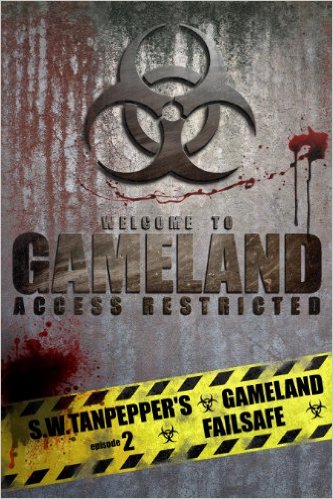
Today’s guest on the Bookshelf Battle Blog is Saul Tanpepper, author of the GAMELAND series, a saga set in a world where zombies outfitted with neural implants are controlled by players using video game controllers.
The carnage ensues when a group of computer hackers break into a Long Island turned wasteland and quickly learn there are consequences far beyond the average video game.
Saul, thanks for joining us.
NOTE: BOLD=VGRF; ITALICS=Saul
 Q. Zombies turned into video game avatars manipulated by wealthy video game enthusiasts. Just when I thought the world was out of fresh spins on the zombie apocalypse genre, you come up with one. How did you do it?
A. I read Suzanne Collins’s Hunger Games right after it was published and knew that it was going to be a blockbuster and therefore a good literary model to emulate. I’d been thinking about publishing dystopian fiction (not just horror or post-apocalyptic), and since zombies were starting to get hot, and readers were demanding series, I combined the three elements together and came up with the idea for GAMELAND. The original plan was to throw a half dozen young adults into a gaming arcade with the undead for a fight to the finish, but that seemed too much like HG. I made the gaming aspect secondary and went heavier on the post-apocalyptic theme.
Q. I hope you don’t mind if I reveal on this blog that you are, in fact, Dr. Ken J. Howe, a PhD molecular biologist and former Army medic/trauma specialist. (Don’t worry, this site only has 3.5 readers so your secret is safe.) Upon learning this about you, several questions come to my mind, the first being, does your experience and training come in handy as a writer and how so?
A. It’s both helpful and harmful. As a former scientist, I tend to be overly critical about technical accuracy and probabilities, which holds me back from writing anything too outrageous. This applies to the technologies referenced in the GAMELAND series. We already have the capacity to prolong life and it won’t be long before we can reverse cell death. Scientists are also dabbling in neural implantation, so it’s not a great leap to think about implanted zombies. My medical background is a great help when it comes to writing descriptions. Having personally had my hands inside chests, smelled the effects of rotting flesh, assisted with surgeries, I try to relay the physical and emotional impact of those experiences to the reader.
Q. Last I checked, zombies are just figments of our imagination (I hope.) However, as a molecular biologist/former medic, do you have any thoughts on zombie physiology that you could share? Are there any known theories on how, hypothetically speaking, a human could be turned into a zombie or exhibit zombie-ish tendencies?
A. There are some aspects of zombie physiology which the lore currently explains poorly. For example, how do they move and moan when they don’t breathe? Why don’t they rot faster? Why do they prefer brains? Why do they go after only the uninfected? GAMELAND attempts to explain some of these discrepancies.
As far as real-life goes, zombies aren’t that much of a leap, at least if we’re simply talking about brain-dead individuals attacking other people. The bath salt incidents of a couple years back, and any number of drug or hypnosis-induced incidents we’ve seen all resemble zombie-like behavior. If the mind can be so easily manipulated by suggestion or chemicals, it’s not hard to imagine an infectious agent producing a chemical to the same effect.
As far as reanimating the dead, that requires a bit more suspension of disbelief or more faith in the paranormal. Cells tend to break down very rapidly, so unless a person has only very recently died, it’s unlikely the body will have much function. My bets for zombies are on the near-dead or recently-deceased.
Q. How would a real life zombie video game such as the one described in your series work? Will video games ever evolve to the point where people can be controlled with a joystick? (And is that necessarily something we’d want?)
A. Technology already exists to remotely control inanimate objects in virtual reality (think drones, surgery, bomb robots), and game developers have reported early success in being able to manipulate living subjects remotely in the same way as well as with the use of neural stimulation. We are on the cusp of an explosion in VR gaming. Just beyond that horizon is remote controlled live action gaming. I don’t want to say too much about it, because it would seem to make the ideas I developed in GAMELAND appear less groundbreaking, but suffice it to say, I’d be surprised if we aren’t soon forced to ponder the very same moral questions the characters in my books failed to ask themselves when it comes to this subject.
Q. You’re also the author of The Essential Book Blog: The Complete Bibliophile’s Toolkit for Building, Growing and Monetizing Your On-Line Book-Lover’s Community. If you had to give Bookshelf Q. Battler one piece of advice on how to improve his blog, what would it be? (Besides obtain more than 3.5 readers.)
A. You’re doing all the right things — writing to a specific target audience, keeping the material fresh, engaging your readers, and leveraging other people’s fan bases — so that’s a great foundation for growing your blog. It takes time, as you already know. Having a mailing list helps, as does having something to offer your readers. For example, I offer my subscribers a free starter library and often tell them about deals and giveaways before I tell the general public. I include a lot of tips in TEBB on how you can monetize your efforts to help defray any costs and build income. Even utilizing the easiest of the techniques will quickly pay for the cost of the book.
Q. Saul, your expertise has been greatly appreciated. Before I go, do you have any final words of wisdom that might help my friends and I survive the East Randomtown Zombie Apocalypse?
A: It’s been my pleasure. As far as surviving the Z-poc, my only suggestion is to get yourself a good sturdy toilet plunger (if you’ve read my series, you’ll understand why). That, and a comfortable pair of sneakers. You’ll be doing a lot of running.
FIND THIS ZOMBIE AUTHOR ON:
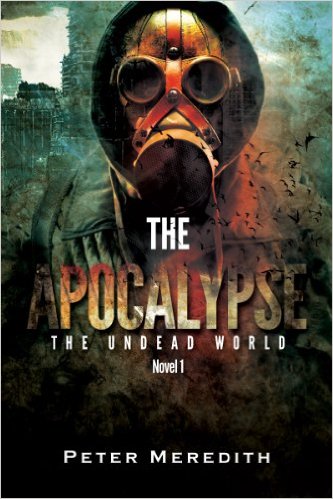 My guest today is Peter Meredith, author of The Undead World series. The tale begins when efforts to cure cancer go horribly wrong, and survivors are forced to do whatever they can to survive in a world crawling with zombies.
A multi-genre author, some of Peter’s other works include: The Trilogy of Void, The Hidden Lands Series, The Sacrificial Daughter, A Perfect America and Sprite.
Hello Peter. Good to speak with you.
NOTE: BOLD=BQB; ITALICS=PETER
Q. Peter, I’ve tried a number of jobs in my life. I’ve been the assistant to the assistant to the Vice President of Corporate Assistance at Beige Corp, the world’s premiere producer of beige products and accessories. I started up a website that boasts upwards of 3.5 readers and now, as luck would have it, I’ve just been named Deputy Mayor of a settlement for zombie apocalypse survivors.
According to your Amazon author page, you’ve had quite the journey yourself. You tried your hand in real estate, worked as an emergency room nurse, and you were also the CEO of a national lighting company. Today, you concentrate on what you refer to as your “true addiction,” writing. For anyone out there who’s searching for their passion and has yet to discover it (or worse, won’t embrace it) what advice do you have for them?
A. Don’t be shocked when you find it and embrace it when you do. Unlike almost every other author I’ve run across, I wasn’t reading at the age of two and writing my first poem by my third birthday. Quite the opposite, I hated to write. I never learned to type and my penmanship hasn’t progressed beyond a second grade level. Since I would fret over every little error, an e-mail used to take me close to an hour to write, if the client was important enough.
But that all changed in 2010. With the economy in the dumps, my company decided to rework our website and in order to attract attention to it, I was told I should write articles and submit them online. So I painstakingly wrote five articles. They were terrible.
Not terribly written, just dull. Writing about the technical aspects of LED lights is super boring and not just to me but for everyone. So with Halloween coming up, I decided to write about the two super-natural occurrences that I had been involved with instead. The boss wasn’t exactly happy, but seeing as she’s my wife, what could she do?
So I wrote two little short stories. Just like that, something kicked in. Suddenly I became a writer. It was altogether inexplicable to go from writing as little as possible to writing all the time. Without any classes or real training, I wrote a book, and then a trilogy, and now I’m currently working on my nineteenth novel. Life is strange, but great.
Q. What motivated you to take the stories in your mind and put them down in written form?
A. It’s a mystery to me. I had always been an unparalleled day dreamer but I never knew I could write. I didn’t know I had the discipline or the drive to write an entire, full-length novel until one day I just started.
Q. Your reader reviews are very positive. One reviewer of The Apocalypse Crusade stated, “DO NOT pick this up until you are ready to commit to an all-night sleep-defying read!” As an author, how are you able to grab a reader’s attention and draw him or her into your world?
A. For me the answer starts with creating realistic, relatable characters—that is key to any book. Then comes the story, and it has to move along at a good clip, one action leading into another in a manner that runs just along the edge of possible.
Q. As William Ernest Henley’s poem, Invictus, goes, “Beyond this place of wrath and tears looms but the horror of the shade…” You’re the author of The Horror of the Shade, which begins with a recitation of Henley’s classic poem. I’ve always been a fan of Invictus. What is it about that poem that inspired you?
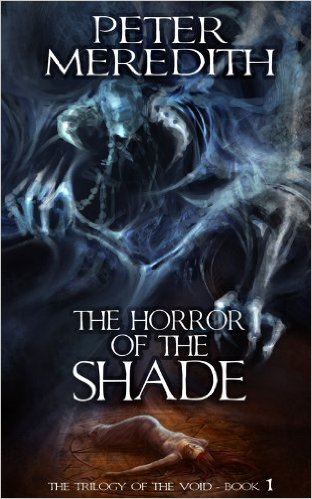
A. The clear call of courage within it matched what I was trying to write about with two of the characters William, the father and Will, the son. Both had their courage tested throughout the book, this being especially true with the confrontation of the demon.
Q. In Sprite, you tell the story of Audrey “Odd” Wyatt, a twelve-year old girl afflicted with startling, dreadfully red eyes. To add to her problems, she’s saddled with Karen, her miserable, bar hopping alcoholic mother who rarely misses an opportunity to make Odd feel bad about herself. What I noticed about this book is that in Odd, you’ve created a very sympathetic character while Karen is likely the kind of character that readers will love to hate. How were you able to craft two completely different character types in one story?
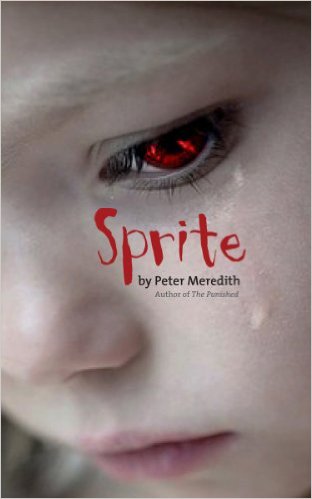 A. Anyone who wishes to become a writer needs to be a student of humanity. It’s far more important than knowing where commas are supposed to go, or what participles are. When you know people and when you realize that human behavior is, for the most part, unchanging, then almost every character is opened to you as a writer.
Q. Peter, thanks for taking the time to share your expertise with me today. Before I go, do you have any last minute advice that might help my friends and I survive the East Randomtown Zombie Apocalypse?
A. Run very fast.
Hello 3.5 readers.
Day 15! We’ve reached the half-way mark for #31ZombieAuthors
For those of you just tuning in…
So that’s all you need to know, 3.5. At some point, I’ll have to archive all of this in one easy to read format but until then, sit back, relax, and enjoy as the second half of #31ZombieAuthors begins!
FIND THIS ZOMBIE AUTHOR ON:
Today’s guest is Kate L. Mary, author of the Broken World series. Follow protagonist Vivian Thomas on the road in the midst of zombie mayhem as she and her DD’s convince a duo of redneck brothers to give her a ride to California so she can locate the daughter she gave up for adoption.
A stay-at-home mother and Air Force wife, Kate and her family have lived in Georgia, Mississippi, South Carolina, California and Oklahoma.
Her Amazon author page states:
“Kate prefers nerdy, non-traditional heroes who can make you laugh to hunky pieces of man-meat…”
So in other words, there’s a distinct chance I might be able to convince her to become the Bookshelf Battle Blog’s 4.5th reader.
Hello Kate. Thanks for taking my call on the space phone.
NOTE: BQB=BOLD; KATE=ITALICS
Q. Let’s talk about the role of trust in a zombie apocalypse. Sometimes a disaster can bring out the best in people. Other times, it can bring out the worst. Unfortunately, you never know who you’re dealing with until it’s too late. My group and I, having just located a survivor camp operated by a retired used car salesman/former television extra, are having trust issues. I think it’s a pretty sweet set-up. My girlfriend thinks we should run. Naturally I thought about Vivian, who makes the tough decision to trust a pair of redneck brothers on her quest to find her daughter. Can anyone ever be fully trusted in a zombie apocalypse?
A. Trusting people during normal times can be tough, but when it comes to a lawless world it’s an even bigger gamble. I know a lot of people hold the belief that humans are basically good, but I wholeheartedly disagree. People are full of bad intentions, and too often the only thing keeping them from acting on those intentions are the consequences. Take away the threat of punishment, and the world will very quickly get a lot darker.
In the case of the used car salesman/former television extra, I’d have to say I’m with your girlfriend. I know the idea of a used car salesman being sleazy and underhanded is just a stereotype, but throw the role of television extra on top of that and every warning bell in my head goes off. This person spent his free time pretending to be someone else on a regular basis. What makes you think that just because the world has ended, he’s stopped pretending?
Q. As a fan of zombie books, movies, TV shows, etc., I’ve noticed that whenever a group of people happen upon a place offering shelter and safety, it’s usually some kind of trick. Someone inevitably ends up robbed, beaten, killed, sold into slavery, chopped up into lunch meat or what have you. Maybe that’s why my better half is so jittery.
As a noted zombie author, can you settle a debate that’s long ranged in the world of zombie fandom? When survivors happen upon a settlement operated by seemingly nice people, should their response be, “Feets don’t fail me now!” or “Thank you for your hospitality. I think I will join you!”
A. In a disaster like this, the idea that there are no good people left in the world has me thinking one thing: If that’s true, why go on? If you’re a good person just trying to survive, you have to assume there are other people out there with good intentions as well. But trusting someone shouldn’t be your first inclination or you’re liable to get robbed, beaten, killed, sold into slavery, or chopped up into lunchmeat. I think it’s important to give off a “thank you for your hospitality” vibe while keeping your eyes open for anything suspicious, much like Rick and crew did when they first arrived at Terminus at the end of season four of The Walking Dead. You have to keep hope alive or you’ll find yourself turning into the very monster you’re afraid to run into, but you need to be smart about it as well.
Q. I’m led to believe you prefer laughable nerds over hunky pieces of man meat. Naturally, as a poindexterish proprietor of a book blog that caters to 3.5 readers, who currently finds himself knee deep in a zombie apocalypse, I’m intrigued. My ensuing inquiries are:
Q1) Is that actually true or is that just something that women say before they make a beeline for the hunky man meat?
A. It’s actually true! While hunky pieces of man meat are great to look at, that was never the type of man I dated, and it definitely won’t be who I rely on when the zombie apocalypse hits. Strength will only get you so far before a horde of zombies decides they want to feast on a meal of muscles, but intelligence will keep you going. And a sense of humor will not only keep you from losing your mind, but give you something to keep going for. While I do share the common problem of most female Walking Dead viewers—a love of Daryl Dixon—I have to admit that I’m in major awe of Glenn Rhee. I wouldn’t mind teaming up with him at the end of the world!
Q2) Point of clarification: Are we talking about a full blown, genuine, bonafide Star Wars toy owning geek despite being an adult type of nerd or the Hollywood version of a nerd, which is usually just a hunky piece of man meat that someone in wardrobe whipped a pair of glasses on? (A hunk in nerd’s clothing, if you will.)
A. I’m all about the adorable kind of nerd. Star Wars toys aren’t a must, but they also aren’t unwelcome—I own a few nerdy Walking Dead toys myself. My husband is a toy collecting nerd as well. For Father’s Day the last two years I got him Simpsons Lego sets. They are currently assembled and on display above our fireplace.
Q3) What is it about a nerdy/non-traditional hero that intrigues you?
A. I think it’s the unexpected. Seeing someone who didn’t think much of himself before the apocalypse rises to the challenge and becomes an important part of a group’s survival. Anyone who looks at a “hunky” guy will assume he’s going to be able to take care of himself, but it’s the people who surprise even themselves who are the most enjoyable to root for.
Q4) Who are some of your favorite nerdy, non-traditional, non-hunky heroes?
A. Glen Rhee of course. The evolution of his character over the last five seasons has been incredible to watch. Every now and then I like to turn on an episode from season one of The Walking Dead just to compare the characters, and seeing how much he has grown since then is mind-blowing.
I was also a huge fan of Chuck when it was on. Watching Chuck fumble his way through assignments was adorable, but seeing how much he had changed by the end of the series was even more fun.
Q. The Broken World series is in Amazon’s top one hundred when it comes to post-apocalyptic and dystopian 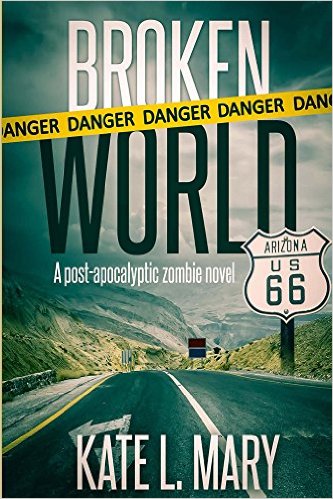 fiction. What’s your secret to bringing so many readers into your world?
A. Honestly, I think it had a lot to do with timing. I wrote the first three books a few years ago, but sat on them for a bit while agents and editors took their time considering publishing Broken World. By the time I finally got around to putting the first book out myself, The Walking Dead had reached the status of TV phenomenon, and it’s popularity really helped the series take off. The fact that it’s a great series—I never get tried of rereading these books!—and so different from a lot of zombie books out there helped even more.
Q. What inspired you to take your ideas and turn them into books that zombie fanatics the world over can enjoy?
A. The Walking Dead, of course. I’ve always loved post-apocalyptic stories, especially zombie stuff, but the sudden popularity of The Walking Dead helped form a story in my head that I just couldn’t get rid of. I almost didn’t write it as a zombie novel, though. If you do any kind of research on what editors/publishers are looking for, you’ll discover the sad fact that they do not want zombie fiction. They say there’s no market for it, which is just crazy—especially now! I wrote the first chapter of Broken World as a post-apocalyptic novel similar to The Stand, but without the religious undertones. But only one chapter in and I changed my mind, deciding to take a risk and write the zombie novel I’d been thinking about for months. Broken World was the result, and I’m so glad I took that leap.
Q. Kate, thanks for stopping by, and especially for enduring my inquisition vis a vis nerds vs. hunks. Before I hang up the space phone, do you have any last minute advice that could help my friends and I brave the zombie apocalypse?
A. Don’t lose hope! It’s the one thing that will get you killed faster than a horde of zombies. If you don’t have some kind of hope for the future, you won’t fight as hard or run as fast. You’ll find yourself wishing that you never wake up when you lay down to sleep at night. If you don’t have any hope that you will be able to find a safe place or that the horror will one day come to an end, it won’t be long before the only end you can imagine is death.
Thanks so much for having me, and I hope you and your group find a safe place to ride out the worst of the zombie apocalypse!
FIND THIS ZOMBIE AUTHOR ON:
Today’s zombie author is Michael Cairns, the scribe behind the series, Thirteen Roses, an epic tale that begins with a flower seller who’s forced to save the day in the face of a zombie apocalypse.
Here on the Bookshelf Battle Blog, I like to talk to people about their own personal battles. Currently, Michael’s winning the battle when it comes to making a name for himself in the writing game, but analysts say the struggle to retain his hair might be lost.
I’m dialing him up on Alien Jones’ space phone now. Michael? Bookshelf Q. Battler here. Let’s talk.
NOTE: BOLD=BQB; ITALICS=Michael
Q. Michael, I’m stuck in a rather stressful situation. I’m in the middle of a zombie apocalypse that’s struck my hometown. As if that’s not enough, a maniacal alien despot who hates reality television has threatened to conquer Earth if I die before writing a novel that’s so good, it inspires the masses to abandon any and all interest in shows in which vapid, mindless, quasi-celebrities are followed around by cameras all day. On top of that, a corrupt general is trying to blow me up because I allowed one of my correspondents to write about a top secret mission dating back to World War II on my blog.
But this interview isn’t about me, it’s about you, and I don’t want to bore you with my personal problems. Suffice it to say, all this stress made me think about your situation. This year began with you making a pledge to your fans that you’d write fifteen books in 2015. Further, you promised to submit a daily video log chronicling your efforts.
We’re on the tail end of 2015. How has the challenge gone, what inspired you to do this in the first place and how have you dealt with the ensuing stress?
A. Hi Bookshelf. First, can I say how sorry I am to hear about your terrible situation? That sounds like pretty dire straits to me. If you’ll forgive a little advice, I’d urge you to keep eating your greens to keep your strength up, and never leave home without at least two chainsaws about your person at all times.
With regards to your question, it’s been a pretty crazy year. Just to clarify, the challenge was to publish 15 books. My inspiration for this was that I wrote 15 books in 2014. I then sat down with another indie-published friend of mine who threatened to kick my arse unless I actually did something with them. So, the challenge was born. To keep things interesting, I also opted to write a million words, publish a short story on my blog every week and vlog my journey every day. The challenge has, so far, gone remarkably well. I’ve published 6 books and have another three less than a month away. So the last few months of 2015 are going to be pretty packed, but it’s still doable, assuming I’m willing to completely lose what remains of my sanity.
Regarding the rest of the challenge, that I’ll easily do. I’m going to hit a million words sometime around the beginning of October, and my short stories are, fortunately, getting better each week.
As far as stress goes, it’s been a mix. I’ve given up shaving, given my chocolate addiction free reign, and taken to shouting at myself on long car journeys…okay, maybe not so much of the last one. It has been stressful, though mostly in a fun way. I have two young children at home and also decided to move house in July, so that’s only added to the fun…
Q. I whine louder than a balloon with air escaping out of it about how I can never find the time to write, but here you are living the dream. Do you have any advice for my 3.5 readers about how to balance writing with all of the other curveballs that life throws our way?
A. Excellent question. I think the answer to that lies in a couple of things. The first is to examine yourself and your habits, and decide how organized you are. If you are someone who does things in a random, scatty kind of way, it can be tricky to develop the discipline to write on a regular basis. Tricky, but by no means impossible. I wrote a guest blog post on how to develop said habit, which you can check out here.
The second thing is to decide how important writing is to you. I know that seems kind of obvious, but it’s easy to say how much it matters. The question is, is it important to ditch reruns of The Walking Dead? Is it important enough to wake up an hour earlier each morning? Simple things that will develop your writing habit.
I can highly recommend Julie’s website that tracks her first year in the self-publishing business. She’s a romance writer, so if you’re struggling to find the light at the end of your apocalypse shaped tunnel, Bookshelf, it might just help brighten your day. 🙂
Q. How has daily video logging worked out for you? Is that a means of author/fan communication that you’d recommend for aspiring writers?
A. I have to be honest about this, it’s been hard work. I’ve got the process, from recording the vlog to having it uploaded onto Youtube and posted on my blog, to tweets scheduled down to about 20 minutes, but there have been more than a few nights when it’s the last thing I’ve wanted to do. Have said that, it’s also been great fun. I’ve gotten almost comfortable talking to myself, certainly improved my ‘umms per minute’ rate, and have a wonderful record of the year. I’ve also got to vlog from all sorts of interesting places. I toured Italy a couple of times with my band in the summer, so I’ve vlogged from over there. I’ve also been to numerous festivals and concerts and done the same from there, so it’s been fun. With regards to author/fan communication, I wouldn’t put it near the top of the list. I’ve had a few nice chats with the videos as a springboard, but not nearly as many as via emails and twitter.
Follow Michael’s 15 for 15 challenge on cairnswrites.com!
Q. One Goodreads reviewer described Thirteen Roses as “The Walking Dead as if written by Neal Gaiman. Is that a fair  assessment and if so, why?
A. I wish!! I loved that quote. It was the kind of quote you couldn’t pay to get, and that it was entirely not my doing was even better! Neil Gaiman’s Sandman is still one of my favorite comic series of all time, so I was beyond flattered to have that comparison made. I’d like to think I could get somewhere close to him in terms of characterization if nothing else, but I’d have to leave that up to the reader to decide…
Q. There are a number of zombie apocalypse books which feature a science based beginning, i.e. an experiment gone wrong, (which coincidentally is how my zombie apocalypse began), terrorists who discharge a virus, or some other physical phenomena. I understand your zombie series has more paranormal origins. I don’t mean to ask for spoilers, but can you elaborate a bit for my 3.5 readers?
A. Without wanting to cop out, it’s very difficult to divulge much of the paranormal side of things without giving everything away. Having said that, I’m happy to say that the origin of the zombies is fairly standard. Am ambitious and slightly naive science student spends far too much time messing with an airborne-delivered toxin. The government takes it away from him, only to have some religious nuts discover the answer to their very screwed up prayers and get involved. The paranormal element comes in with the people left behind, the sorry survivors such as yourself. There’s more to it than that, but I really don’t want to spoil all the fun.
Q. I might know a guy who’s also losing the battle for his hair. Note that it’s not me at all, just some other unnamed person. Any advice on follicle stimulation that I could pass along to this individual or should he just give up the goose?
A. Alas, I’ve tried all sorts. I can confirm that having kids, moving house, and eating your own body weight in chocolate don’t help with hair growth, despite all my wife’s assurances that they would. Actually, she might not have said the thing about the chocolate…
Q. Michael, thanks for taking a few minutes to speak with me today. Before I go, do you have any final words of wisdom that might help my friends and I survive the East Randomtown Zombie Apocalypse?
Food! Head to the nearest library and get yourself some books on farming. Simple, self-sustaining farming is a must with all that supermarket fruit and veg already rotting away. Similarly, find some goats and put a fence around them. Chickens, too, if you can find them.
However, considering the people you surround yourself with, I’d have thought finding a space ship and getting the hell off this Godforsaken rock would be the only true way to survive.
Best of luck and lovely to talk to you.
BQB EDITORIAL NOTE: Thanks, Michael! I’m going to check with Alien Jones on that, but he’ll probably bore me with some lecture about Intergalactic Space Law, which I usually just take as code for him being too lazy. Good luck with your challenge!

FIND THIS ZOMBIE AUTHOR ON:
Bram Stoker award winning novelist Joe McKinney is to fans of zombie fiction what Elvis is to rock and roll. Simply mention Joe’s name to zombie enthusiasts and they’re likely to swoon and pass out.
If a zombie invasion were to ever go down, Joe could handle it. After all, in his day job, he’s a Sergeant with the San Antonio, TX Police Department, where he’s a patrol supervisor. He’s also worked as a homicide detective and a disaster mitigation specialist.
 As if that weren’t impressive enough, he’s also the author of the Dead World series. The action begins in Dead City. After a series of hurricanes rocks the Gulf Coast, a zombifying virus spreads to San Antonio, where police officer Eddie Hudson has to brave a zompoc in order to get his wife and son to safety.
Joe’s also the author of the Deadlands series, the latest book of which, The Dead Won’t Die, came out last month on September 29. In fact, word has it that he’s heading to Atlanta October 16 and 17th for book signings, so if you’re in The Walking Dead territory, you might want to keep a pen handy.
Thanks for taking the time to speak with me today, oh wise zombie master. My 3.5 readers and I greatly appreciate it.
NOTE: BOLD=BQB; ITALICS=JOE
Q. You got in on the ground floor of a zombie fiction renaissance that began in the mid-2000’s and to date, doesn’t show any signs of stopping. What is it about zombies that have kept fans of these creepy creatures coming back for more after all these years?
A. I was on a zombie panel at a horror convention a while back, and one of my fellow panelists was a writer who is generally regarded as “one of the literary elite” sort. I like this guy. I have a lot of respect for him, both as a person and as a writer. I’d even go so far as to call him a mentor. And we’re good friends on top of that. Well, somebody from the audience threw out a question very similar to this and my friend answered something like this: “Zombies are a symptom of our self-loathing. We so hate ourselves and our society that we invent a straw man like the zombie, a monster that both looks enough like us so that we see in its putrefaction how much we disgust ourselves and yet is anonymous enough that we can imagine those who anger us as we fire an endless barrage of headshots at the approaching horde.”
Now, I don’t totally buy that. I don’t think self-loathing, or even societal loathing, is a strong enough emotion to turn a drive-in movie monster into a cultural archetype. There may be something to that explanation, especially for the readers who spend too much time arguing about politics on Facebook, but that isn’t everybody.
What about the rest of us? Why do we love zombies? Well, aside from the creeping dread that comes with imagining streets filled with the undead and the way really great zombie stories tend to treat the apocalypse like a crucible that distills humanity down to its core, I think the zombie has caught on because it’s a blank page upon which writers and readers can draw anything they want. What are you afraid of? Disease; death of the mind, a la Alzheimer’s; societal collapse; or possibly illegal immigration? You name it, if you’re scared of it, we have a zombie for you. They are sponges for metaphor. They can be anything you want them to be, and I believe that that’s their secret storytelling power.
Q. On your site, you mention how your daughter’s birth inspired you to follow your dream of becoming a writer, but it wasn’t easy. You explain how you penned a 1950’s style space opera, came to the conclusion that it was “crap,” and wondered why you were even bothering. Honestly, in my experience, most aspiring authors stop when they reach the “This is crap!” point, but you kept going and today you’re a rousing success.
For those of us who are convinced our writing is “crap,” can you give us a little pep talk to inspire us to keep going until we hit our non-crappy groove?
A. Getting started is hard. Really hard. There are days when you spend a lot of time looking at yourself in the mirror wondering why you’re even bothering. And when you do finally get your first few pieces out there, there’s never a shortage of nasty trolls to tell you how you shouldn’t have bothered in the first place. You need a lot of hard work, a lot of bullheaded determination, and a really thick skin. Oh, and a super harsh inner critic that isn’t afraid to occasionally be a cheerleader. Like I said, it’s hard.
But it can be done. And while I can’t tell you the secret of finding that determination you need to get out of your own way, I can let you in on a little secret that will make it easier for you to write that first novel.
First, outline your story, in exhaustive detail, before you ever start thinking of your opening sentence. It seems like every time I go to a convention, somebody says, “You know, I’ve got this novel I’ve been working on for three years now.” I usually stop them right there and ask them if they outline or write by the seat their pants. Invariably, I get some confused rambling about how Stephen King said writers should be pantsers because anything else would stifle creativity. I usually answer by pointing out that never getting the story written is even more stifling to creativity. Outline, outline, outline. It’s the first step to success. My outlines for novels will usually go 70 to 90 pages and they take me about two months to write…about the same amount of time as the novel itself.
The second part of the secret? Write a little bit every day. Don’t listen to the stories of Ray Bradbury writing Fahrenheit 451 in 9 days, or Robert Louis Stevenson writing Dr. Jekyl and Mr. Hyde in 3 days. You don’t need that kind of self-abuse. What you do need is a manageable word count that you promise yourself each day. When I started out, that promise was 500 words a day. These days, it’s 1,500. But you have to work up to that. You have to start with digestible chunks and gradually build up from there. Remember: How do you eat an elephant? One bite at a time!
Q. “Write what you love” is one piece of advice you mention on your blog. Specifically, you hit your stride when you realized that after growing up on a steady diet of monster flicks, the zombie apocalypse genre was right up your alley.
So in other words, aspiring writers should just be themselves and stop trying to be something they’re not?
A. Yeah, pretty much. One simple lesson I try time and again to convey is that if you want to be interesting, you have to be interested. What that means is that you have to love what you’re writing about. I don’t mean simply loving zombies, so you write a zombie story. I mean loving the life of being a cop with a family, and so you write a zombie story about a cop trying to fight his way home to his family on the first night of the zombie apocalypse. You’ll see the same love in every writer you read, both the great ones and the hacks. The point is that writing is all about getting your inner joy out there, even if the mood in which that joy conveys is tragic. Simply put, if you don’t love it, nobody else will either. It doesn’t matter what you’re interested in. If you are crazy cool madly in love with ladybugs, and you write a murder mystery, or a romance, or a horror novel, or a science fiction space opera about how cool ladybugs are, your chances of successfully connecting with an audience just went up about ten thousand percent. We don’t care what your interest is, just that you convince us that you love it, and that we should too…through your characters!
Q. “Write what you know” is a phrase often heard in the literary world. As a police officer, you know law enforcement procedure and it shows in your writing. For example, when I discovered that Dead City involved a series of hurricanes, it didn’t surprise me to learn that you worked as a disaster mitigation specialist.
How else have you drawn on your police experience to bring greater detail to your writing? And should aspiring scribes go out and get some experience in something, anything before they put pen to paper?
A. Well, I have to be careful about that. My department has specific rules about writing for publication that prohibit me from writing on cases I have personally worked on and cases that have yet to be adjudicated. You can imagine why. Imagine being a rape victim. You somehow work up the courage to report the rape, and you spend the afternoon pouring your soul and anger and all the rest of it out to a detective. Now imagine that detective turns around and sells your story to some magazine somewhere. Imagine the outrage and violation you would feel. I take my oath as a cop very seriously, and that trust is a bond I will never break.
Still, I get quite a bit of mileage from the things I’ve learned on the job. Being on the job you learn a lot about human nature, and that definitely helps with writing. It also helps with creating a unique niche for my writing. Lots of horror utilizes police procedure, but grudgingly, because most writers lack any firsthand knowledge of it. Writers will create situations where the police have to make an appearance, and then they’re forced to tap dance until they find a reason to get rid of the police. I see it all the time. I don’t have that problem, though. I would definitely recommend that all writers develop some kind of skillset like that, be it beekeeping or pot making or anything, really.
Q. You hold a Master’s Degree in English Literature. For anyone out there hoping to break into the literary world, do you recommend such a formal course of study?
A. It worked for me, but I’m just one voice shouting in the wilderness. I know hundreds of writers, and they come from every profession imaginable. Some are butchers; some are call girls. Some are beekeepers; some are college professors. Some are cowboys; some are stand up comedians. One writer I know owns a barbeque restaurant in New Braunfels, Texas that serves the best braised beef short ribs you could possibly imagine. It really doesn’t matter what your background is. What does matter is that you love something so much that you want, want, need to fit it into a story. Find that spark inside you, and the words will come. I promise.
Q. OK. Here’s a big question. You’re a busy police officer. On top of that, you’ve got a family. And yet, amidst all of these important commitments, you have managed to have an amazing career as a writer.
Meanwhile, I don’t want to call myself a slacker, but one time I sat down with my laptop to write an epic masterpiece, got frustrated after the first few lines, then ended up watching a Steven Seagal movie marathon while devouring an entire box of Oreos instead.
Please, for myself, and anyone else who can’t get their act together, give us some tips on how to juggle work, family, other stuff that happens in life, and still find time to pursue writing.
A. Any author who tells you every day is an orderly procession of getting the words on paper is a filthy liar. Some days are hard, even after you make a name for yourself. Some days, the Oreos and movie marathons are what the body and soul need. There’s no shame in that.
But you have to hold two seemingly disparate ideals in mind if you want to write professionally. First, you have to have a love of craft and a determination to keep butt in chair that, frankly, defies human nature. The kids are playing with the dogs in the backyard, and begging you to come join them. There’s a lovely breeze blowing. Your youngest looks at you with a smile you know won’t be there in her angsty teenage years.
But you have a deadline.
That kind of denial of human nature. Bullheadedness, my wife calls it. Maybe even assholery. Yeah, it sucks that bad.
But how do you get to have problems like that? Well, that comes with manageable word counts. Seriously, folks, 500 words a day. Treat everyday like it’s NaNoWriMo. Do 500 words a day. You can do it. Outline first, figure out what you’re going to be writing during those precious few moments out of each day that you can spare for the keyboard, and then start typing. Get the first draft done. Don’t go back and edit what you wrote the day before, just push forward to the end. Once you’re done, go back and edit. That’s why they call them first drafts.
Q. Thanks for checking in, Joe. Before I go, do you have any last minute advice that might help my friends and I survive the East Randomtown Zombie Apocalypse?
A. Well, yes…obviously Cardio! Oh, and as a cop, I wholeheartedly recommend the double tap as well. But after that: Be smart. Be watchful. Pay attention; it don’t cost nothing. Take a good look around you every moment of every day. Even if the apocalypse doesn’t come (and I think I’m not alone in kind of wishing that it would come), you will still have the observational aptitude to write about it.

FIND THIS ZOMBIE AUTHOR ON:
My guest today is Rachel Aukes, author of The Deadland Saga. Set in a zombie infested midwest, the first book of the series, 100 Days in Deadland, was named one of the best books of 2013 by Suspense Magazine. The trilogy concluded in May of this year with Deadland Rising.
Under the pen name, “Berinn Rae,” Aukes also wrote Stealing Fate, a USA Today recommended read.
Ahh let me see here. Pick up the old space phone. Dial up Rachel. It’s ringing. Hmm hmm la la la. Hello!
RACHEL: Hey, BQB. Great to hear from you! How’s life treating you?
NOTE: BOLD=BQB; ITALICS=Rachel
 Q. Terrible, Rachel. I’m currently riding out a zombie apocalypse in a small locked room. Outside, zombies are desperate to get in here and gobble me up like a nice Christmas ham. Inside, I’m stuck with my insufferable ex-girlfriend, who complains about everything I do. Naturally, I feel like I’m trapped in the seventh circle of hell.
But I don’t want to bother you with my personal problems. What I want to know is what inspired you to weave that classic English 101 staple, Dante’s Inferno, into 100 Days in Deadland?
A. I’d always wanted to write a zombie tale but never found the right inspiration… that was, until I was watching O Brother Where Art Thou one night, which is a quirky retelling of Homer’s Odyssey. Dante’s “Inferno” popped into my mind, and instantly I knew the zombie tale I needed to write.
Oh, and look at the bright side. You’re not trapped inside with two ex-girlfriends.
BQB EDITORIAL NOTE: TWO ex-girlfriends? What am I, Hugh Hefner?
Q. The series continues, mashing Dante Alighieri’s other writings with zombitastic goodness. I’m going to go out a limb and guess you’re a lover of the classics. If you could zombify another classic novel, which one would it be and why?
A. I do love the classics. Most modern stories I’ve read seem to be simply new versions of old stories. If I zombified another classic, I’d go for The Scarlet Pimpernel by Baroness Emma Orczy (a newer classic). I think it’d be a hoot to write a fun romp of a witty master of disguise who rescues people during the zombie apocalypse.
Q. Your protagonists come from two very different backgrounds. Cash is an office worker with few survival skills while Clutch is a battle hardened veteran/PTSD sufferer. Do disasters have a tendency to bring people together who would normally never have anything to do with one another?
A. I believe disasters unveil the best and worst in people by throwing them into inconceivable situations without a lifeline. Cash and Clutch never would’ve met in their normal lives. It took Cash running from zombies on the interstate and being given a lift by Clutch in his big rig for the two to be given the chance to meet… and discover that they made a perfect zombie-killing pair.
Q. You’ve also written sci-fi romance under your pen name, “Berinn Rae.” What are some of the key components of a good sci-fi romance story?
A. Sci-fi romance needs to have the same ingredients of any good story—a tempo that turns the page, characters we can love or hate, and a plot that makes us think. For sci-fi romance, you sprinkle on a happily-ever-after ending (or happily-for-now in the case of my stories since I’ve never been one for Disney princess stories). Then, stir in elements of science fiction. In my Colliding Worlds trilogy, an intergalactic war came to earth.
Q. Rachel, you’ve received accolades from USA Today and Suspense Magazine. Did you ever dream you’d get this far when you first put pen to paper (or fingers to keys?)
A. Hell, no. I began writing because I had too many stories playing bumper cars in my head. I was ecstatic when people paid money for my stories. Whenever my stories receive accolades, I’m downright delirious. I love telling stories—that I’m fortunate enough to be building a career out of it makes me feel like the luckiest person on earth.
Q. Speaking of, how did you end up writing professionally?
A. After I wrote my first story (a paranormal thriller), I shopped it around to a few agents and small presses. One of those small presses gave me my first break (This was before self-publishing had become a big thing). With that first sale, I learned the full editing process and the publishing process on a publisher’s dime. Not long after, I wrote a sci-fi with mild romantic elements and got a three-book deal with a larger house for the Colliding Worlds Trilogy. It took me three years before I dipped my toes in the self-publishing waters with the Deadland Saga, and I’ve never looked back.
Q. Thanks for taking the time to help a nerd out. Before I return to my own seventh circle of hell, do you have any last minute words of advice that could help my friends and I survive the East Randomtown Zombie Apocalypse?
A. Use the ex-girlfriend as bait so you can escape. It’s a win-win situation… for you, anyway.
BQB EDITORIAL NOTE: Not a terrible idea. I’ll submit it to the group and let them mull it over.

FIND THIS ZOMBIE AUTHOR ON:
Today’s guest is Armand Rosamilia. A New Jersey native transplanted to sunny Florida, he’s an active member of the Horror Writer’s Association, a baseball and metal music fan, and an expert on everything zombie.
Armand is the author of over one-hundred and fifty stories, running the gamut from horror and zombies, to contemporary fiction, thrillers and more. Not one to be hung up on genre labels, Armand’s goal is to write a good story, no matter where the subject matter takes him.
When he isn’t busy writing, Armand runs two very successful podcasts on Project iRadio:
Arm Cast: Dead Sexy Horror Podcast – interviewing fellow authors as well as filmmakers, musicians, etc.
Arm N Toof’s Dead Time Podcast – with co-host Mark Tufo, the duo interview authors and filmmakers and anyone else they feel like talking to.
Zombie fans will want to check out his series, Dying Days, which chronicles zombie killer Darlene Bobich’s ongoing efforts to save the day from the undead.
Welcome Armand.
NOTE: BOLD=BQB; ITALICS=Armand
Q. I’m having a hard time getting started as an author. I have several ideas but am never able to focus myself on just one. I’ll work on one idea for awhile, get distracted, then before I know it, I’m onto something else and nothing ever gets done. What advice do you have for someone in my situation?
A. Just keep writing. I have 5-7 projects going at all times so it never gets stale. I might work on one more than the others (especially if it is already paid for and I have a solid deadline) but the goal is just to keep writing and get your daily words in so it keeps growing.
Q. Why are people so fascinated with zombies? Is it the creatures themselves? Is it the fantasy of living in a post-apocalyptic world with no rules? Is it something else?
A. Zombies are just cool to me. I know you can do the entire ‘mirror to consumer society mentality’ crap if you want, but they are just interesting to write and read about for me. And we all want to shoot the neighbor in the head but can’t until they turn, right?
Q. Do you think zombies are going to stick around in the entertainment world for awhile? Is there another type of monster that could unseat them?
A. Everyone keeps talking about how five minutes ago zombies are, but I don’t see them ever truly going away. There will always be a small rabid fan base into zombies. I’m one of them. I’ll keep writing zombie stories until I have nothing more to say about them.
Q. What inspired your interest in zombies and moreover, what motivated you to write about them?
A. The Rising by Brian Keene. I was always a fan of some zombie movies but his book showed me you can do something unique with the genre. It led me to write a couple of flash fiction pieces and Highway To Hell, an extreme zombie novella. That led right into Dying Days.
BQB EDITORIAL NOTE: Brian Keene was kind enough to grant me a Twitter interview. Check it out!
 Q. Regarding your protagonist, Darlene Bobich, one Amazon reviewer wrote, “she is a well-developed character who grabs a hold of you with her guts, fears, pain, uncertainty, and determination to keep going.” There has been a lot of discussion for the need for more female roles in fiction lately. How did you come up with the idea for Darlene and how were you able to portray her in a way that intrigued readers?
A. It started out as a flash fiction piece I wrote for an anthology. I wanted to see if I could write a zombie story. The idea was simple: a woman is faced with having to shoot her turned father with the gun he bought her. I loved the character (who is named after a real person, a friend I’ve never actually met on Facebook) and wanted to portray her realistically in future stories. She’s a regular woman. A little overweight, average looks, boring mall job, and no military training. She cries, she has panic attacks and she is just someone you can relate to.
Q. You’re also the author of Keyport Cthulhu. Kudos to you, sir, for I’ve always felt Cthulhu has been underrepresented in fiction. So here’s my question. Zombies vs. Cthulhu – who would you put your money on?
A. I will not give the odds on it, because if either side wins we all lose. Isn’t that how it works? But it would be a helluva fight to get some popcorn and sit down and watch as the world ended.

Armand and Fun-Sized Cthulhu
Q. Thanks for taking the time to talk with me today. Before I go, do you have any last minute advice that might help me survive the East Randomtown Zombie Apocalypse?
A. Keep your eyes open and don’t get caught in a dead-end or surrounded by these monsters. Good luck.

FIND THIS ZOMBIE AUTHOR ON:
By: Special Guest Interviewer Video Game Rack Fighter
Zombie movie buffs rejoice because today’s guest is none other than Devan Sagliani, author of the original screenplay for the movie HVZ: Humans Versus Zombies, a satirical thriller flick based on the live action role playing game of the same name. As if that weren’t enough, he also penned the Zombie Attack! series, The Undead L.A. series, The Rising Dead, A Thirst for Fire, and most recently Saint Death. Don’t forget to check out Escapist Magazine for his bimonthly horror column, Dark Dreams.
NOTE: BOLD=VGRF; ITALICS=Devan
Thanks for taking my call, Devan. Bookshelf Q. Battler would have called but he’s too busy arguing with his ex-girlfriend, which leads me to my first question:
Q. Is it possible for a group of zombie apocalypse survivors to make it when they’re at each others’ throats? I think we’ll work it out so don’t worry about us, but generally speaking, if you had to give a pep talk to a bunch of survivors to convince them to drop their petty differences and focus on staying alive, what would you say?
A. I’m more of a loner than a leader these days, but if it the role were forced on me I’d probably remind them that no one makes it in this world on their own, that we all work better as a team, and that if we stick together we can not only survive this nightmare but also create a better future for all of us in the process.
Q. You wrote a screenplay for a zombie movie. What was that experience like? Can you describe it for BQB’s 3.5 readers?
A. The movie was based off of the live action role playing game Humans Vs. Zombies, or HVZ. I’d had an idea for a zombie movie in mind when I got the call from a director I’d worked with before and the timing was just right. There is a downside to working in Hollywood, which is ultimately the lack of creative control you get as a writer. That’s why I decided to make the jump to writing novels, so I could make all the decisions and know they wouldn’t get changed at the last minute without my knowledge or consent. After all, when your name is on something you want to be able to be proud of how it turned out and not feel like anything was compromised.
Q. In Undead L.A., one might argue that the City of Los Angeles is almost a character itself. From a pilot hijacking a plane from LAX in order to flee the insanity to a detective on the trail of a case that begins in West Hollywood, you provide a great deal of detail about the city. How were you able to make L.A. leap off the page?
A. I think the best answer is simply that I love this city with all of my heart. I was born and raised here in Los Angeles and at this point I don’t want to live anywhere else. Los Angeles will always be my home. I feel like sometimes the city gets a bad rap from all the people who come here looking to create a better life for themselves in the entertainment industry or make it in Hollywood. I wanted to show off just how amazing and diverse this sprawling metropolis really is. I think too that people who have visited L.A. or lived here for a while before returning to where they are from can enjoy reading about the characters moving through the same streets they remember, seeing all the landmarks, and eating at places they ate at while they were here. I know I always enjoy that when I read Michael Connelly’s books.
Q. In Book Two of the Zombie Attack! series, your protagonist, Xander, is put in charge of a survivor colony. With the help of his wife, Felicity Jane, the couple deals with reconstruction efforts, constant zombie attacks, and a bloodthirsty group of cannibals. That last part brings a question to my mind – who’s more dangerous in a zombie apocalypse? Zombies, or the humans who take advantage of the chaos that zombies create?
A. In the Zombie Attack series the zombies themselves mostly just move the action along as Xander does his best to deal with a host of perilous issues that now exist in the post Z-Day world. Zombies are absolutely dangerous, no question about it, but many humans are far worse than the biters because of the deliberate evil they act on in the absence of established law and order. I feel confident that this is how things would devolve in the event of any major crisis or apocalypse. One group of people would work to uphold the common good while the rest would fight over what they could get and set up their own territories like warlords. Let’s just hope we never have to find out!
Q. At least 2 of BQB’s 3.5 readers are wannabe writers. What advice do you have for someone getting started in the writing game?
A. First I’d recommend that they read ON WRITING by Stephen King. That book changed my life and got me writing novels. Then I’d suggest that they give themselves time to grow and don’t be impatient to get stuff out there before it is ready. Take your time to learn your craft and develop your own voice. Last but not least I would tell them not to sign any publishing deals until they know exactly what they are getting themselves into. These days there are a lot of small press publishers who will promise the sun, the moon, and the stars to get new talent but can’t offer much more than the writer could do on their own with a Facebook and Twitter account.
Q. Thanks for your help, Devan. Before I hang up, do you have any last words of wisdom to help my friends and I survive the East Randomtown Zombie Apocalypse?
A. Make sure you can lock down one area for you and your loved ones, that it is secure from the living and the dead, and then stock it up with as much clean water as you can get your hands on. That’s going to be a huge issue during the zombie apocalypse. Then go for the canned goods next and nonperishables. Then it’s all about medicine, fuel, and weapons after that. Aim for the head and don’t stop until they are dead! Good luck!
 Bookshelf Battle