Tag Archives: 31zombieauthors

#31ZombieAuthors – Day 18 Interview – Deirdre Gould – Maine Prepping and Self-Publishing

dg

FIND THIS ZOMBIE AUTHOR ON:

Amazon             Website

  Twitter

My guest today is Deirdre Gould, who has strategically placed herself in Maine, where cold temperatures make the zombies run slower and remote isolation means zombifying viruses take longer to spread.  Better yet, harsh storms make it so no one thinks Deirdre’s crazy for prepping.

In other words, she finds it to be a primo spot for writing the After the Cure series, which chronicles a world in which “the December Plague” has turned humans into violent, bloodthirsty, cannibalistic monsters.

I just hope they don’t eat me.  I taste awful.

Let me see if I can Deirdre on the space phone.

Q.  Hello Deirdre.  Are you a prepper and if so, I’ll ask the question I’ve posed to other prepper authors this month.  Why?  Are we all doomed or is it just a better safe and sorry thing?

A.  Hello BQB, things are getting pretty dodgy for you and your comrades! I hope I can help! Am I a prepper? Well, yes and no.  What lots of folks forget about Maine is that most of it is very, very rural.  And in the winter, when the tourists go home, even the cities are kind of rural.  There are some places, like my home town, that first got electricity within my lifetime (and I’m in my 30s).  Not only was a significant portion of my childhood spent without running water or electricity, but even after we got put on the grid, it wasn’t reliable. For a long time, it wasn’t unusual for the power to go out at least once a week.  It’s still pretty normal for it to go down once a month or so. And although our power workers are truly the best, it’s a big state (landwise) and once the power goes out, it could be out for a few hours or several days.  

As recently as the 1998 ice storm, my family spent two full weeks with no power and no running water.  And winter up here is no joke. You know that Stephen King book. The Storm of the Century?  Yeah, we have one of those at least every year.  Really. Had to turn one of the kids over to Linoge like six years ago. So almost everyone has a wood stove, most rural places still have an old hand pump well (and someone that lives there knows how to prime it and is constantly reminding people not to fall in), and lots of us have pantries stocked full at any given moment.  Especially because we can our own goods. And because for many people, the closest grocery store is forty five minutes to an hour away (everything is very spread out here).  Solar panels are big here, when people can afford them. Homemade windmills too.

But I don’t know anyone who has a bunker, unless it’s been turned into a root cellar after the Soviet Union collapsed.  Or a gun unless it’s for deer hunting. While a packed pantry is good, I try not to store more than about six months worth of anything, it’s just not practical for my particular family. And while Mainers have a reputation for being curt or crotchety, we really do take care of our neighbors instead of try to hide what we’ve got from them.  And I know there are lots of very generous preppers out there who do the same, but I’ve also heard stories about secret storehouses and guarded water sources. But probably somewhere in the back of almost every Mainer’s mind is the memory of someone helping them out when they most needed it.  Whether it was being rescued from an icy accident, sharing water with each other during the ice storm, or that emergency delivery of wood or oil in the worst part of February, we’ve all got them. Even in this modern world, we wouldn’t survive out here without each other. Besides, having the neighbors over is an excuse for a party. I like to think of us more as the Hobbits of the Prepper world. We do it because it makes good sense, and because we are always expecting company.  Not because we’re all doomed. 

Q.  Soap.  Water.  Tacos.  iPads.  Netflix.  Showers.  All these great inventions become lost in a zombie apocalypse.  Why do zombie fans fantasize about a world where all these things we take for granted are lost?

A.  I think it’s that old urge to pit man against nature. We want to imagine that we are tough enough to measure up without our crutches. We’ve conquered every bit of this old earth (there’s even a litter problem on Everest and tourists in Antarctica), so there’s no place left for those that feel that drive to explore, to prove that rugged individualistic streak. Much of apocalyptic fiction is concerned with the end of civilization, of course, but why? Is it because there is something inherently wrong with showers and readily available bacon? For the majority of these stories, no. It’s not really about damning our current way of life (though lots of these stories contain “warnings”), it’s about wanting to do better. About wanting to be better. But we all know we are creatures of habit. We won’t stop what we like unless we’re forced to.  We won’t make a better world until the one we live in is destroyed.  These stories aren’t about losing technology and history and massive portions of the population.  That’s just a byproduct.  The real story is about the people that emerge when they are forced to do without.  To do without modern implements, without the convenience and interconnectedness of society, even to do without the most basic and precious commodity we have, other humans and their brain power (cause it’s being snacked on).  It’s about being alone in an unfamiliar world and not only surviving, but making that world a better place.  Starting fresh.  That’s what we all really want to do. Start fresh.

Q.  You provide your readers with an interesting spin on the zompoc genre, namely, your series begins “after the cure” has been found.  This cure turns the Infected back to normal, regular humans but alas, they have to live with the realization of all the horrible things they’ve done.

I hate to ask for spoilers, but here’s the question that pops into my mind.  A zombie turns back to normal.  Should we blame him for eating other humans or should we be all like, “It’s cool, man.  You were a zombie.”

A.  No worries, that’s not really a spoiler, that’s one of the biggest questions of the series and why I started writing it in the first place.  Remember that the non-zombies aren’t totally innocent either.  They would have had to kill to survive as well. In the world of After the Cure, some of the Immunes killed even when they didn’t have to. But they didn’t know that the zombies would be cured. Should we blame them too?  How does a society function when everyone is a killer? You’d think that it would just fall apart. But we know, from our own human history, that it happens. We don’t have zombies, but we do have war and atrocity and cruelty. But when the war is over, when the conflict is resolved, people still have to go home. Maybe their neighbor was on the opposing side. Maybe their boss at work betrayed them to the opposing side. Maybe their grocer was their prison camp guard. But somehow, life goes on, people still interact, even when it seems incomprehensible.  So that’s a running theme throughout the series.  Who is guilty? Who is evil? How do people live not only with their neighbors, but with their own memories?

Q.  In the first book of the series, a court psychologist and a defense attorney work to bring those responsible for the virus to justice.  I could be wrong here, but I can’t think of another zombie apocalypse series where the reader actually gets to see a zombie apocalypse end and people turn their attention towards rebuilding society.  How did you come up with the idea for this?

A.  Actually, it was from reading truckloads of zombie books! I love them, I can’t get enough of them, even the ones that fall into a sort of formula. But after tome number gazillion and one, I realized that the causes of zombieism were always kind of limited.  For the most part, it was either a deadly virus or some chemical spill that caused zombies (with an occasional voodoo spell or electrical malfunction thrown in).  But I’d never seen a zombie story where a bacteria was involved.  That’s it, that was where it started. I started to wonder why nobody ever used a bacteria, and I realized that it was because a bacteria had the potential for an antibiotic, a cure, where a virus didn’t. It violated one of the most cherished rules of zombieism: They can’t be cured, so all you can do is kill them. It’s part of the “fun” of zombie fiction. There is no moral quandary about killing them because they can’t come back. They aren’t “people” anymore.  Zombies who can’t be cured might as well be a tornado or locusts or a volcano, just a natural disaster to be avoided or beaten. But what if that rule changed? What if people discovered that not only could the zombies be cured, but that once they were cured, they could remember everything that had happened while they were sick? And what if they found out late? Really, really late. 

If they were anything like us, the first thing they’d do is try to find someone or something to blame for what had happened. Something to excuse their own guilt. That’s why the trial became the initial frame for this world. But are the defendants really guilty or just convenient scapegoats? 

Q.  What motivated you to start writing?

A.  I’m one of those weird people who never wanted to start doing this for real. I mean, I’ve enjoyed writing since I was a little girl, but I never wanted to be a writer. I went to school for something very different, but when I was in college my mom was diagnosed with cancer. I took a year and a half off from school to help her. It meant many, many really long days of driving and sitting in doctor’s offices and hospitals (remember, everything is far away in Maine!). So to amuse myself, I started writing a novel. I didn’t finish it and set it aside for a long time, but I thought about it often and I’d add a bit here and there. Finally, the year my oldest child was born, I heard about Nanowrimo and decided I was going to finish this book (I think it had been about 7 years since I started it at that point).  At the end of November I had a draft and put it away. Three years later, I’d been laid off from my copywriting job and struggling to find something else and honestly just couldn’t find anything. So I sat down and worked on the book for another year. I pretended it was just going to be for me, that I didn’t care about anyone reading it, but I started reading all these sites by agents anyway. Finishing the book made me more confident and I started working on other things, just for fun. I submitted a few pieces but everything I was reading on the agent sites convinced me that I shouldn’t even bother trying. Nobody ever took on new writers any more. I had a better chance of winning the lottery as being picked up by even an agent, let alone a publisher. And then I heard about KDP. I decided I had nothing to lose, and posted one of my finished novels, just to see what would happen.  It was addictive. I got sucked in.  I still considered it a hobby, something for my spare time, pretty much until last year when I started hearing from readers. Then it started to get serious, because someone besides me actually cared what happened to my characters. I’m now firmly entrenched and I actually sometimes feel guilty because I enjoy doing this so much, it feels like I’m goofing off instead of working a “real” job. 

Q.  Thanks for talking with me today.  Before I go, do you have any last minute advice for my friends and I that might help us survive the East Randomtown Zombie Apocalypse?

A.  Well, you are a couple of weeks in now, you’ve probably got some nicks and scrapes by now. You are going to want to keep any wounds clean and free from infection. In a world where antibiotics will be hard to find, you are going to need some easy alternatives or else that blister on your foot could mean amputation in a few weeks, or worse.  Honey is a great topical antibiotic. It can be rubbed directly onto small wounds to fight off infection before you bandage them. For internal or systemic bacteria (like listeria from that bad deli meat you ate from the mall after the coolers lost power), if you have a silver dollar or a piece of real silverware, some water, and a battery, you can make some colloidal silver to fight that nasty bug off.  Use too muc, though and your skin will turn a lovely shade of blue, permanently. If you listened to Sarah Lyons Fleming on day one, you probably have some baby wipes to clean yourself, but what are you doing about those nasty blood spattered weapons? Those things are crawling with zombie virus. Washing them won’t completely kill the germs, so you’ll need to find some copper. The pipes in your building probably aren’t doing much good now, if the electricity is off. Hack off a length of copper pipe. At night (or whenever you stop to flop down, exhausted from the near constant run/slaughter/run combo) place your pipe over the weapons. In two hours or so, almost all the germs will be gone, even a foot away from the actual copper!  Here’s hoping you make it to day 19!

Tagged , , , , , , , , , , , , , , , , , , , , , , ,

#31ZombieAuthors – Day 17 Interview – Jeremy Laszlo – The E-Mail That Launched a Self-Publishing Career

jl

FIND THIS ZOMBIE AUTHOR ON:

Amazon        Website

Facebook       Twitter

Today’s guest is Jeremy Laszlo, the best-selling author of over thirty novels, including the Left Alive series, which chronicles the journey of Charles as he strives to make good on a promise to his dying wife to deliver their children to safety in the midst of a zombie infested nightmare of a world.

Jeremy’s works have broken the top ten of over ninety Amazon lists by genre, at times reaching the top ten of all books on Amazon.

Our noble scribe resides in Louisiana, where threats to his well-being include alligators, oversized mosquitos, and scorching temperatures.  Luckily, he avoids all that by chilling out in his air conditioned workspace, where he spends most of his time either writing or being boxed by children wearing cartoonishly large Hulk hands.

A pleasure to speak with you, Jeremy.

NOTE: BOLD=BQB; ITALICS=JEREMY

Q.  When it comes to a good zombie apocalypse novel, how much do the zombies actually matter?  Is it the zombies themselves that attract readers or the threat of a lawless, no holds barred post-society world that said zombies represent?  Would it be possible to replace the zombies with hurricanes, tornadoes, plagues, or locusts and achieve the same result?

A.  First, thanks for having me. I think the notion of zombies really pulls from a deeper, darker, cruder portion of the human psyche. There is a part of everyone that craves chaos, especially in a world such as ours where there are rules and limitations enforced on every aspect of our lives. Zombies simply play into that less evolved portion of who we are. In a story, they don’t need to be the driving force, they certainly aren’t in my LEFT ALIVE series. But that element of devolved, cannibalistic people adds a dark edge to any story that readers can really associate with.

Q.  You’ve written so many novels.  Where do you get the ideas from?  For those of us who whine about writer’s block or a lack of inspiration, do you have any advice?

A.  I do write a lot. I’m actually shooting for 4 more releases before the end of the year, including another zombie trilogy. Ideas come from everywhere. My family and life experiences are a great source of inspiration. Truthfully though, most of my books start with a ‘What if’ scenario. It is really the building block for all of my novels, and a concept I explain in detail in my ‘Kindle Fiction Mastery’ book aimed to help struggling writers. For the LEFT ALIVE series, I simply asked myself what would happen if a strain of genetically modified fertilizer had unintended mutations and ruined the world’s ecosystem killing all plants on Earth. You can see how that alone could be an entire series of apocalyptic books (Coming soon), but what if coming into contact with the infected soil had consequences as well? What if it deteriorated neurons and brain tissue? That is how my zombies were born.

Q.  I read an interview on “The Bearded Scribe” in which you discuss how an errant email convinced you to go the self-publishing route.  Specifically, you submitted your work to a traditional publishing house only to receive an e-mail from a pair of interns joking about how one of them had just batch rejected 600 authors.  (Note to readers – watch out for that ‘Reply All’ button!)

Could you explain how this experience convinced you to take control of your own destiny as a writer?

A.  Ah yes… the intern. He will end up a character in one of my novels, eventually. I simply haven’t decided how to kill him yet.

What can I say? It was not only a direct blow to my own confidence as a writer, but also an eye-opening moment about the REAL state of the publishing industry.

The old model of publishing doesn’t care an ounce about writers. They actually artificially control supply and demand by doing precisely what was done to me, and batch rejecting the vast majority of writers without so much as reading the first word of their work. By limiting the number of books published, they can create a false sense of limited choices, and herd readers like cattle to purchase what they produce, simply because it was all that was available. They controlled trends in genres. They controlled the prices of books. They controlled who and what got published, and in many cases it was more about who you knew, rather than how well you wrote.

The intern laughing about rejecting my work without even reading it, along with nearly 600 others, was just the final straw. There was really no reason to wait around while agent after agent and publisher after publisher form rejected my work (even though some showed interest).

There was another option, and I went all in. Since then, I’ve met a ton of wonderful authors and a great community of people built around those authors. I’ve self-taught myself in graphic design to create the majority of my covers. I’ve spent countless hours learning the secrets of writing, publishing, marketing and promotion. There really isn’t anything writers can’t do for themselves. That’s not to say that I wouldn’t entertain a publishing contract from a large publishing house. I certainly would. But they’d better have some respect, and understand that I can do it on my own.

BQB EDITORIAL NOTE: Yes! Viva la revolucion!

Q.  One of my 3.5 readers is a big orc fan and I noticed you’re also the author of the Orc Destiny series which follows the adventures of Orc warrior Gnak.

For me, this begs a question for the ages.  Orcs vs. zombies – who wins in that scenario?

A.  That is a tough question, but one that is sort of answered in the Orc Destiny trilogy. Orcs actually fight the undead in the series! That said, Orcs win. Hands down. Every time. Why? Because Orcs, that’s why. They’re big, hulking warriors. They fear nothing and kill everything. I’m a big fan myself.

Q.  You’re a marine.  Thank you for your service.  How does that experience come into play with your writing?

A.  You’re welcome…? That’s always been awkward for me. I appreciate your appreciation, truly.

Being a Marine is hard to explain. It isn’t just a way of life, it becomes a part of who and what you are. I suppose the obvious would be to say that my battle and fight scenes are probably a tad more graphic than many writers. I don’t shy away from the gore and the real emotion of the battlefield. But it goes further than that. Marines are known around the world for being determined and focused. We don’t surrender. Ever. The same goes with my writing. I knew I could do it, and I refused to let a few rejections deter me. I have the focus and stamina of a Marine, which allows me to sit and write until a story is finished. The third novel of my Blood and Brotherhood Saga, The Changing, is 87,000 words long and I wrote it in three days. I don’t intend to quit. Not even when my name is known in every household around the world.

Q.  Your books have topped various Amazon charts.  What’s your secret?

A.  Determination. Experimentation. Research. Commitment. That’s what it really boils down to. If you want to be a writer, first and foremost you have to write and keep writing. No matter what. Then you have to learn the business side of being an Author. It isn’t a part time job. If you write as a hobby, it will always be a hobby. If you want success, you have to earn it toiling away countless hours learning the ins and outs of the industry. Or, of course, you could read my Fiction Masters series, which details much of what I’ve learned these past years and how to employ my secrets and strategies.

Q.  Jeremy, thanks for your help.  Before I go, do you have any last minute advice that might help my friends and I survive the East Randomtown Zombie Apocalypse?

A.  If the media tells us anything, it’s be a redneck with a crossbow. Not only will you be a badass, but troves of women will follow you anywhere. If you’re going to survive the apocalypse, if might be nice to have a lot of… um… company.

If you can’t be a redneck, use bait. Use your brain, and be evil… it’s an advantage. I suggest driving an iron rod deep into the ground in the middle of your yard. Place a ring of cars around the rod, leaving a clearing between them about twenty feet wide. Then, go find a young guy. A healthy one. One that acts like he was probably an asshat before the apocalypse. Befriend him. Team up with him. When he’s sleeping, tie him up and cut off one of his feet. Don’t forget a tourniquet just above the ankle so he doesn’t bleed out. Then chain him to the stake in the middle of the cars. Now you have your bait.

He’ll scream, which will attract the zombies, but that’s ok, because you’re going to move off a safe distance and pick off the zombies as they struggle to get over the ring of cars. It’s not only entertainment, but it will also help to clean up the neighborhood. And don’t worry about whether or not it is humane. It is a kill or be killed world, and you’ll certainly be thought of as a hero, which leads us back to having lots of company.

Oh, and food… nah, never mind the food. Just put a sign up that says “Cellphones work here” with an arrow pointing towards the ring of cars. The idiots will likely have food. Let the zombies handle the idiots, you can collect their food later. After all, you have company to entertain.

Aside from that, if you have any questions about the apocalypse or zombies you can get in touch through my website at www.jeremylaszlo.com

Or Facebook at www.facebook.com/bloodandbrotherhood

BQB EDITORIAL NOTE:  Well, I’ve got to hand it to you, Jeremy.  You sure put a lot of thought into that last question.  Thanks for stopping by!

Tagged , , , , , , , , , , , , , , , , , , , ,

Read All the Zombie Author Interviews

Hey Poindexters,

In case you missed the earlier zombie author interviews, check the Bookshelf Q. Battlechive

Tagged ,

#31ZombieAuthors – Day 16 Interview – Saul Tanpepper – Zombified Video Gaming

61PEMQz9RoL._UX250_ (1)

FIND THIS ZOMBIE AUTHOR ON:

Amazon        Website

    Twitter            Facebook

By:  Video Game Rack Fighter, Special Guest Interviewer

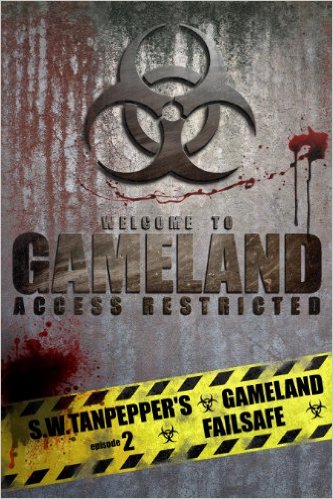
Today’s guest on the Bookshelf Battle Blog is Saul Tanpepper, author of the GAMELAND series, a saga set in a world where zombies outfitted with neural implants are controlled by players using video game controllers.

The carnage ensues when a group of computer hackers break into a Long Island turned wasteland and quickly learn there are consequences far beyond the average video game.

Saul, thanks for joining us.

NOTE: BOLD=VGRF; ITALICS=Saul

51TmgJ+nv1L._SX331_BO1,204,203,200_Q.   Zombies turned into video game avatars manipulated by wealthy video game enthusiasts.  Just when I thought the world was out of fresh spins on the zombie apocalypse genre, you come up with one.  How did you do it?

A.   I read Suzanne Collins’s Hunger Games right after it was published and knew that it was going to be a blockbuster and therefore a good literary model to emulate. I’d been thinking about publishing dystopian fiction (not just horror or post-apocalyptic), and since zombies were starting to get hot, and readers were demanding series, I combined the three elements together and came up with the idea for GAMELAND. The original plan was to throw a half dozen young adults into a gaming arcade with the undead for a fight to the finish, but that seemed too much like HG. I made the gaming aspect secondary and went heavier on the post-apocalyptic theme.

Q.  I hope you don’t mind if I reveal on this blog that you are, in fact, Dr. Ken J. Howe, a PhD molecular biologist and former Army medic/trauma specialist. (Don’t worry, this site only has 3.5 readers so your secret is safe.)  Upon learning this about you, several questions come to my mind, the first being, does your experience and training come in handy as a writer and how so?

A.  It’s both helpful and harmful. As a former scientist, I tend to be overly critical about technical accuracy and probabilities, which holds me back from writing anything too outrageous. This applies to the technologies referenced in the GAMELAND series. We already have the capacity to prolong life and it won’t be long before we can reverse cell death. Scientists are also dabbling in neural implantation, so it’s not a great leap to think about implanted zombies. My medical background is a great help when it comes to writing descriptions. Having personally had my hands inside chests, smelled the effects of rotting flesh, assisted with surgeries, I try to relay the physical and emotional impact of those experiences to the reader.

Q.  Last I checked, zombies are just figments of our imagination  (I hope.)  However, as a molecular biologist/former medic, do you have any thoughts on zombie physiology that you could share?  Are there any known theories on how, hypothetically speaking, a human could be turned into a zombie or exhibit zombie-ish tendencies?

A.  There are some aspects of zombie physiology which the lore currently explains poorly. For example, how do they move and moan when they don’t breathe? Why don’t they rot faster? Why do they prefer brains? Why do they go after only the uninfected? GAMELAND attempts to explain some of these discrepancies.

As far as real-life goes, zombies aren’t that much of a leap, at least if we’re simply talking about brain-dead individuals attacking other people. The bath salt incidents of a couple years back, and any number of drug or hypnosis-induced incidents we’ve seen all resemble zombie-like behavior. If the mind can be so easily manipulated by suggestion or chemicals, it’s not hard to imagine an infectious agent producing a chemical to the same effect.

As far as reanimating the dead, that requires a bit more suspension of disbelief or more faith in the paranormal. Cells tend to break down very rapidly, so unless a person has only very recently died, it’s unlikely the body will have much function. My bets for zombies are on the near-dead or recently-deceased.

Q.  How would a real life zombie video game such as the one described in your series work?  Will video games ever evolve to the point where people can be controlled with a joystick?  (And is that necessarily something we’d want?)

A.  Technology already exists to remotely control inanimate objects in virtual reality (think drones, surgery, bomb robots), and game developers have reported early success in being able to manipulate living subjects remotely in the same way as well as with the use of neural stimulation. We are on the cusp of an explosion in VR gaming. Just beyond that horizon is remote controlled live action gaming. I don’t want to say too much about it, because it would seem to make the ideas I developed in GAMELAND appear less groundbreaking, but suffice it to say, I’d be surprised if we aren’t soon forced to ponder the very same moral questions the characters in my books failed to ask themselves when it comes to this subject.

Q.  You’re also the author of The Essential Book Blog: The Complete Bibliophile’s Toolkit for Building, Growing and Monetizing Your On-Line Book-Lover’s Community.  If you had to give Bookshelf Q. Battler one piece of advice on how to improve his blog, what would it be?  (Besides obtain more than 3.5 readers.)

A.   You’re doing all the right things — writing to a specific target audience, keeping the material fresh, engaging your readers, and leveraging other people’s fan bases — so that’s a great foundation for growing your blog. It takes time, as you already know. Having a mailing list helps, as does having something to offer your readers. For example, I offer my subscribers a free starter library and often tell them about deals and giveaways before I tell the general public. I include a lot of tips in TEBB on how you can monetize your efforts to help defray any costs and build income. Even utilizing the easiest of the techniques will quickly pay for the cost of the book.

Q.  Saul, your expertise has been greatly appreciated.  Before I go, do you have any final words of wisdom that might help my friends and I survive the East Randomtown Zombie Apocalypse?

A:  It’s been my pleasure. As far as surviving the Z-poc, my only suggestion is to get yourself a good sturdy toilet plunger (if you’ve read my series, you’ll understand why). That, and a comfortable pair of sneakers. You’ll be doing a lot of running.

Tagged , , , , , , , , , , , , , , , , , , , , ,

#31ZombieAuthors – Day 15 Interview – Peter Meredith – Finding Your True Passion

41t0irGAGRL__UX250_

FIND THIS ZOMBIE AUTHOR ON:

Amazon

Website       Facebook

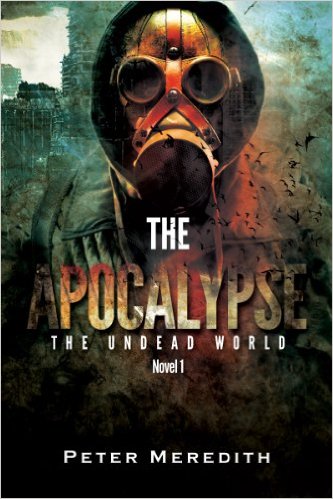
51Hxq5kK0WL._SX331_BO1,204,203,200_ My guest today is Peter Meredith, author of The Undead World series. The tale begins when efforts to cure cancer go horribly wrong, and survivors are forced to do whatever they can to survive in a world crawling with zombies.

A multi-genre author, some of Peter’s other works include: The Trilogy of Void, The Hidden Lands Series, The Sacrificial Daughter, A Perfect America and Sprite.

Hello Peter. Good to speak with you.

NOTE: BOLD=BQB; ITALICS=PETER

Q.  Peter, I’ve tried a number of jobs in my life. I’ve been the assistant to the assistant to the Vice President of Corporate Assistance at Beige Corp, the world’s premiere producer of beige products and accessories. I started up a website that boasts upwards of 3.5 readers and now, as luck would have it, I’ve just been named Deputy Mayor of a settlement for zombie apocalypse survivors.

According to your Amazon author page, you’ve had quite the journey yourself. You tried your hand in real estate, worked as an emergency room nurse, and you were also the CEO of a national lighting company. Today, you concentrate on what you refer to as your “true addiction,” writing. For anyone out there who’s searching for their passion and has yet to discover it (or worse, won’t embrace it) what advice do you have for them?

A.  Don’t be shocked when you find it and embrace it when you do. Unlike almost every other author I’ve run across, I wasn’t reading at the age of two and writing my first poem by my third birthday. Quite the opposite, I hated to write. I never learned to type and my penmanship hasn’t progressed beyond a second grade level. Since I would fret over every little error, an e-mail used to take me close to an hour to write, if the client was important enough.

But that all changed in 2010. With the economy in the dumps, my company decided to rework our website and in order to attract attention to it, I was told I should write articles and submit them online. So I painstakingly wrote five articles. They were terrible.

Not terribly written, just dull. Writing about the technical aspects of LED lights is super boring and not just to me but for everyone. So with Halloween coming up, I decided to write about the two super-natural occurrences that I had been involved with instead. The boss wasn’t exactly happy, but seeing as she’s my wife, what could she do?

So I wrote two little short stories. Just like that, something kicked in. Suddenly I became a writer. It was altogether inexplicable to go from writing as little as possible to writing all the time. Without any classes or real training, I wrote a book, and then a trilogy, and now I’m currently working on my nineteenth novel. Life is strange, but great.

Q.   What motivated you to take the stories in your mind and put them down in written form?

A.   It’s a mystery to me. I had always been an unparalleled day dreamer but I never knew I could write. I didn’t know I had the discipline or the drive to write an entire, full-length novel until one day I just started.

Q.   Your reader reviews are very positive. One reviewer of The Apocalypse Crusade stated, “DO NOT pick this up until you are ready to commit to an all-night sleep-defying read!” As an author, how are you able to grab a reader’s attention and draw him or her into your world?

A.   For me the answer starts with creating realistic, relatable characters—that is key to any book. Then comes the story, and it has to move along at a good clip, one action leading into another in a manner that runs just along the edge of possible.


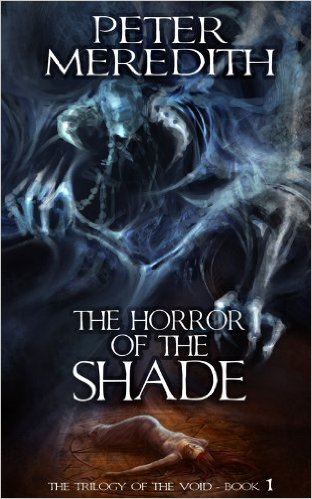
Q.   As William Ernest Henley’s poem, Invictus, goes, “Beyond this place of wrath and tears looms but the horror of the shade…” You’re the author of The Horror of the Shade, which begins with a recitation of Henley’s classic poem. I’ve always been a fan of Invictus. What is it about that poem that inspired you?

51wu5HwzQpL._SX310_BO1,204,203,200_

A.  The clear call of courage within it matched what I was trying to write about with two of the characters William, the father and Will, the son. Both had their courage tested throughout the book, this being especially true with the confrontation of the demon.

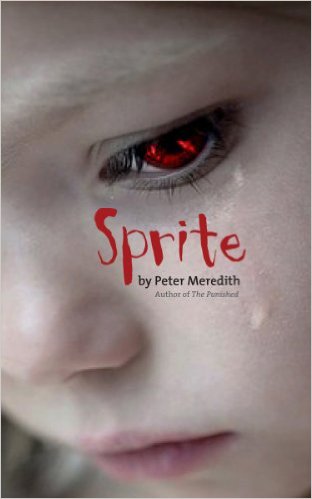
Q.  In Sprite, you tell the story of Audrey “Odd” Wyatt, a twelve-year old girl afflicted with startling, dreadfully red eyes. To add to her problems, she’s saddled with Karen, her miserable, bar hopping alcoholic mother who rarely misses an opportunity to make Odd feel bad about herself. What I noticed about this book is that in Odd, you’ve created a very sympathetic character while Karen is likely the kind of character that readers will love to hate. How were you able to craft two completely different character types in one story?

41JsLlh4NtL._SX310_BO1,204,203,200_A.  Anyone who wishes to become a writer needs to be a student of humanity. It’s far more important than knowing where commas are supposed to go, or what participles are. When you know people and when you realize that human behavior is, for the most part, unchanging, then almost every character is opened to you as a writer.

Q.   Peter, thanks for taking the time to share your expertise with me today. Before I go, do you have any last minute advice that might help my friends and I survive the East Randomtown Zombie Apocalypse?

A.   Run very fast.

Tagged , , , , , , , , , , , , , , , ,

PREVIOUSLY ON #31ZombieAuthors

Hello 3.5 readers.shutterstock_99981176 copy

Day 15!  We’ve reached the half-way mark for #31ZombieAuthors

For those of you just tuning in…

  • East Randomtown, the burg I call home, has been ravaged by a zombie apocalypse, masterminded by the dreaded Dr. Hugo Von Science.
  • I, Bookshelf Q. Battler, and my group of survivors including my girlfriend, Video Game Rack Fighter, alien/intergalactic correspondent Alien Jones, friend/former Funky Hunks rap duo partner Bernie “MC Plotz” Plotznick, and ex-girlfriend Blandie, who is totally the worst, have formed a survivor’s group.
  • You can read daily posts of our adventure’s in BQB’s Zombie Apocalypse Survivor’s Journal.
  • Naturally, I can’t do this alone, so for the past fifteen days I’ve been reaching out to noted authors of zombie books to seek their undead expertise.  Check back here every day for a new zombie author interview.
  • Even if you’re one of those nerds who aren’t into zombies, these writers are still sharing their secrets to success, so if you’re an aspiring scribe, you’ll want to tune in and learn from the masters anyway.
  • For most of this month, my gang and I have been trapped in the East Randomtown Mall.  However, a complex plot, perhaps too complex for a blog with only 3.5 readers has emerged.
  • General Morganstern, a corrupt general who answers to a shadowy, yet to be named figure, is attempting to use the zombie apocalypse as a cover to blow me the hell up.
  • He’s gone on Network News One to assure the public that everyone in East Randomtown is either dead or a zombie, and that his planned air strikes won’t harm anyone.
  • Luckily, fans of the Funky Hunks, the wholesome, non-threatening rap duo Bernie and I were in during the late 1990s/early 2000’s, have been descending on the Army’s base of operations in West Randomtown to protest the strikes and inform the people that Bernie and I are very much alive.
  • They know this because they’ve been reading my posts on the Bookshelf Battle Blog.  Oddly, despite all this attention, I never seem to average more than 3.5 readers anyway.
  • After leaving the mall, the gang and I searched for my beloved Aunt Gertie, to no avail.  Is she lost? Dead?  Zombified?  Will I ever find out?  Oh Gertie, where are you?
  • Currently, the gang and I are holed up in “Hauser Town” or as it used to be know, the East Randomtown Park/Rec Center.  East Randomtownians are in a dispute over who is the town’s most famous citizen.  Some say it’s Doug because he appeared as an extra in a 1980’s cop drama for thirty entire seconds, during which his character had the snot beaten out of them.  Others say it’s me because I built a WordPress blog that brings in 3.5 readers.  I don’t care about the title.  Doug claims not to.  Thus far, we’ve been able to set the rivalry aside for the town’s greater good.

So that’s all you need to know, 3.5.  At some point, I’ll have to archive all of this in one easy to read format but until then, sit back, relax, and enjoy as the second half of #31ZombieAuthors begins!

Tagged , , , , , , , ,

Zombie Trump Reviews the Walking Dead – Season 6, Episode 1 – First Time Again

By: Zombie Trump, Special Guest Reviewershutterstock_110983922 copy

Hello 3.5 losers.  Zombie Trump here, doing Bookshelf Q. Battler one hell of a favor by making a special guest appearance on his pitiful excuse for a blog.  Do you know that more people have read the ingredients on the back of those restaurant sugar packets than have read this lousy website?

I’ll tell you, BQB should be puckering up and smooching my rotten, undead derrière because getting me on this site is quite a get indeed.

OK, Battler.  Get ready for the highest stats ever on this crap hole.

THIS IS GOING TO BE HUUUUUUUUUGGGGGGEEE!

So the gang is back and they’re broodier and angrier than ever.

LAST SEASON

Rick and Co. have spent the past five seasons surviving the zombie menace so at this point they’re all like “Look at us!  We know how to live in the dirt and kill zombies and shit!”

Please.  Who cares?  What kind of a job is that going to allow you to acquire in today’s market?

Oh, by the way, I’m supposed to say SPOILERS ahead or else a bunch of you goons will whine I ruined your favorite show.  Look.  There’s no way to ruin this show.  Zombies try to eat people.  People fight back.  Some of the people die occasionally.  Other times they don’t.  There you go.

So Rick’s crew reached Alexandria last season.  Alexandria’s a settlement that has survived since the beginning of the zombie apocalypse, thanks to a local politician and her engineer husband WHO BUILT A WALL to keep out the zombies, thus allowing the survivors behind the wall to live productive, zombie free lives.

Hmmm, I wonder which other zombie candidate in the race for the office of President of All Zombies proposed building a wall?  Walls work, people.  Ask the Chinese.  Have they been invaded by Mongolians lately?  No.  Thanks to the Great Wall.  And Alexandria has been able to keep the zombies out thanks to their wall.

Anyway, rather than congratulate the Alexandrians on their foresight to build an anti-zombie wall, Rick and his hoodlums are all like “Waah waah waah, we fought zombies in the woods and wandered around Georgia for five years, blah blah blah, we know everything.”

Yeah clowns.  Maybe you should have known to BUILD AN ANTI-ZOMBIE WALL.  Stop demanding that others reward you for your own incompetence, losers.

THIS SEASON

This first episode was some kind of half black and white, half color Tarantino style nonsense where they jumped between the past and the future.  I’m not going to lie.  For the first half-hour, I thought my zombie television was on the fritz, but I knew that couldn’t be, because I reside at the luxurious Zombie Trump Taj Mahal, where everything is really classy.

The big problem the group faced is that there was some kind of ridiculous zombie dam that was about to break loose and send the zombies on a big charge towards Alexandria.

Zombies tend to have a herd mentality.  Few are strong, independent forward thinking zombies like myself, who dare to pledge to make the Zombie Nation great again.

Rick’s big plan is to lead these zombies on a zombie parade, manipulating them down a path through sounds and (hey what do you know) WALLS designed to keep the undead from straying.

Wait a minute.  So zombies are that easy to control?  Just put a damn hill billy on a motorcycle and they’ll go anywhere you want them to?  Doesn’t that kind of negate the last five seasons?  Why doesn’t Daryl just lead all the undead off a cliff and save the world already then?

Seems like a big plot hole to this zombie.  But then again, it is a show about people who fight zombies so I suppose you have to suspend disbelief a bit to enjoy it.

Just like how Bookshelf Q. Battler suspends disbelief about how sucktastic his blog is so he can bring himself to keep blogging anyway.

Enjoy your hits running off the rails, Battler.  I’m off to dine on some first class brains at Chez Zombie Trump, the number one eatery in the world for zombies.  It’s so extravagant it makes all other zombie eateries look like the Outback Steakhouse.

Zombie Trump out.

Tagged , , , , , , , , , , , , , ,

#31ZombieAuthors – Day 14 Interview – Kate L. Mary – Nerds vs. Hunks

klm

FIND THIS ZOMBIE AUTHOR ON:

Amazon          Website

Facebook         Twitter

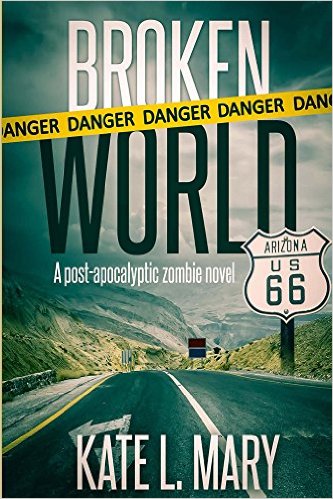
Today’s guest is Kate L. Mary, author of the Broken World series.  Follow protagonist Vivian Thomas on the road in the midst of zombie mayhem as she and her DD’s convince a duo of redneck brothers to give her a ride to California so she can locate the daughter she gave up for adoption.

A stay-at-home mother and Air Force wife, Kate and her family have lived in Georgia, Mississippi, South Carolina, California and Oklahoma.

Her Amazon author page states:

“Kate prefers nerdy, non-traditional heroes who can make you laugh to hunky pieces of man-meat…”

So in other words, there’s a distinct chance I might be able to convince her to become the Bookshelf Battle Blog’s 4.5th reader.

Hello Kate.  Thanks for taking my call on the space phone.

NOTE: BQB=BOLD; KATE=ITALICS

Q.   Let’s talk about the role of trust in a zombie apocalypse.  Sometimes a disaster can bring out the best in people.  Other times, it can bring out the worst.  Unfortunately, you never know who you’re dealing with until it’s too late.  My group and I, having just located a survivor camp operated by a retired used car salesman/former television extra, are having trust issues.  I think it’s a pretty sweet set-up.  My girlfriend thinks we should run.  Naturally I thought about Vivian, who makes the tough decision to trust a pair of redneck brothers on her quest to find her daughter.  Can anyone ever be fully trusted in a zombie apocalypse?

A.   Trusting people during normal times can be tough, but when it comes to a lawless world it’s an even bigger gamble. I know a lot of people hold the belief that humans are basically good, but I wholeheartedly disagree. People are full of bad intentions, and too often the only thing keeping them from acting on those intentions are the consequences. Take away the threat of punishment, and the world will very quickly get a lot darker.

In the case of the used car salesman/former television extra, I’d have to say I’m with your girlfriend. I know the idea of a used car salesman being sleazy and underhanded is just a stereotype, but throw the role of television extra on top of that and every warning bell in my head goes off. This person spent his free time pretending to be someone else on a regular basis. What makes you think that just because the world has ended, he’s stopped pretending?

Q.   As a fan of zombie books, movies, TV shows, etc., I’ve noticed that whenever a group of people happen upon a place offering shelter and safety, it’s usually some kind of trick.  Someone inevitably ends up robbed, beaten, killed, sold into slavery, chopped up into lunch meat or what have you.  Maybe that’s why my better half is so jittery.

As a noted zombie author, can you settle a debate that’s long ranged in the world of zombie fandom?  When survivors happen upon a settlement operated by seemingly nice people, should their response be, “Feets don’t fail me now!” or “Thank you for your hospitality.  I think I will join you!”

A.   In a disaster like this, the idea that there are no good people left in the world has me thinking one thing: If that’s true, why go on? If you’re a good person just trying to survive, you have to assume there are other people out there with good intentions as well. But trusting someone shouldn’t be your first inclination or you’re liable to get robbed, beaten, killed, sold into slavery, or chopped up into lunchmeat. I think it’s important to give off a “thank you for your hospitality” vibe while keeping your eyes open for anything suspicious, much like Rick and crew did when they first arrived at Terminus at the end of season four of The Walking Dead. You have to keep hope alive or you’ll find yourself turning into the very monster you’re afraid to run into, but you need to be smart about it as well.

Q.   I’m led to believe you prefer laughable nerds over hunky pieces of man meat.  Naturally, as a poindexterish proprietor of a book blog that caters to 3.5 readers, who currently finds himself knee deep in a zombie apocalypse, I’m intrigued.  My ensuing inquiries are:

Q1)  Is that actually true or is that just something that women say before they make a beeline for the hunky man meat?

A.   It’s actually true! While hunky pieces of man meat are great to look at, that was never the type of man I dated, and it definitely won’t be who I rely on when the zombie apocalypse hits. Strength will only get you so far before a horde of zombies decides they want to feast on a meal of muscles, but intelligence will keep you going. And a sense of humor will not only keep you from losing your mind, but give you something to keep going for. While I do share the common problem of most female Walking Dead viewers—a love of Daryl Dixon—I have to admit that I’m in major awe of Glenn Rhee. I wouldn’t mind teaming up with him at the end of the world!

Q2)  Point of clarification:  Are we talking about a full blown, genuine, bonafide Star Wars toy owning geek despite being an adult type of nerd or the Hollywood version of a nerd, which is usually just a hunky piece of man meat that someone in wardrobe whipped a pair of glasses on?  (A hunk in nerd’s clothing, if you will.)

A.   I’m all about the adorable kind of nerd. Star Wars toys aren’t a must, but they also aren’t unwelcome—I own a few nerdy Walking Dead toys myself. My husband is a toy collecting nerd as well. For Father’s Day the last two years I got him Simpsons Lego sets. They are currently assembled and on display above our fireplace.

Q3)  What is it about a nerdy/non-traditional hero that intrigues you?

A.  I think it’s the unexpected. Seeing someone who didn’t think much of himself before the apocalypse rises to the challenge and becomes an important part of a group’s survival. Anyone who looks at a “hunky” guy will assume he’s going to be able to take care of himself, but it’s the people who surprise even themselves who are the most enjoyable to root for.

Q4)  Who are some of your favorite nerdy, non-traditional, non-hunky heroes?

A.   Glen Rhee of course. The evolution of his character over the last five seasons has been incredible to watch. Every now and then I like to turn on an episode from season one of The Walking Dead just to compare the characters, and seeing how much he has grown since then is mind-blowing.

I was also a huge fan of Chuck when it was on. Watching Chuck fumble his way through assignments was adorable, but seeing how much he had changed by the end of the series was even more fun.

Q.  The Broken World series is in Amazon’s top one hundred when it comes to post-apocalyptic and dystopian 511rJyBOZLL__SX331_BO1,204,203,200_fiction.  What’s your secret to bringing so many readers into your world?

A.  Honestly, I think it had a lot to do with timing. I wrote the first three books a few years ago, but sat on them for a bit while agents and editors took their time considering publishing Broken World. By the time I finally got around to putting the first book out myself, The Walking Dead had reached the status of TV phenomenon, and it’s popularity really helped the series take off. The fact that it’s a great series—I never get tried of rereading these books!—and so different from a lot of zombie books out there helped even more.

Q.  What inspired you to take your ideas and turn them into books that zombie fanatics the world over can enjoy?

A.  The Walking Dead, of course. I’ve always loved post-apocalyptic stories, especially zombie stuff, but the sudden popularity of The Walking Dead helped form a story in my head that I just couldn’t get rid of. I almost didn’t write it as a zombie novel, though. If you do any kind of research on what editors/publishers are looking for, you’ll discover the sad fact that they do not want zombie fiction. They say there’s no market for it, which is just crazy—especially now! I wrote the first chapter of Broken World as a post-apocalyptic novel similar to The Stand, but without the religious undertones. But only one chapter in and I changed my mind, deciding to take a risk and write the zombie novel I’d been thinking about for months. Broken World was the result, and I’m so glad I took that leap.

Q.   Kate, thanks for stopping by, and especially for enduring my inquisition vis a vis nerds vs. hunks.  Before I hang up the space phone, do you have any last minute advice that could help my friends and I brave the zombie apocalypse?

A.   Don’t lose hope! It’s the one thing that will get you killed faster than a horde of zombies. If you don’t have some kind of hope for the future, you won’t fight as hard or run as fast. You’ll find yourself wishing that you never wake up when you lay down to sleep at night. If you don’t have any hope that you will be able to find a safe place or that the horror will one day come to an end, it won’t be long before the only end you can imagine is death.

Thanks so much for having me, and I hope you and your group find a safe place to ride out the worst of the zombie apocalypse!

Tagged , , , , , , , , , , , , , , , , , , , , , , , , , ,

#31ZombieAuthors – Day 13 Interview – Michael Cairns – Video Blogging

Michael Cairns headshot High Res copy

FIND THIS ZOMBIE AUTHOR ON:

Amazon           Website

Facebook           Twitter

Today’s zombie author is Michael Cairns, the scribe behind the series, Thirteen Rosesan epic tale that begins with a flower seller who’s forced to save the day in the face of a zombie apocalypse.

Here on the Bookshelf Battle Blog, I like to talk to people about their own personal battles.  Currently, Michael’s winning the battle when it comes to making a name for himself in the writing game, but analysts say the struggle to retain his hair might be lost.

I’m dialing him up on Alien Jones’ space phone now.  Michael?  Bookshelf Q. Battler here.  Let’s talk.

NOTE:  BOLD=BQB; ITALICS=Michael

Q.  Michael, I’m stuck in a rather stressful situation.  I’m in the middle of a zombie apocalypse that’s struck my hometown.  As if that’s not enough, a maniacal alien despot who hates reality television has threatened to conquer Earth if I die before writing a novel that’s so good, it inspires the masses to abandon any and all interest in shows in which vapid, mindless, quasi-celebrities are followed around by cameras all day.  On top of that, a corrupt general is trying to blow me up because I allowed one of my correspondents to write about a top secret mission dating back to World War II on my blog.

But this interview isn’t about me, it’s about you, and I don’t want to bore you with my personal problems.  Suffice it to say, all this stress made me think about your situation.  This year began with you making a pledge to your fans that you’d write fifteen books in 2015.  Further, you promised to submit a daily video log chronicling your efforts.

We’re on the tail end of 2015.  How has the challenge gone, what inspired you to do this in the first place and how have you dealt with the ensuing stress?

A.  Hi Bookshelf. First, can I say how sorry I am to hear about your terrible situation? That sounds like pretty dire straits to me. If you’ll forgive a little advice, I’d urge you to keep eating your greens to keep your strength up, and never leave home without at least two chainsaws about your person at all times.

With regards to your question, it’s been a pretty crazy year.  Just to clarify, the challenge was to publish 15 books.  My inspiration for this was that I wrote 15 books in 2014. I then sat down with another indie-published friend of mine who threatened to kick my arse unless I actually did something with them. So, the challenge was born. To keep things interesting, I also opted to write a million words, publish a short story on my blog every week and vlog my journey every day. The challenge has, so far, gone remarkably well. I’ve published 6 books and have another three less than a month away. So the last few months of 2015 are going to be pretty packed, but it’s still doable, assuming I’m willing to completely lose what remains of my sanity.

Regarding the rest of the challenge, that I’ll easily do. I’m going to hit a million words sometime around the beginning of October, and my short stories are, fortunately, getting better each week.

As far as stress goes, it’s been a mix. I’ve given up shaving, given my chocolate addiction free reign, and taken to shouting at myself on long car journeys…okay, maybe not so much of the last one. It has been stressful, though mostly in a fun way. I have two young children at home and also decided to move house in July, so that’s only added to the fun…

Q.  I whine louder than a balloon with air escaping out of it about how I can never find the time to write, but here you are living the dream.  Do you have any advice for my 3.5 readers about how to balance writing with all of the other curveballs that life throws our way?

A.  Excellent question. I think the answer to that lies in a couple of things. The first is to examine yourself and your habits, and decide how organized you are. If you are someone who does things in a random, scatty kind of way, it can be tricky to develop the discipline to write on a regular basis. Tricky, but by no means impossible. I wrote a guest blog post on how to develop said habit, which you can check out here.

The second thing is to decide how important writing is to you. I know that seems kind of obvious, but it’s easy to say how much it matters. The question is, is it important to ditch reruns of The Walking Dead? Is it important enough to wake up an hour earlier each morning? Simple things that will develop your writing habit.

I can highly recommend Julie’s website that tracks her first year in the self-publishing business. She’s a romance writer, so if you’re struggling to find the light at the end of your apocalypse shaped tunnel, Bookshelf, it might just help brighten your day. 🙂

Q.  How has daily video logging worked out for you?  Is that a means of author/fan communication that you’d recommend for aspiring writers?

A.   I have to be honest about this, it’s been hard work. I’ve got the process, from recording the vlog to having it uploaded onto Youtube and posted on my blog, to tweets scheduled down to about 20 minutes, but there have been more than a few nights when it’s the last thing I’ve wanted to do. Have said that, it’s also been great fun. I’ve gotten almost comfortable talking to myself, certainly improved my ‘umms per minute’ rate, and have a wonderful record of the year. I’ve also got to vlog from all sorts of interesting places. I toured Italy a couple of times with my band in the summer, so I’ve vlogged from over there. I’ve also been to numerous festivals and concerts and done the same from there, so it’s been fun. With regards to author/fan communication, I wouldn’t put it near the top of the list. I’ve had a few nice chats with the videos as a springboard, but not nearly as many as via emails and twitter.

Follow Michael’s 15 for 15 challenge on cairnswrites.com!

Q.  One Goodreads reviewer described Thirteen Roses as “The Walking Dead as if written by Neal Gaiman.  Is that a fair 51BTDCI9zlL__SX331_BO1,204,203,200_assessment and if so, why?

A.   I wish!! I loved that quote. It was the kind of quote you couldn’t pay to get, and that it was entirely not my doing was even better! Neil Gaiman’s Sandman is still one of my favorite comic series of all time, so I was beyond flattered to have that comparison made. I’d like to think I could get somewhere close to him in terms of characterization if nothing else, but I’d have to leave that up to the reader to decide…

Q.  There are a number of zombie apocalypse books which feature a science based beginning, i.e. an experiment gone wrong,  (which coincidentally is how my zombie apocalypse began), terrorists who discharge a virus, or some other physical phenomena.  I understand your zombie series has more paranormal origins.  I don’t mean to ask for spoilers, but can you elaborate a bit for my 3.5 readers?

A.   Without wanting to cop out, it’s very difficult to divulge much of the paranormal side of things without giving everything away. Having said that, I’m happy to say that the origin of the zombies is fairly standard. Am ambitious and slightly naive science student spends far too much time messing with an airborne-delivered toxin. The government takes it away from him, only to have some religious nuts discover the answer to their very screwed up prayers and get involved. The paranormal element comes in with the people left behind, the sorry survivors such as yourself. There’s more to it than that, but I really don’t want to spoil all the fun.

Q.  I might know a guy who’s also losing the battle for his hair.  Note that it’s not me at all, just some other unnamed person.  Any advice on follicle stimulation that I could pass along to this individual or should he just give up the goose?

A.  Alas, I’ve tried all sorts. I can confirm that having kids, moving house, and eating your own body weight in chocolate don’t help with hair growth, despite all my wife’s assurances that they would. Actually, she might not have said the thing about the chocolate…

Q.  Michael, thanks for taking a few minutes to speak with me today.  Before I go, do you have any final words of wisdom that might help my friends and I survive the East Randomtown Zombie Apocalypse?

Food! Head to the nearest library and get yourself some books on farming. Simple, self-sustaining farming is a must with all that supermarket fruit and veg already rotting away. Similarly, find some goats and put a fence around them. Chickens, too, if you can find them.

However, considering the people you surround yourself with, I’d have thought finding a space ship and getting the hell off this Godforsaken rock would be the only true way to survive.

Best of luck and lovely to talk to you.

BQB EDITORIAL NOTE: Thanks, Michael!  I’m going to check with Alien Jones on that, but he’ll probably bore me with some lecture about Intergalactic Space Law, which I usually just take as code for him being too lazy. Good luck with your challenge!

Tagged , , , , , , , , , , , , , , , ,

#31ZombieAuthors – Day 12 Interview – Joe McKinney – Legendary Zombie Master

jm

FIND THIS ZOMBIE AUTHOR ON:

Amazon           Website

     Twitter               Facebook

Bram Stoker award winning novelist Joe McKinney is to fans of zombie fiction what Elvis is to rock and roll.  Simply mention Joe’s name to zombie enthusiasts and they’re likely to swoon and pass out.

If a zombie invasion were to ever go down, Joe could handle it.  After all, in his day job, he’s a Sergeant with the San Antonio, TX Police Department, where he’s a patrol supervisor.  He’s also worked as a homicide detective and a disaster mitigation specialist.

51CTSWUWJzL__SX302_BO1,204,203,200_As if that weren’t impressive enough, he’s also the author of the Dead World series.  The action begins in Dead City.  After a series of hurricanes rocks the Gulf Coast, a zombifying virus spreads to San Antonio, where police officer Eddie Hudson has to brave a zompoc in order to get his wife and son to safety.

Joe’s also the author of the Deadlands series, the latest book of which, The Dead Won’t Die, came out last month on September 29.  In fact, word has it that he’s heading to Atlanta October 16 and 17th for book signings, so if you’re in The Walking Dead territory, you might want to keep a pen handy.

Thanks for taking the time to speak with me today, oh wise zombie master.  My 3.5 readers and I greatly appreciate it.

NOTE: BOLD=BQB; ITALICS=JOE

Q.   You got in on the ground floor of a zombie fiction renaissance that began in the mid-2000’s and to date, doesn’t show any signs of stopping.  What is it about zombies that have kept fans of these creepy creatures coming back for more after all these years?

A.   I was on a zombie panel at a horror convention a while back, and one of my fellow panelists was a writer who is generally regarded as “one of the literary elite” sort. I like this guy.  I have a lot of respect for him, both as a person and as a writer.  I’d even go so far as to call him a mentor.  And we’re good friends on top of that.  Well, somebody from the audience threw out a question very similar to this and my friend answered something like this:  “Zombies are a symptom of our self-loathing.  We so hate ourselves and our society that we invent a straw man like the zombie, a monster that both looks enough like us so that we see in its putrefaction how much we disgust ourselves and yet is anonymous enough that we can imagine those who anger us as we fire an endless barrage of headshots at the approaching horde.”

Now, I don’t totally buy that.  I don’t think self-loathing, or even societal loathing, is a strong enough emotion to turn a drive-in movie monster into a cultural archetype.  There may be something to that explanation, especially for the readers who spend too much time arguing about politics on Facebook, but that isn’t everybody.

What about the rest of us?  Why do we love zombies?  Well, aside from the creeping dread that comes with imagining streets filled with the undead and the way really great zombie stories tend to treat the apocalypse like a crucible that distills humanity down to its core, I think the zombie has caught on because it’s a blank page upon which writers and readers can draw anything they want.  What are you afraid of?  Disease; death of the mind, a la Alzheimer’s; societal collapse; or possibly illegal immigration?  You name it, if you’re scared of it, we have a zombie for you.  They are sponges for metaphor.  They can be anything you want them to be, and I believe that that’s their secret storytelling power. 

Q.   On your site, you mention how your daughter’s birth inspired you to follow your dream of becoming a writer, but it wasn’t easy.  You explain how you penned a 1950’s style space opera, came to the conclusion that it was “crap,” and wondered why you were even bothering.  Honestly, in my experience, most aspiring authors stop when they reach the “This is crap!” point, but you kept going and today you’re a rousing success.

For those of us who are convinced our writing is “crap,” can you give us a little pep talk to inspire us to keep going until we hit our non-crappy groove?

A.   Getting started is hard. Really hard.  There are days when you spend a lot of time looking at yourself in the mirror wondering why you’re even bothering.  And when you do finally get your first few pieces out there, there’s never a shortage of nasty trolls to tell you how you shouldn’t have bothered in the first place.  You need a lot of hard work, a lot of bullheaded determination, and a really thick skin.  Oh, and a super harsh inner critic that isn’t afraid to occasionally be a cheerleader.  Like I said, it’s hard.

But it can be done.  And while I can’t tell you the secret of finding that determination you need to get out of your own way, I can let you in on a little secret that will make it easier for you to write that first novel.

First, outline your story, in exhaustive detail, before you ever start thinking of your opening sentence.  It seems like every time I go to a convention, somebody says, “You know, I’ve got this novel I’ve been working on for three years now.”  I usually stop them right there and ask them if they outline or write by the seat their pants.  Invariably, I get some confused rambling about how Stephen King said writers should be pantsers because anything else would stifle creativity.  I usually answer by pointing out that never getting the story written is even more stifling to creativity.  Outline, outline, outline.  It’s the first step to success.  My outlines for novels will usually go 70 to 90 pages and they take me about two months to write…about the same amount of time as the novel itself.

The second part of the secret?  Write a little bit every day.  Don’t listen to the stories of Ray Bradbury writing Fahrenheit 451 in 9 days, or Robert Louis Stevenson writing Dr. Jekyl and Mr. Hyde in 3 days.  You don’t need that kind of self-abuse.  What you do need is a manageable word count that you promise yourself each day.  When I started out, that promise was 500 words a day.  These days, it’s 1,500.  But you have to work up to that.  You have to start with digestible chunks and gradually build up from there.  Remember: How do you eat an elephant?  One bite at a time!

Q.   “Write what you love” is one piece of advice you mention on your blog.  Specifically, you hit your stride when you realized that after growing up on a steady diet of monster flicks, the zombie apocalypse genre was right up your alley.

So in other words, aspiring writers should just be themselves and stop trying to be something they’re not?

A.   Yeah, pretty much. One simple lesson I try time and again to convey is that if you want to be interesting, you have to be interested.  What that means is that you have to love what you’re writing about.  I don’t mean simply loving zombies, so you write a zombie story.  I mean loving the life of being a cop with a family, and so you write a zombie story about a cop trying to fight his way home to his family on the first night of the zombie apocalypse.  You’ll see the same love in every writer you read, both the great ones and the hacks.  The point is that writing is all about getting your inner joy out there, even if the mood in which that joy conveys is tragic.  Simply put, if you don’t love it, nobody else will either.  It doesn’t matter what you’re interested in.  If you are crazy cool madly in love with ladybugs, and you write a murder mystery, or a romance, or a horror novel, or a science fiction space opera about how cool ladybugs are, your chances of successfully connecting with an audience just went up about ten thousand percent.  We don’t care what your interest is, just that you convince us that you love it, and that we should too…through your characters!

Q.   “Write what you know” is a phrase often heard in the literary world.  As a police officer, you know law enforcement procedure and it shows in your writing.  For example, when I discovered that Dead City involved a series of hurricanes, it didn’t surprise me to learn that you worked as a disaster mitigation specialist.

How else have you drawn on your police experience to bring greater detail to your writing?  And should aspiring scribes go out and get some experience in something, anything before they put pen to paper?

A.   Well, I have to be careful about that. My department has specific rules about writing for publication that prohibit me from writing on cases I have personally worked on and cases that have yet to be adjudicated.  You can imagine why.  Imagine being a rape victim.  You somehow work up the courage to report the rape, and you spend the afternoon pouring your soul and anger and all the rest of it out to a detective.  Now imagine that detective turns around and sells your story to some magazine somewhere.  Imagine the outrage and violation you would feel.  I take my oath as a cop very seriously, and that trust is a bond I will never break.

Still, I get quite a bit of mileage from the things I’ve learned on the job.  Being on the job you learn a lot about human nature, and that definitely helps with writing.  It also helps with creating a unique niche for my writing.  Lots of horror utilizes police procedure, but grudgingly, because most writers lack any firsthand knowledge of it.  Writers will create situations where the police have to make an appearance, and then they’re forced to tap dance until they find a reason to get rid of the police.  I see it all the time.  I don’t have that problem, though.  I would definitely recommend that all writers develop some kind of skillset like that, be it beekeeping or pot making or anything, really.

Q.   You hold a Master’s Degree in English Literature.  For anyone out there hoping to break into the literary world, do you recommend such a formal course of study?

A.   It worked for me, but I’m just one voice shouting in the wilderness. I know hundreds of writers, and they come from every profession imaginable.  Some are butchers; some are call girls.  Some are beekeepers; some are college professors.  Some are cowboys; some are stand up comedians.  One writer I know owns a barbeque restaurant in New Braunfels, Texas that serves the best braised beef short ribs you could possibly imagine.  It really doesn’t matter what your background is.  What does matter is that you love something so much that you want, want, need to fit it into a story.  Find that spark inside you, and the words will come.  I promise. 

Q.   OK.  Here’s a big question.  You’re a busy police officer.  On top of that, you’ve got a family.  And yet, amidst all of these important commitments, you have managed to have an amazing career as a writer.

Meanwhile, I don’t want to call myself a slacker, but one time I sat down with my laptop to write an epic masterpiece, got frustrated after the first few lines, then ended up watching a Steven Seagal movie marathon while devouring an entire box of Oreos instead.

Please, for myself, and anyone else who can’t get their act together, give us some tips on how to juggle work, family, other stuff that happens in life, and still find time to pursue writing.

A.   Any author who tells you every day is an orderly procession of getting the words on paper is a filthy liar. Some days are hard, even after you make a name for yourself.  Some days, the Oreos and movie marathons are what the body and soul need.  There’s no shame in that.

But you have to hold two seemingly disparate ideals in mind if you want to write professionally.  First, you have to have a love of craft and a determination to keep butt in chair that, frankly, defies human nature.  The kids are playing with the dogs in the backyard, and begging you to come join them.  There’s a lovely breeze blowing.  Your youngest looks at you with a smile you know won’t be there in her angsty teenage years.

But you have a deadline.

That kind of denial of human nature.  Bullheadedness, my wife calls it.  Maybe even assholery.  Yeah, it sucks that bad.

But how do you get to have problems like that?  Well, that comes with manageable word counts.  Seriously, folks, 500 words a day.  Treat everyday like it’s NaNoWriMo.  Do 500 words a day.  You can do it.  Outline first, figure out what you’re going to be writing during those precious few moments out of each day that you can spare for the keyboard, and then start typing.  Get the first draft done.  Don’t go back and edit what you wrote the day before, just push forward to the end.  Once you’re done, go back and edit.  That’s why they call them first drafts. 

Q.   Thanks for checking in, Joe.  Before I go, do you have any last minute advice that might help my friends and I survive the East Randomtown Zombie Apocalypse?

A.   Well, yes…obviously Cardio! Oh, and as a cop, I wholeheartedly recommend the double tap as well.  But after that: Be smart.  Be watchful.  Pay attention; it don’t cost nothing.  Take a good look around you every moment of every day.  Even if the apocalypse doesn’t come (and I think I’m not alone in kind of wishing that it would come), you will still have the observational aptitude to write about it.

Tagged , , , , , , , , , , , , , ,