Tag Archives: war

BQB’s Serial Club – Serial Season 2, Episode 1 – DUSTWUN

Hello 3.5 readers.

Have you ever listened to the podcast, “Serial?”  In the first season, the hose, Sarah Koenig, presented the case of Adnan Syed and illustrated that how it is possible for all the evidence to be laid out in a case and for people to still be unsure of whether or not a defendant is innocent or guilty.

Koenig has a knack for storytelling style journalism and keeps things lively and moving.

Produced by the creators of This American Life, Serial is back for a second season.  This time the individual under scrutiny is Sgt. Bo Bergdahl.

You might remember he was a major news story last year.  In 2009, he walked away from his post in Afghanistan and six soldiers died while looking for him.

Last year, he was returned to the US after a prisoner swap with the Taliban that led to four major terrorists in captivity going free.

This is a tough one.  My blog is not political…at all.  But I do enjoy good story telling and Sarah Koenig is a master at it.  She definitely knows how to end every episode on a cliffhanger that keeps her audience coming back for more.

So here’s what I propose. If you’re listening to Serial, stop by here once a week and let’s chat about the latest episode, hash out the info and the evidence and try to figure out what’s going on.

Not gonna lie – I might pull the plug on this.  My hope is you all won’t get too political.  Were the wars in the Middle East right or wrong?  I hate this politician or I like that politician or whatever…not really up for debate here.

The crux of this season seems to be around Bergdahl telling his story and admittedly, as of the end of the first episode, it sounds pretty lame.

Briefly summarized – he claims he ran away because he had to create a “DUSTWUN” or a missing soldier situation in which the top brass pays attention.  He claims he had to do this because his unit was poorly managed and hoped this would get him an audience with someone with a high rank that could do something about his complaints about his unit.

I have to admit, that sounds like a pretty fishy story. “I was 23 and I was scared and so I made a dumb mistake and ran away.  I’m very sorry for the six people who died looking for me.”

To me, that would be more sympathetic than, “I was afraid my poorly managed unit was going to lead to people getting killed….so I ran away….um, and got six people killed.”

Anyway, let’s be civil (NOT POLITICAL) and look at it from an academic approach.  If you listened to this first episode, do you believe Bergdahl or do you think he’s full of a smelly substance?

I’ll say up front I believe he’s in the latter column.  My fear is that this guy is basically trying to save himself by impugning the character of a unit that tried to save him when he went AWOL (six of whom died in the process.)

And I get it.  I’ve never served in the military. Who am I to criticize anyone? But, like I said, I’d be sympathetic to “I was young and scared and made a mistake” but hearing him talk as though he is “Jason Bourne” strains credibility.

Cliffhanger for next week – um, it sounds like Sarah is going to call the Taliban on the phone to interview them.  Who knew they were even listed in the phonebook?

Check out Serial Podcast for more.

NOTE: To reiterate, please refrain from the nastiness of politics.  I’m not looking for comments to the effect of “I HATE REPUBLICANS!” or “I HATE DEMOCRATS!” and so on.

The podcast is interesting to me because, as she did in the first season with Syed, Sarah presents two sides of a case and leaves it up to the listener to make his/her own conclusions.

So in other words, we’re not talking about the politics of war – instead, we’re presented with a case.  A soldier walked away from his unit, got 6 people killed during a search for him, his release led to four dangerous people being freed.

Is Bergdahl guilty?  Yes or no and what about the evidence/interviews presented in the podcast make you think that way?


Tagged , , , , , , , , ,

#31ZombieAuthors – Day 25 Interview – Zombie Warfare

31k9+O6xswL._UX250_

FIND THIS ZOMBIE AUTHOR ON:

Amazon       Facebook     Website

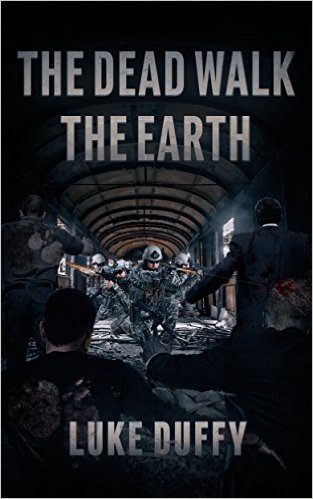
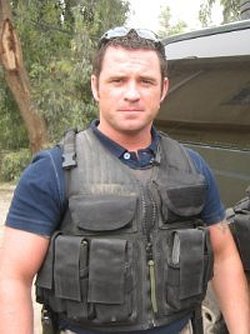
Today’s guest is Luke Duffy, author of The Dead Walk the Earth and When There’s No More Room in Hell series of books, which detail the journeys of soldiers as they fight undead hordes.

Have you ever read a zombie book written by a guy who’s skilled at jumping out of perfectly good airplanes? Having grown up in Northern England, Luke joined the Parachute Regiment at the age of eighteen. Further, he has worked in Iraq on the Private Security Circuit.

His first book, Running the Gauntlet: The Private War in Iraq, detailing his memoirs from his time on the circuit, was published in 2011.

Following that non-fiction work, he turned his attention to zombie lore.

Luke, thanks for taking a minute to talk with me today, and thank you for your service.

NOTE: BOLD=BQB; ITALICS=LUKE

Q.  I’m just going to say it. Look at you. Soldier. Private security. 51qtY0bYz1L._SX311_BO1,204,203,200_You’re a badass. As a layman, I’d think that having such vast military experience would inform one’s writing. Do you find that’s the case? Do you draw on your experience when writing your books?
A.  Absolutely. I read a few apocalyptic books before I decided to write my own. Some were great, others were awful. But one thing I found that the majority of them had in common was that most authors lacked any real experience in military matters. Don’t get me wrong, there were some great efforts out there, well researched and thought out, but there was always something missing. The mark was never quite hit. Only someone who has experienced being shot at, blown up, or felt those familiar sensations of dread and retrospect when preparing for a fight, can write a realistic battle scene. I’ve always tried to make the action as close to real as possible, and my own experiences have helped, a lot. I like to draw the reader into the pages, making them imagine what it is like to come under fire and wonder whether they would make it out. As a reader, it’s important to feel part of the story.

Also, most of my characters are actually based on real people that I have known over the years.

Q. You started out with non-fiction and then moved on to fiction. What drew you into the world of zombies?

A. In a few short words; Dawn of the Dead. I’m talking about the original. I watched it when I was about six or seven, and from there, I was hooked. It wasn’t so much the action and the zombies themselves, but more to do with the collapse of society and the slow death of humanity. Even as a kid the words ‘what if?’ rattled around inside my head. The end of civilisation has always fascinated me, regardless of the cause. But what could be more exciting, terrifying, and total, as the dead returning to life and hunting the living?

I like to imagine how different people, from various rungs of the social ladder, would react to a global crisis such as a zombie plague. I think true, true colours would quickly come to light, and I think the whole ‘good and bad’ thing would be turned on its head in many cases. I couldn’t imagine Bob Geldof and Bono still wanting to save the world, hugging plague victims and shaking hands with zombies. I think they would barricade themselves into their mansions and drop from the radar.

Q. Here’s a question I’ve thrown at a lot of writers this month. How do you find the time to write? I ask because I’m rather unfocused and if a good show comes on TV, there goes my writing for the day. So obviously, I respect a guy who has served in the military and in private security and yet still finds the time to write. Do you have any advice for aspiring scribes on how to balance work and writing?

A. My best piece of advice would be to create a routine. Finding the time and motivation to start writing, even if I’m half way through a book and on a roll, can be extremely hard. Sometimes I need to give myself a serious kick up the arse to get myself down behind my computer. Like you said, distractions can have a severe effect on you. So, what I do is ensure that I get myself into a routine. If I’m working away, most of my writing is done in the evening, which can be a real pain because my energy and enthusiasm is sapped by then.

When I’m home in the UK, it’s a little easier. I get up, have a coffee and a smoke, check the news, as well as the usual morning stuff that a man does. Then, come ten o’clock, I get to work and do at least four hours writing each day. After that, the world is my lobster and I don’t feel guilty, having the fact hanging over my head that I jacked on my work for the day because Susanna Reid was looking particularly hot on morning television and I became side-tracked.

Q. The description of The Dead Walk the Earth states, “Eight soldiers, accustomed to operating below the radar, carrying out the dirty work of a modern democracy, become trapped within the carnage of a new and terrifying world. Deniable and completely expendable. That is how their government considers them, and as the dead begin to walk, Stan and his men must fight to survive.”

“Deniable and expendable.” OK. So obviously, I enjoy being alive, so I’m not asking you to get into “If I tell you I have to kill you” territory (sorry, bad joke there) but generally speaking, is being “deniable and expendable” a fate that soldiers often find themselves facing?

A. Depends on the type of soldier and the operations being conducted. There’s no such thing as a clean government, and they all need someone to get their hands extremely dirty on their behalf, from time to time. I’ll not go into too much detail, but deniable operatives do exist. No, not like xXx and Mission Impossible. They’re just beyond fantasy. Deniable operators could be the man next door, or the guy driving your taxi. Shaved heads, huge muscles, and wearing Oakley sun glasses in the dark… don’t help.

I suppose that all soldiers are expendable, to a degree. Or at least they are viewed that way by the people who send them to war. No politician, no matter how sincerely they claim to have, has ever lost sleep or shed a tear over the men and women of their country being brought home in bags. Tony Blair and George Bush; they saw their military as mere pawns to be moved about on their own paths towards personal glory and gain.

Don’t get me wrong, I was part of the invasion of Iraq. I was amongst the first troops into Kosovo during the liberation in 99. I battled in Sierra Leone during their civil war, and I patrolled the streets of Northern Ireland before the peace process. I enjoyed the lot, but I never lost sight of the fact that not a single member of the government cared how many of my friends lost their lives.

Since joining the private circuit in Iraq, I’ve seen the attrition rate first-hand, and watched as countless friends were killed. Yes, we were in it for the money, but we were also doing a job on behalf of the US and UK governments, helping to rebuild the Iraqi infrastructure. But before long, the media stopped reporting the deaths and the government leaders forgot about us. All the while, the deaths of British and American private military soared. Expendable.

Q. Hypothetically, would today’s modern military be able to take on a zombie outbreak? Not that I spend a lot of time worrying about such a scenario, but I’d be interested to hear your take on it.

A. It depends on society as a whole, I suppose. In my books, the concept of the dead returning to life (zombies) has never been imagined. There are no books, movies, computer games, or folk tales about such creatures. So, when the dead begin to rise, it’s complete confusion, terror, and chaos. No one knows how to deal with the problem. On the one hand, some see the threat for what it is, and insist that immediate action be taken. However, on the other hand, there are the ‘bleeding hearts’ and ‘do-gooders’, bleating that even the dead are people and have rights.

Governments hesitate, fearing backlash should they act with what can be viewed as brutality and inhumanity towards the infected (yes, I believe that even on the brink of an apocalypse, the politicians would still worry about their image and future votes).

People struggle to come to terms with the outbreak. Families cannot imagine that the monsters staggering towards them are no longer their dad, mum, sister, brother, uncle – twice removed… etc.
Then there are the legal complications to consider. Most people out there follow the rules. They avoid confrontation and shy away from violence. Inflicting pain and suffering is not a desire that most human beings carry. Many would hesitate, because we have all been brought up to understand that killing is wrong, both in a legal and moral sense. Suddenly being told that it is perfectly okay to smash your neighbor’s head in with a hammer, isn’t going to have any great and immediate effect. Most people would simply lock their doors and hide. Even I would hesitate, and I don’t like my neighbors.

Morality and human emotions play huge parts in the downfall, and only when it is too late, do people realize the extent of the catastrophe and put down their delusions of decency and respect, but by then, it’s too late.

However, in reality, I believe that the military would soon have the outbreak under control. No doubt, they would all be rounded up and sent to work in Starbucks, maybe even become Labour Party members.

Q. Any plans for further zombie books in the future? Or perhaps other monsters? I read a post on your blog that made me think you find technology as infuriating as I do. That me think – soldiers vs. killer robots has some potential.

A. I take it that you’ve never watched Terminator?

Seriously though, yes, I find technology infuriating. In my opinion, it causes more trouble than its worth, even though I have found myself reliant upon it.

I have one more book to write in the current series, and then I intend to get a couple of kids’ books written that I have in mind. Yes, it’s a dramatic shift from people being eaten alive and copious amounts of profanities and violence, but I’ve had these stories in my head for some time, so I will be hanging up my zombie hat for a while. I may return in the future, if the demand is high enough and I have some new ideas, but for now, I need to step away from the genre.

Q. Luke, thanks for stopping by. Before I go, do you have any last minute advice that might help me survive the East Randomtown Zombie apocalypse?

A. Get away from the cities. Find a place that is remote. The dead are stupid, and lazy. Can you imagine them walking up mountains or fording rivers? High-ground, preferably open with good all round visibility, would be your best bet. Dense forests are also good, but they can be a double edged sword; they can’t see you, but you can’t see them, either. I wouldn’t like to have to bug-out from a wooded area during the dark hours, surrounded by zombies

If you’re stuck in an urban area, stock up, stay out of sight, and keep quiet. Remember, a barricade can never be too big, no matter how valuable that antique chest of drawers is. Trust no one, and lock your heart away in a sealed box. There’s no room for easy emotion and sentimentality in the zombie apocalypse world. Finally, make a note of all the people close by who have pets, because when the time comes, cats and dogs make good eating.

Tagged , , , , , , , , , , , , ,

#31ZombieAuthors – Day 24 Interview – W.J. Lundy – WTF

512Y4LyVAOL._UX250_

FIND THIS ZOMBIE AUTHOR ON:

Amazon          Website

Facebook        Twitter

My guest today is soldier/writer W.J. Lundy.

A veteran of the U.S. Military with service in Afghanistan, W.J. has over fourteen years of combined service with the Army and Navy in Europe, the Balkans, and Southwest Asia. W.J. is an avid athlete, backpacker and shooting enthusiast.

After being asked in jest about how it would be possible to defend against a zombie attack, W.J. began taking notes about his ideas and sure enough the Whiskey Tango Foxtrot series was born. In fact, W.J. wrote the first book of the series, Escaping the Dead in a small, spiral bound note book and later tapped it out on a keyboard once he got back home.

So it just goes to show you, 3.5 readers. You never know where or when inspiration might strike.

 NOTE: BOLD=BQB; ITALICS = WJ

61iZBK4i3+L._SX353_BO1,204,203,200_ Q. W.J., welcome. Thanks for talking to me today and thank you for your service. Obviously, I’m not a military man but I’m going to wager that “Whiskey Tango Foxtrot” translates into “WTF” or in other words, a phrase I might yell if I see a zombie, correct?

A. Absolutely, it is a bit of military vernacular. There are so many common phrases like this, and when I came up with the story line WTF fit the tale best, it really punctuates that first flash message to your brain when the target refuses to go down. It also translates nicely into civilian speak.

Q. I’m just going to throw it out there. I’m envious of your multi-tasking skills. I’m always whining that I’m never able to find the time to write and yet here you are, serving in the military, fighting evil, being an all around bad ass and such, and you still find time to write and publish. Meanwhile, if I feel a little cranky, or tired, or if there’s a good movie on HBO then I call it quits on writing for the rest of the day, so my hat goes off to you, sir. How do you do it? For aspiring scribes like myself, what advice do you have to balance work and writing?

A. I have to admit I find it very difficult. When I first started writing it was to fill the voids and occupy the down time while overseas, I could pour words on the page. As I returned from Afghanistan, my downtime was replaced with family time and many, many, other things. Now that the series and demand for more books has taken off, I typically find myself writing in the midnight hours of the day. I have pushed a lot of TV viewing and pleasure reading to the back for a while.

Breaks tend to help me and motivate my writing. Recently I was out on a 12 week training stint, it pulled me completely out of my creative zone, those reboots slow down my production, but I also come back with fresh ideas and a stronger drive to tackle a project. I like opening a document back up after one of those extended breaks, it’s like seeing something from a different POV and the characters really begin to take off again.

Q. There’s an old adage that goes, “Write what you know.” Obviously, you’re doing that here. How does your military experience inform the journey of your protagonist, Staff Sergeant Brad Thompson as he and his brothers and arms fight the zombie hordes?

A.  The biggest connection to my experience is with the character development and the character interactions, I also like to take readers to different parts of the world, places the average civilian will never experience. At the heart of the story, I like to stay true to my service background, and the military’s core values. Even if it at times it makes the story line feel stiff, I will choose realism over fantasy action scenes. In a civil breakdown like in WTF, it would all fall down to discipline and small unit leadership. Most of my real world missions have all been Joint service and I like to describe the “one team-one fight” relationship that the different branches of the service have. As long as those things remain after the balloons go up, I think we have a chance. If people stop working together and the military and law enforcement fall into anarchy and chaos we are all F’d….

Q.  Divided We Fall, which is Book Six of the Whiskey Tango Foxtrot series, has currently sold 150,000 copies and has 1,000 five star reviews by Amazon customers. Admittedly, I’m no publishing expert, but I am a book nerd and in my experience, that’s pretty amazing. The average of all your customer reviews is 4.8 and to put things in perspective, George R.R. Martin’s Game of Thrones has a 4.5 average. I’m not putting down Game of Thrones, but it just goes to show even the likes of the great George R.R. will have the occasional crabby reviewer throw a monkey wrench in the works. Can you take my 3.5 readers and I under your wing, oh wise one, and put us on the path to greatness with a few writing tips? How are you able to acquire such a high level of customer satisfaction?

A. Honestly I am amazed at my readers and the kind reviews I have received. The best thing I can say is write in your own voice, and don’t try to paint a picture in someone else’s vision … If that makes sense. I’ve helped a few aspiring writers and some of the worst things I’ve read is when a writer is trying to mimic another work, or write in someone else’s voice. Just tell the story the way you’d tell it to a friend, describe the scenes the way you see them. And of course find a quality trusted editor that you like and enjoy talking to. If you don’t like your editor, or have a bond with them it will show in the end result.

Q. Do you have any plans to branch out and possibly have the military fight other types of monsters? Just spitballing here, but Army Dudes vs. Cthulhu would be pretty sweet.

A. The Darkness Series is an Alien\Zombie hybrid tale, I have big things in mind for that series. The tone really hardens in the second book of the series The Shadows. If you like Body Snatchers with a mix of Battle of Los Angeles I think you will dig The Darkness. It is a fast developing Science fiction horror tale with some hard hitting guerrilla warfare dropped on top. The setup has been laid down with TD and I am really letting things go wild in TS.

Q. W.J. thanks for taking the time to speak with me today. Before I go, do you have any last minute advice that might help my friends and I brave the East Randomtown Zombie Apocalypse?

A. Zombies are synonymous with any threat (hurricane, terror attack, random violence). Stay vigilant, stay alert and stay alive. Whenever possible travel in pairs, know when to fight and when to run, and when you must fight, then fight as a team. Know your terrain and most importantly, always have a plan and a place to regroup with family if you lose comms.

Tagged , , , , , , , , , , ,

Pop Culture Mysteries: Sneak Peak of Operation Fuhrerpunschen

shutterstock_193545215Before he became BQB’s Pop Culture Detective, Jake Hatcher was a down and out boxer forced by the evil Mugsy McGillicuddy to take a dive, thus tanking his chance at the big time, not to mention his budding romance with singer Peaches LeMay.

When Jake tries to escape his past by enlisting, he gets a second chance at the greatness he missed out on when he’s recruited by General George S. Patton, President Roosevelt, and Pre-CIA Agent Carmichael to take on the most daring mission in the history of warfare:

Infiltrate Das Fuhrerbunker and punch Adolf Hitler in the face before an equally skilled puncher sent by the Russians can.

Why?  Assassination attempts by his own men have left Hitler paranoid in the final days of World War II.  He’s banned all staff from carrying weapons, leaving him the only armed individual in the bunker.

No guns.  No knives.  Nothing.

Thus, Uncle Sam needs a man whose weapon is his fist.

Is this a viable novel idea?  Would you want to read a book about Hitler getting punched in the face?

The first three proposed chapters and outline of the rest:

Chapter 1

Chapter 2

Chapter 3

Outline of Rest 

Tear it apart, 3.5 Readers.  Be brutal and let me have it.

By the way, the Mr. Devil Man sneak peak was well received by the 3.5 and I plan on working on that too.  Ultimately, I hope to put both out.

Tagged , , , , , , , , , , , , , ,

BQB and the Meaning of Life – Part 22 – Welcoming Party

PREVIOUSLY ON BOOKSHELF Q. BATTLER AND THE MEANING OF LIFE…

READ

AND NOW BOOKSHELF Q. BATTLER AND THE MEANING OF LIFE CONTINUES…

I felt like I was going to vomit. Vicky already had.

Happly’s rickety propeller plane jostled us all over the place. It was such a rusty bucket of bolts that it looked like it was going to fall apart at any minute.

“How y’all doin’ back there?” Happly shouted back to us over the loud, struggling engine.  It sounded like it hadn’t been tuned up in years, if at all.

Thank you for flying with Kip Happly Enterprises.  The lap of luxury package costs a hundred bucks extra.  Actual package may or may not be included.

Thank you for flying with Kip Happly Enterprises. The lap of luxury package costs a hundred bucks extra. Actual package may or may not be included.

I looked around. We were surrounded by crates filled with live chickens, guns, grenades, and a white powdery substance that was either sugar or nose candy.

“I thought you said we’d be flying in the lap of luxury!” I yelled.

An asian woman popped her head out of the copilot’s seat and looked at us.

“Meet my wife, Luxury!” Happly yelled. “Met her in a Bangkok Boom Boom Room! A real sweet gal! Not entirely sure if she was born a man or a woman but when you’re in love, you’re in love.”

“Um,” I said. “OK then.”

“Aww,” Vicky said, clutching her right hand over her heart. “That’s so sweet!”

“Did y’all want to sit on her lap?” Happly asked. “I forgot to mention, that’s an extra hundred bucks!”

“We’re good!” I yelled.

An explosion bursted about ten feet over the cockpit windshield. I felt my butt pucker to the point where it almost sucked me inside of it.

“Holy smokes!” Happly yelled. “That’s our welcoming party! Them Pango-Tango boys do not like uninvited guests!”

“Can you radio them or something?!” I shouted. “Tell them we’re friendly!”

Happly slapped his knee and laughed. Luxury joined in.

“Son, they don’t give a flyin’ elephant patoot if you’re friendly or not!” Happly said.

“They’re not going to try to blow us up when we land are we?” I asked.

Happly turned around and lifted his goggles to reveal one tiny beady eye and one milky glass eye.

“Son!” the pilot yelled. “Who in tarnation ever said anything about landing?!”

No landing?  Say what?  Oh no he did-ent.  BQB and the Meaning of Life returns tomorrow.  Same BQB time.  Same BQB channel.  Tell your friends.  If you have no friends, make some and tell them.

Copyright (C) 2015 Bookshelf Q. Battler.  All Rights Reserved.

Tagged , , , , , , , , , , , , , , , , , , ,

Happy Veterans Day! (Literary War Quotes)

Happy Veterans Day!

For the past week, I’ve been offering “Literary War Quotes” – quotes from classic pieces of literature, as a tie in to my latest obsession with Call of Duty: Advanced Warfare.  I’m half-way through the campaign and have just learned that Kevin Spacey’s character is the bad guy.  Who knew?

It is probably about time to conclude this series of posts with this quote:

“You were just babies in the war – like the ones upstairs!  But you’re not going to write it that way, are you?  You’ll pretend that you were men instead of babies and you’ll be played in the movies by Frank Sinatra and John Wayne or some of those other glamorous, war-loving, dirty old men.  And war will look just wonderful, so we’ll have a lot more of them.  And they’ll be fought by babies like the babies upstairs.” – Kurt Vonnegut, Slaughterhouse-Five

This quote, taken from Vonnegut’s 1969 novel, illustrates an ongoing problem in pop culture – glorification of violence.  In TV, in movies, heck even in video games like the one I’m playing now, war is portrayed as exciting, noble, adventurous and so on.  The heroic parts are played by actors who have never seen war.  And while it is all well and good to portray the heroic and exciting aspects of war, there needs to be balance – the dark side of war needs to be shown as well.

Vonnegut’s point may have made more sense in his day.  In his day, Sinatra or John Wayne would go on screen, do heroic deeds, give patriotic speeches, and then the audience would rarely ever see the blood and guts that occurs during war.  Today, movies have done a complete turnaround and some may argue they show too much.

But overall, wars are usually fought by young people who are just starting out in life and learning about things – this is something we should keep in mind and it can be hard to do when Hollywood often portrays soldiers as battle hardened veterans ready for anything.

This may seem like a silly point to argue but the public can’t be led to think that wars are all flag waving and patriotic adventures, there is a steep price in human suffering that gets paid as well.

That concludes my series of quotes from literature about war.  Sorry if it bummed you out, my intention was more to get people thinking.  At any rate, it is time to move on to more lighthearted topics.

PS – Equally fitting because today is Kurt Vonnegut’s Birthday!  Happy Birthday Kurt!

Tagged , , , , , , , , , , ,

Literary War Quote – 1984 by George Orwell

Bookshelf Battler here, reporting live from the Call of Duty: Advanced Warfare battlefront.  I have to hand it to this game.  Such ultimate realism – the sights, the sounds, the blasts, the getting shot twenty times and then hiding behind a corner until you get better – ok, so maybe the realism factor isn’t all that high but still it is an all around A+ game.

This week I’m celebrating this game with a tie-in to literary war quotes – mentions in literature about that most necessary (or unnecessary?) of all evils – war.  War.  Ungh.  Goo God yah huh – what’s it even good for?  Absolutely nothin.’

In 1984, (the book, not the year that happened thirty years ago – hey what do you know, Happy Anniversary 1984!) by George Orwell, a vivid portrait the ultimate police state is created, so much so that the novel gave rise to the phrase, “Big Brother is watching you.”

What did this book have to say about violence – as in organized violence ,or in other words, war?  Check it out:

“Those who abjure violence can only do so by others committing violence on their behalf.”  – George Orwell, 1984

Don’t be fooled by the catchy use of the word, “Battle” in the title of this blog.  I’m all for peace, happiness, and tranquility.  But George makes a good point.  Constant threats abound – both from criminal degenerates at home and terrorists abroad.  We are able to sit around and type on our blogs, drink our Mountain Dew, and play our video games because “rough men,” i.e. police and soldiers are taking up arms on our behalf and keeping the bad guys at bay.  Here’s what else George had to say on the subject:

“People sleep peacefully in their beds only because rough men stand ready to do violence on their behalf.”  – George Orwell, 1984

My opinion, police and military types often get a bad rap.  They’re often portrayed in pop culture  as savages, jerks, people on a power trip who just enjoy committing acts of violence and while I suppose there will always be a few bad apples in any bunch, we have to be honest with ourselves and realize that we are able to live peaceful lives because the government employs “rough men” (and hey – even “rough women!” to fight on our behalf.

This concept was further immortalized in the 1992 military courtroom drama film, A Few Good Men.  Remember the character Col. Nathan Jessup played by Jack Nicholson?  Here’s the direct quote of his infamous “You Can’t Handle the Truth!” speech:

“Son, we live in a world that has walls, and those walls have to be guarded by men with guns.  Who’s gonna do it?  You?  You, Lt. Weinburg?  I have a greater responsibility than you could possibly fathom.  You weep for Santiago and you curse the Marines.  You have that luxury.  You have the luxury of not knowing what I know – that Santiago’s death, while tragic, probably saved lives.  And my existence, while grotesque and incomprehensible to you, saves lives.  You don’t want the truth because deep down in places you don’t talk about at parties, you want me on that wall, you need me on that wall.  We use words like honor, code, loyalty.  We used these words as the backbone of a life spent defending something.  You use them as a punchline.  I have neither the time nor the inclination to explain myself to a man who rises and sleeps under the blanket of the very freedom that I provide and then questions the manner in which I provide it.  I would rather you just said thank you, and went on your way.  Otherwise, I suggest you pick up a weapon and stand a post.  Either way, I don’t give a damn what you think you are entitled to.”  – Jack Nicholson as Col. Nathan Jessup in A Few Good Men

Well, maybe this is not the best example since Jessup was the bad guy in the film but overall, the main point – if you feel the need to criticize police and the military for being “rough men,” try to also keep in mind that their “roughness” is very much needed.

And don’t forget – my Call of Duty character will be exploded 50 times tonight by frag grenades, many of which I tossed accidentally at my own feet, so that you can play peaceful video games like Mario Kart and Minecraft.

Full disclosure – I have to give props to NBC’s The Blacklist because Raymond “Red” Reddington used Orwell’s quote in this week’s episode.  When I heard it, I was like, “Thank you, James Spader!  There’s a blog post!”

In conclusion – don’t forget to subscribe to this blog and follow @bookshelfbattle.com on Twitter.

And if you’re a Walking Dead fan – stop by Sunday night to discuss the latest episode!  What is Carol going to do as a patient at the evil hospital, anyway?

Tagged , , , , , , , , , , , , , , , , , , , , , , , , , , , , , , , ,

Literary War Quotes – A Farewell to Arms

Bookshelf Battler here, reporting live from the Call of Duty home base.  I am working on my fighting skills and have perfect a move where I run my character into a wall for thirty seconds until another player stealthily sneaks up behind me and either a) rudely shoots me in the back b) knifes me in the back c) lobs a grenade at me or d) a combination of a, b, and c.

All part of my genius plan to wear the enemy down.  Once the opposing forces are exhausted from constantly throttling me, I’ll strike!  (And run into the wall for an entire minute before I figure out how to turn around).

Are you playing Call of Duty: Advanced Warfare?  Take a break to read today’s literary war quote:

“If people bring so much courage to this world the world has to kill them to break them, so of course it kills them. The world breaks every one and afterward many are strong at the broken places. But those that will not break it kills. It kills the very good and the very gentle and the very brave impartially. If you are none of these you can be sure it will kill you too but there will be no special hurry.”  – Ernest Hemingway, A Farewell to Arms

Ernest Hemingway’s 1929 novel, A Farewell to Arms is a classic love story set against the backdrop of World War I.  Heartbreaking and perhaps even depressing, it pulls no punches in illustrating the plight of those who fight.

What about the above quote?  Essentially, Hemingway is saying that the world is such a harsh place that sooner or later it brings down everyone – pessimist and optimist alike.  Is that true?  Is there anyone who ever manages to get through life without being dragged down by some of the crueler aspects of the world?

Press the pause button on your remote control and share your thoughts in the comment section!  As always, thanks for dropping by and don’t forget to follow @bookshelfbattle on Twitter.

Tagged , , , , , , , , , , , , , , , , , , , ,

Call of Duty

Dear Loyal Readers,

Due to circumstances beyond my control, book reviews will be on hold for the foreseeable future.  Thank you for your understanding.  Have a nice day.


“War must be, while we defend our lives against a destroyer who would devour all; but I do not love the bright sword for its sharpness, nor the arrow for its swiftness, nor the warrior for his glory. I love only that which they defend.” – J.R.R. Tolkien, The Two Towers
See that?  Sooner or later I always manage to tie it all into literature.  If you miss my witty commentary while I am trying to prevent video game-ized Kevin Spacey from conquering the world, feel free to follow me on twitter: @bookshelfbattle
Tagged , , , , , , , , , ,

Public Domain Horror Fiction – The War of the Worlds by H.G. Wells

Aliens!  Spaceships!  Intergalactic travel!  The most unbelievable part?  For me, it is that this novel was first published in 1898, a time of virtually little to none technology at all (at least compared to today’s standards) and yet the author was able to envision beings from outer space utilizing technology to attack Earth.

Thankfully, it still hasn’t happened, but it just amazes me that a person who grew up in a time of the horse and buggy could have had such a vivid imagination.

Check out Project Gutenberg’s free copy:

https://www.gutenberg.org/ebooks/36

“No one would have believed in the last years of the nineteenth century that this world was being watched keenly and closely by intelligences greater than man’s and yet as mortal as his own; that as men busied themselves about their various concerns they were scrutinised and studied, perhaps almost as narrowly as a man with a microscope might scrutinise the transient creatures that swarm and multiply in a drop of water.”  – H.H. Wells, The War of the Worlds

Tagged , , , , , , , , , , , ,